MinuteRead
30 min
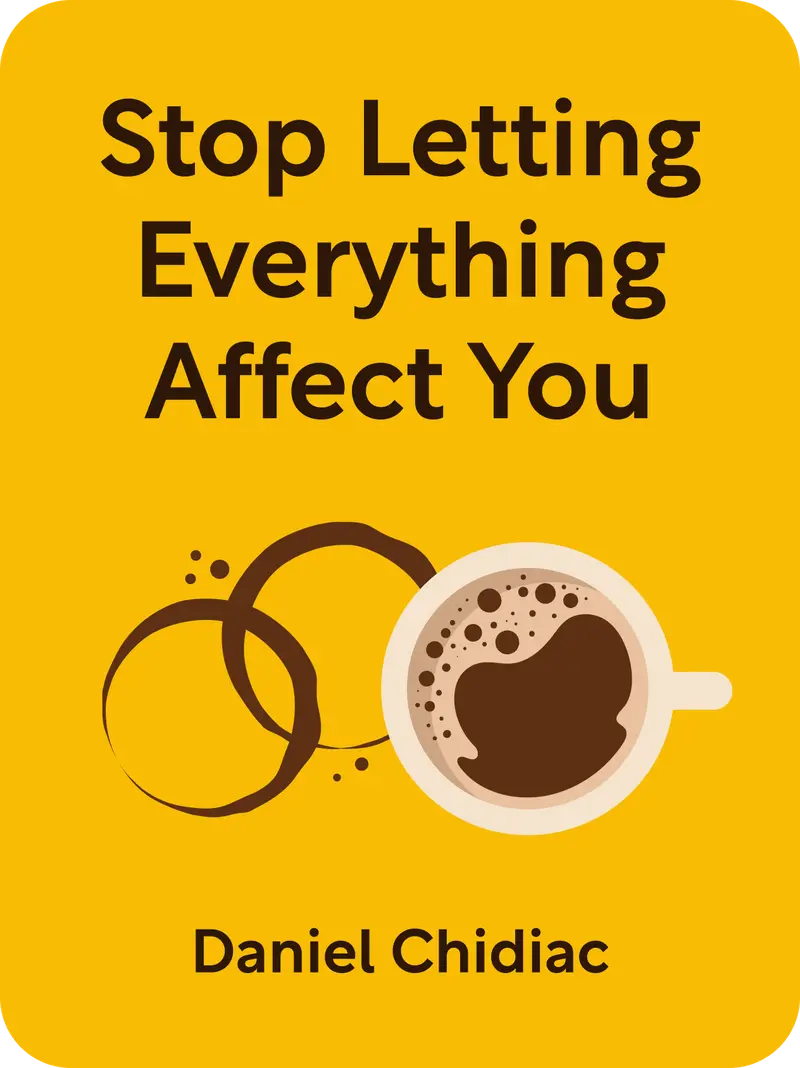
Book summary
Premium summary · Opens in the app · 30 min read
There is a quiet epidemic running through modern life. It doesn't show up on medical scans or blood tests, but it shapes how millions of people experience every single day. It's the epidemic of emotional exhaustion, the constant feeling that everything is too much, that other people's moods are somehow your responsibility, that every text message carries hidden meaning, and that peace is something other people seem to have figured out while you remain stuck in a loop of overthinking and overfeel
**Author:** Daniel Chidiac **Estimated Reading Time:** 45 minutes
### What You'll Learn
How to break free from emotional reactivity, stop absorbing other people's problems, and reclaim the mental energy you've been giving away. You'll learn practical techniques for managing anxiety, setting boundaries, and building emotional resilience without becoming cold or detached.
### Who This Book Is For
Anyone who lies awake replaying conversations, feels drained after social interactions, takes things personally that were never meant that way, or finds themselves caught in cycles of worry and rumination. If you've ever been told you're "too sensitive" or you care too much, this book speaks directly to you.
There is a quiet epidemic running through modern life. It doesn't show up on medical scans or blood tests, but it shapes how millions of people experience every single day. It's the epidemic of emotional exhaustion, the constant feeling that everything is too much, that other people's moods are somehow your responsibility, that every text message carries hidden meaning, and that peace is something other people seem to have figured out while you remain stuck in a loop of overthinking and overfeeling. Daniel Chidiac wrote this book for the people who feel everything deeply. Not because feeling deeply is a flaw, but because without understanding how to work with that sensitivity, it becomes a burden rather than a gift. The person who absorbs every emotion in a room, who replays conversations for hours after they end, who feels physically drained after spending time with certain people, who cannot seem to stop caring even when caring is destroying them, that person needs more than generic advice to "just let it go." The problem is that most advice about emotional reactivity misses the point entirely. Telling someone to stop caring so much is like telling someone to stop being tall. The instruction doesn't address the underlying mechanism. It doesn't acknowledge that reactivity is learned, practiced, and reinforced over years. It doesn't recognize that the person who overreacts to small things is often carrying a lifetime of unprocessed emotional weight that makes every new stressor feel like the final straw. Chidiac's approach is different because it starts with a radical premise: your reactive mind is not who you are. It's simply what you've practiced becoming. And anything you've practiced can be unpracticed. Anything you've learned can be unlearned. The patterns that keep you trapped in emotional turmoil are not permanent features of your personality. They are habits, and habits can be changed. This matters because so many people have resigned themselves to a life of emotional exhaustion. They believe they're just wired this way, that sensitivity is their cross to bear, that some people are simply born…
Continue reading in the MinuteRead app
Get the complete 30-minute summary of Stop Letting Everything Affect You
Get the complete summary in the appYour reactivity is a habit, not your identity. Anything practiced can be unpracticed.
The anxiety loop feeds on attention. Stop engaging and the loop weakens.
Thank your anxiety instead of fighting it. Gratitude activates different neural networks than stress.
Use the Witness Practice: name the emotion, create distance, locate the sensation.
Absorbing others' emotions is self-abandonment, not compassion. Use the Compassionate Container.
Guilt after setting boundaries is withdrawal from an old pattern, not evidence you're wrong.
"Stop Letting Everything Affect You" is a strong fit if you want practical ideas around inspiration, self help, psychology, especially themes like your reactivity is a habit, not your identity. anything practiced can be unpracticed; the anxiety loop feeds on attention. stop engaging and the loop weakens. The MinuteRead summary distills these concepts into a focused read, whether you're deciding whether to buy the book or applying its lessons at work.
Continue Reading Pricing • Terms of Service • Privacy Policy • 30-Day Refund Policy • DMCA • Affiliate • Twitter • Support • Follow Listen 2 mins Now playing Stop Letting Everything Affect You 0:00 -0:00 Now playing Stop Letting Everything Affect You 0:00 -0:00 1x Queue Voice Speed Music Voice Dan Jennifer Andrew Sarah Michelle Lauren – 1.0 × + 200 words per minute Off Low Medium High Music Volume Off Low Medium High Contents Bookmark Share Want to Read Currently Reading Read Did Not Finish Home…
View all summaries by Daniel ChidiacContinue Reading
Access the complete 30-minute summary and thousands more nonfiction books in the MinuteRead app.

Continue reading the complete summary in the MinuteRead app.