MinuteRead
30 min
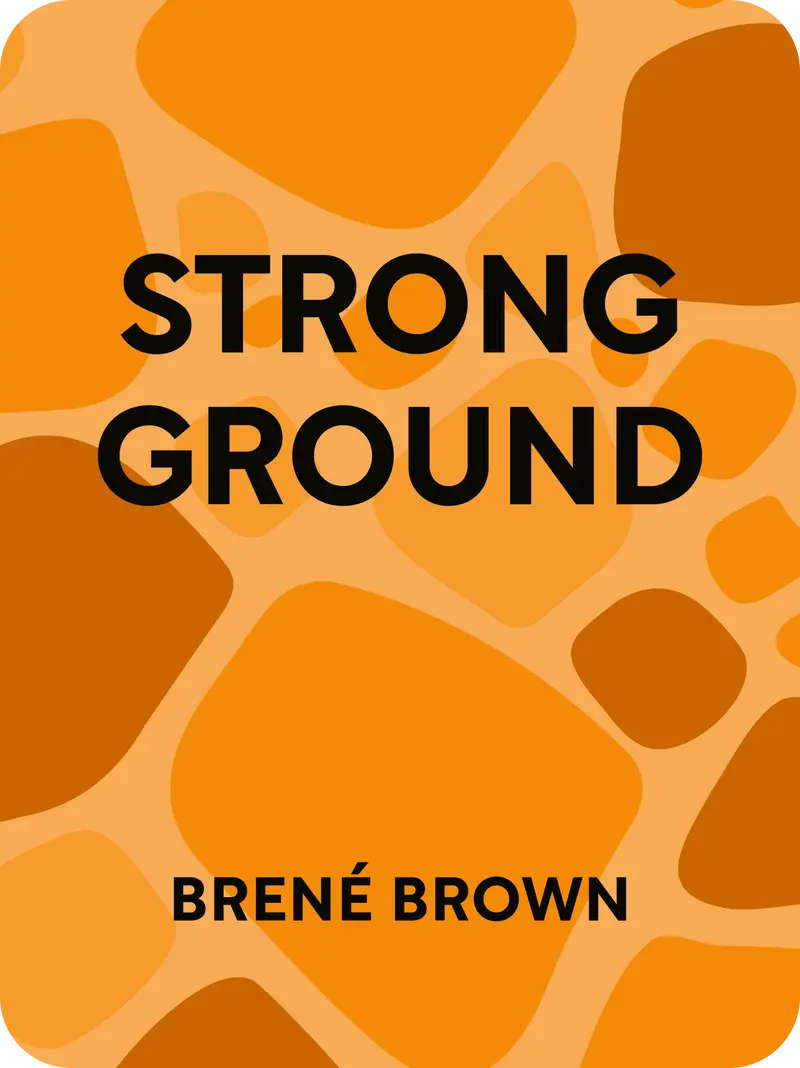
Book summary
by Brené Brown
Premium summary · Opens in the app · 30 min read
Brené Brown was lying on the floor of a gym, injured from a pickleball game, when her trainer Tony delivered a diagnosis that would reshape her understanding of leadership. She had scored ten out of twenty-two on a basic fitness assessment. Her arms and back were doing work they were never designed to do, compensating for weak core muscles in her glutes, lats, and stomach. The injury was not the problem. The injury was a symptom. The problem was a foundation that could not support the demands be
**Author:** Brené Brown
**Estimated Reading Time:** 45 minutes
**What You'll Learn:**
- Why most organizational transformation fails before it begins - How to build personal and collective stability in uncertain times - The connection between physical grounding and leadership capacity - Practical tools for navigating fear, vulnerability, and paradox - Why preparation matters more than presence - How to create genuine trust and connection in teams
**Who This Book Is For:**
Leaders who feel the ground shifting beneath them. Managers tired of chasing tools and technologies that promise transformation but deliver dysfunction. Anyone who senses that the real work of change happens inside people before it happens inside systems. And readers who want to understand why courage, vulnerability, and connection are not soft skills but survival skills.
Brené Brown was lying on the floor of a gym, injured from a pickleball game, when her trainer Tony delivered a diagnosis that would reshape her understanding of leadership. She had scored ten out of twenty-two on a basic fitness assessment. Her arms and back were doing work they were never designed to do, compensating for weak core muscles in her glutes, lats, and stomach. The injury was not the problem. The injury was a symptom. The problem was a foundation that could not support the demands being placed on it. Tony's prescription was simple and uncompromising: strengthen the foundation before adding anything new. No advanced exercises. No intensity. Just the unglamorous work of building strength where it mattered most. "We will not build on dysfunction," he told her. That sentence became the organizing principle for this book. Brown has spent more than two decades studying courage, vulnerability, shame, and empathy. She has interviewed thousands of leaders, from military special forces to NFL coaches to Fortune 500 executives. Her TED talk on vulnerability has been viewed over sixty million times. Her books have sold millions of copies worldwide. Yet when she looked at the landscape of modern leadership, she saw something troubling. Organizations everywhere are trying to build on dysfunction. They want to add artificial intelligence to cultures riddled with fear. They want to scale fast on foundations of avoidance and unspoken resentment. They want to disrupt industries while their own teams cannot have honest conversations. They chase tools, technologies, and frameworks while ignoring the human ground beneath everything they build. The result is predictable. Transformation initiatives fail. Technology amplifies existing problems rather than solving them. Leaders burn out. Teams fracture. And the people who were supposed to benefit from all this change end up more disconnected than before. Brown's argument is both simple and radical: the strong ground is not a tool. It is not a technology. It is not a strategy…
Continue reading in the MinuteRead app
Get the complete 30-minute summary of Strong Ground
Get the complete summary in the appStrong ground has two elements: your own footing and your connection to other grounded people.
Vulnerability is the prerequisite for courage, not weakness.
Hold paradox. Gritty faith AND gritty facts.
Think like a scientist. Search for reasons you might be wrong.
Name when fear is driving. Above the line, you choose. Below the line, fear chooses.
Real transformation requires breaking what used to work. The fire is the transformation.
"Strong Ground" is a strong fit if you want practical ideas around leadership, self help, psychology, especially themes like strong ground has two elements: your own footing and your connection to other grounded people; vulnerability is the prerequisite for courage, not weakness. The MinuteRead summary distills these concepts into a focused read, whether you're deciding whether to buy the book or applying its lessons at work.
Dr. Brené Brown is a research professor at the University of Houston and visiting professor at UT Austin's McCombs School of Business. She has spent two decades studying courage, vulnerability, shame, and empathy. Her six #1 New York Times bestsellers include Atlas of the Heart, Dare to Lead, and Daring Greatly, translated into over 30 languages. She hosts award-winning podcasts Unlocking Us and Dare to Lead. Her TED talk on vulnerability has over 60 million views, ranking among the top five mos…
View all summaries by Brené BrownContinue Reading
Access the complete 30-minute summary and thousands more nonfiction books in the MinuteRead app.

Continue reading the complete summary in the MinuteRead app.