MinuteRead
30 min
Book summary
Premium summary · Opens in the app · 30 min read
Every investment you make changes the world. This is not a philosophical statement. It is a mechanical fact. When you buy shares in a company, you provide capital that funds its operations. When you purchase a bond, you finance a project. When you hold cash in a bank, that bank lends your money to businesses and governments. The question is not whether your investments have an impact. The question is whether you have any idea what that impact is.
**Author:** R. Scott Arnell **Estimated Reading Time:** 42 minutes
**What You'll Learn:** - How sustainable investing evolved from a niche strategy to a global movement - Why ESG factors are now essential to sound financial decision-making - How to measure real-world impact alongside financial returns - What technologies are transforming responsible investing - How blended finance unlocks capital for global challenges - Why natural capital belongs on every investor's balance sheet
**Who This Book Is For:** This book is for investors who want their money to reflect their values without sacrificing returns. It is for financial professionals seeking to understand the fastest-growing segment of the investment industry. It is for anyone who has wondered whether their portfolio is helping or hurting the world, and what they can do about it.
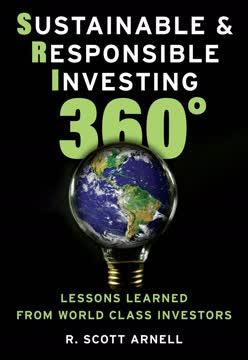
Every investment you make changes the world. This is not a philosophical statement. It is a mechanical fact. When you buy shares in a company, you provide capital that funds its operations. When you purchase a bond, you finance a project. When you hold cash in a bank, that bank lends your money to businesses and governments. The question is not whether your investments have an impact. The question is whether you have any idea what that impact is. For most of modern financial history, the answer was no. Investors evaluated opportunities on a narrow set of criteria: expected return, volatility, liquidity, correlation. What the company actually did in the world was someone else's problem. If a business polluted a river, exploited its workers, or bribed government officials, those were externalities. They did not appear on the balance sheet. They did not affect the stock price. They were invisible to the investor. That era is ending. R. Scott Arnell has spent his career at the intersection of finance and social impact. He founded Geneva Capital S.A., an alternative investment advisory firm focused on sustainable and responsible investment opportunities. His work has taken him across Asia, Europe, and Latin America. He has seen poverty up close. He has also seen how capital, deployed thoughtfully, can lift communities out of desperation. This book is the synthesis of that experience. The central argument of Sustainable & Responsible Investing 360° is straightforward: the old separation between financial returns and social impact was always an illusion. Every investment has consequences. The only question is whether investors choose to understand and direct those consequences, or whether they remain willfully blind to them. The stakes could not be higher. Climate change threatens to destabilize global economies. Wealth inequality undermines social cohesion. Resource scarcity creates geopolitical tensions. These are not distant problems. They are present realities that affect the value of every asset class. An investor who ignores…
Continue reading in the MinuteRead app
Get the complete 30-minute summary of Sustainable & Responsible Investing 360°
Get the complete summary in the appEvery investment has an impact. Make it intentional.
Sustainable investing has evolved from exclusion to integration to impact.
ESG factors are financially material. Ignoring them is negligent.
Measurement is essential for credibility. If you cannot measure it, you cannot manage it.
Engagement is more powerful than divestment. Stay at the table and push for change.
Technology is transforming sustainable investing, enabling better data, analysis, and products.
"Sustainable & Responsible Investing 360°" is a strong fit if you want practical ideas around ebooks, inspirational, business, especially themes like every investment has an impact. make it intentional; sustainable investing has evolved from exclusion to integration to impact. The MinuteRead summary distills these concepts into a focused read, whether you're deciding whether to buy the book or applying its lessons at work.
R. Scott Arnell is the founder of Geneva Capital S.A., an alternative investment advisory firm specializing in sustainable and responsible investment opportunities. His extensive business experience spans Asia, Europe, and Latin America, establishing him as an authority in the field. Arnell's background includes travels to poverty-stricken countries, which ignited his passion for responsible investing. His expertise in sustainable and responsible investing (SRI) is evident in his writing, where …
View all summaries by R. Scott ArnellContinue Reading
Access the complete 30-minute summary and thousands more nonfiction books in the MinuteRead app.

Continue reading the complete summary in the MinuteRead app.