MinuteRead
30 min
Book summary
Premium summary · Opens in the app · 30 min read
Most people think they know what ADHD is. They picture a hyperactive child who cannot sit still in class, blurts out answers, and drives teachers to distraction. They imagine it is a childhood condition that fades with age, like a phase some kids outgrow.
**Author:** Russell A. Barkley
**Estimated Reading Time:** 45 minutes
**What You'll Learn:**
- Why ADHD is far more than an attention problem - How executive function deficits shape every aspect of adult life - What effective diagnosis and treatment actually look like - Practical strategies for managing time, tasks, emotions, and relationships - How to reduce risks in driving, finances, and substance use - How to build a life that works with your brain rather than against it
**Who This Book Is For:**
If you are an adult who has been diagnosed with ADHD, suspects you might have it, or loves someone who does, this book is for you. It is also for anyone who wants to understand why smart, capable people sometimes struggle profoundly with everyday demands. You do not need a background in psychology or neuroscience. You need curiosity, honesty, and a willingness to look at your own life with fresh eyes.
Most people think they know what ADHD is. They picture a hyperactive child who cannot sit still in class, blurts out answers, and drives teachers to distraction. They imagine it is a childhood condition that fades with age, like a phase some kids outgrow. That picture is incomplete and often wrong. ADHD is not a childhood disorder that people eventually leave behind. For the majority of those affected, it is a lifelong condition that continues into adulthood. The symptoms may change shape. The hyperactive boy running around the classroom becomes the adult who cannot sit through meetings, interrupts colleagues, and feels restless when forced to be still. The daydreaming girl staring out the window becomes the woman who loses her keys, misses deadlines, and feels overwhelmed by the ordinary logistics of daily life. But the real problem is not attention. The real problem runs much deeper. Russell Barkley, one of the world's leading ADHD researchers, has spent decades studying what this disorder actually does to the brain and to people's lives. His conclusion is both sobering and liberating. ADHD is not a problem with knowing what to do. It is a problem with doing what you know. It is a disorder of performance, not knowledge. Think about that for a moment. Most adults with ADHD know exactly what they should do. They know they should pay bills on time. They know they should not interrupt people. They know they should start projects early instead of waiting until the last minute. They know they should think before they speak. The knowledge is there. What is missing is the ability to translate that knowledge into consistent action. This distinction explains why ADHD is so frustrating for everyone involved. Family members think, "He's smart. He knows better. He just…
Continue reading in the MinuteRead app
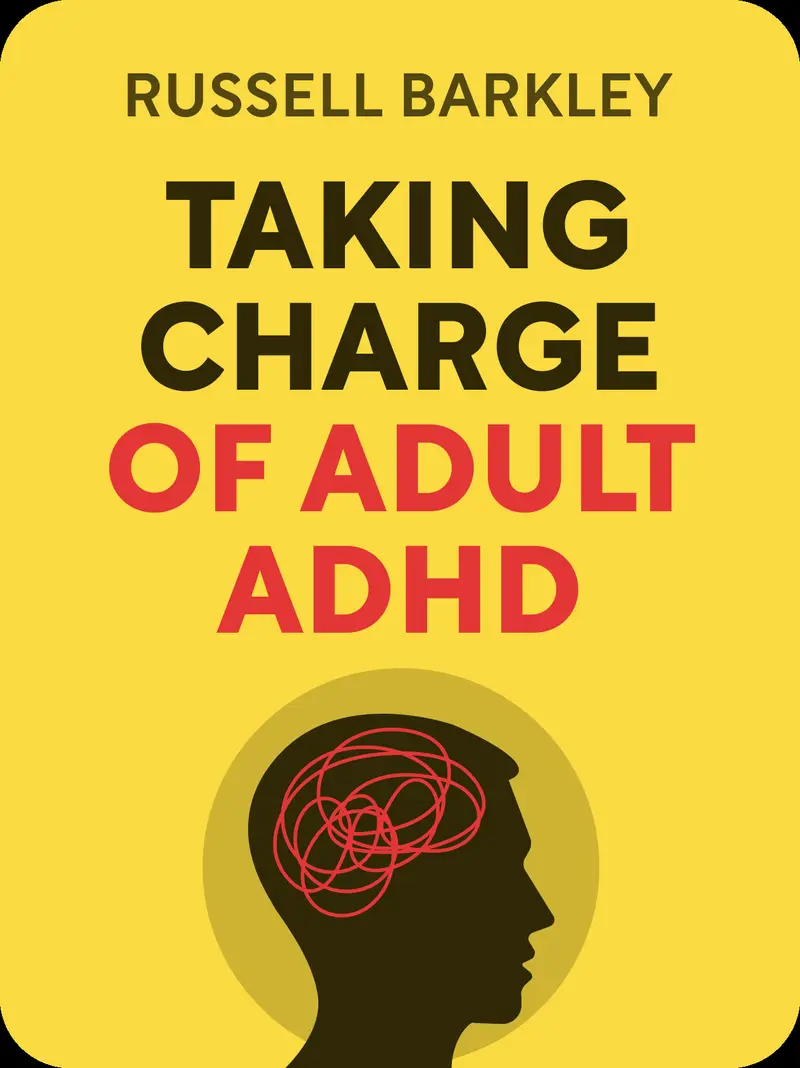
Get the complete 30-minute summary of Taking Charge of Adult ADHD
Get the complete summary in the appADHD is a disorder of performance, not knowledge. You know what to do. The challenge is doing it.
Executive functions are the brain systems affected by ADHD. They include inhibition, working memory, emotional regulatio
Willpower is impaired in ADHD. Build external systems instead of relying on internal motivation.
Time blindness is real. Use timers, alarms, and structured schedules to compensate.
Medication is highly effective for most adults with ADHD. It provides a foundation for other strategies.
Accurate diagnosis requires comprehensive evaluation. Seek a professional who specializes in adult ADHD.
"Taking Charge of Adult ADHD" is a strong fit if you want practical ideas around health & fitness, adhd, psychology, especially themes like adhd is a disorder of performance, not knowledge. you know what to do. the challenge is doing it; executive functions are the brain systems affected by adhd. they include inhibition, working memory, emotional regulatio. The MinuteRead summary distills these concepts into a focused read, whether you're deciding whether to buy the book or applying its lessons at work.
Russell A. Barkley is a renowned clinical psychologist and expert on Attention-Deficit Hyperactivity Disorder (ADHD). Born in 1949, he has been involved in ADHD research since 1973 and became a licensed psychologist in 1977. Barkley holds a position as a clinical professor of psychiatry at the Medical University of South Carolina. He has authored numerous books on ADHD and has dedicated much of his scientific career to studying the disorder and related problems in children. His research interest…
View all summaries by Russell A. BarkleyContinue Reading
Access the complete 30-minute summary and thousands more nonfiction books in the MinuteRead app.

Continue reading the complete summary in the MinuteRead app.