MinuteRead
30 min
Book summary
by Scott Tannenbaum
Premium summary · Opens in the app · 30 min read
Most people have experienced both sides of the teamwork equation. On one side sits the team where everything clicks. Information flows naturally. People anticipate each other's needs. Problems get solved before they escalate. The work feels almost effortless, even when the challenges are substantial.
**Author:** Scott Tannenbaum **Estimated Reading Time:** 45 minutes
Why some teams consistently outperform others despite having similar talent. The specific behaviors, attitudes, and cognitive habits that separate effective teams from dysfunctional ones. How to build psychological safety, coordinate under pressure, communicate with precision, and create organizational conditions where teamwork flourishes.
Team leaders who want to move beyond intuition and guesswork. Team members who want to contribute more effectively. Executives responsible for designing organizations where collaboration actually works. Anyone who has ever wondered why smart people sometimes form terrible teams.
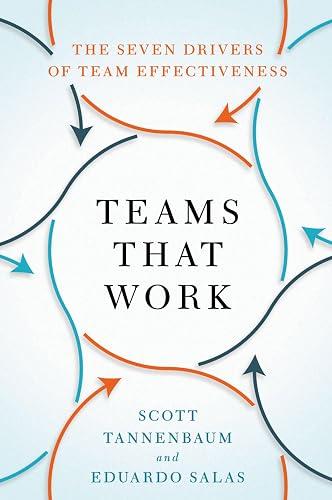
Most people have experienced both sides of the teamwork equation. On one side sits the team where everything clicks. Information flows naturally. People anticipate each other's needs. Problems get solved before they escalate. The work feels almost effortless, even when the challenges are substantial. On the other side sits the team where nothing works. Meetings drag on without resolution. People hoard information. Mistakes get hidden. Conflicts simmer beneath the surface. The same problems recur week after week. Everyone works hard, yet the collective output remains disappointing. The strange part is that both teams often contain talented, well-intentioned people. The difference lies not in individual capability but in how the team functions as a unit. Scott Tannenbaum has spent decades studying this difference. As an organizational psychologist and president of The Group for Organizational Effectiveness, he has worked with Fortune 500 companies, government agencies, military units, and healthcare organizations. He has observed teams in high-stakes environments where failure carries severe consequences. He has also studied teams in ordinary business settings where dysfunction simply drains energy and produces mediocrity. His conclusion is straightforward: teamwork is hard, but it is not mysterious. The behaviors that make teams effective are identifiable, teachable, and repeatable. The problem is that most organizations treat teamwork as a personality trait rather than a skill. They assume that good team players are born, not made. They hire for technical competence and hope for collaboration. They reward individual achievement while preaching collective effort. They expect teams to gel naturally without providing the conditions or training that make cohesion possible. This book challenges those assumptions. It presents evidence-based insights about what actually makes teams work. The research spans decades and draws from multiple fields, including organizational psychology, human factors, military science, and healthcare. The findings are remarkably consistent across contexts. Effective teams share certain characteristics. They develop shared understanding about goals, roles, and priorities. They communicate with precision rather than volume. They create psychological safety that enables honest dialogue. They coordinate their actions through specific, observable behaviors. They adapt and learn continuously rather than repeating the same mistakes. None of these characteristics requires extraordinary talent. They require attention, intention, and practice. They…
Continue reading in the MinuteRead app
Get the complete 30-minute summary of Teams That Work
Get the complete summary in the appTeamwork is a learnable skill, not an innate trait.
Technical competence alone is insufficient. Teams also need teamwork skills.
Psychological safety is the foundation of team effectiveness.
Coordination requires specific, observable behaviors that can be taught and practiced.
Communication quality matters more than quantity. Verify understanding.
Shared understanding of goals, roles, and priorities enables coordination.
"Teams That Work" is a strong fit if you want practical ideas around management, leadership, business, especially themes like teamwork is a learnable skill, not an innate trait; technical competence alone is insufficient. teams also need teamwork skills. The MinuteRead summary distills these concepts into a focused read, whether you're deciding whether to buy the book or applying its lessons at work.
Motivated to help readers with "Teamwork and collaboration are hard." Foundational Team Dynamics, Scott Tannenbaum wrote “Teams That Work” to package those ideas for a fast, focused read. In “Teams That Work”, Scott Tannenbaum focuses on "Teamwork and collaboration are hard." Foundational Team Dynamics. Through “Teams That Work”, Scott Tannenbaum distills the core ideas on management into lessons readers can absorb in a single short sitting. Readers turn to this work when they want Scott Tannenb…
Continue Reading
Access the complete 30-minute summary and thousands more nonfiction books in the MinuteRead app.

Continue reading the complete summary in the MinuteRead app.