MinuteRead
30 min
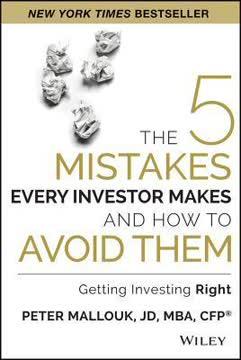
Book summary
Premium summary · Opens in the app · 30 min read
Most investors believe they are making rational decisions. They read the news, follow the markets, listen to experts, and act on what seems like good information. Yet the vast majority of individual investors dramatically underperform the very markets they invest in. The gap between what the market returns and what the average investor actually earns is not small. It is enormous. And it is not because the market is rigged or because investing is impossibly complex. It is because investors keep m
**Author: Peter Mallouk**
**Estimated Reading Time: 42 minutes**
**What You'll Learn:** - Why market timing destroys wealth and what to do instead - How behavioral biases sabotage your returns without your awareness - The truth about active trading versus passive investing - How to select a financial advisor who actually serves your interests - A complete framework for building a portfolio you can stick with for life
**Who This Book Is For:** Individual investors who want to stop making costly mistakes, professionals who suspect their current approach isn't working, and anyone who wants a clear, evidence-based investing philosophy that doesn't require watching financial news or predicting the next market move.
Most investors believe they are making rational decisions. They read the news, follow the markets, listen to experts, and act on what seems like good information. Yet the vast majority of individual investors dramatically underperform the very markets they invest in. The gap between what the market returns and what the average investor actually earns is not small. It is enormous. And it is not because the market is rigged or because investing is impossibly complex. It is because investors keep making the same five mistakes, over and over, across decades, across market cycles, across generations. Peter Mallouk has spent his career watching these mistakes play out in real portfolios with real consequences. As CEO of Creative Planning, one of the largest independent wealth management firms in the country, he has seen what works and what fails. The patterns are unmistakable. Investors chase performance. They try to time markets. They trust the wrong advisors. They let fear and greed override their plans. They misinterpret information that seems important but is actually noise. And they construct portfolios that don't match their actual lives. This book exists because these mistakes are both devastating and completely avoidable. The problem isn't a lack of intelligence. Many of the people making these errors are highly successful in other areas of their lives. The problem is that investing feels intuitive in ways that are exactly wrong. The instincts that serve you well in your career, your relationships, and your daily decisions will reliably lead you astray when applied to financial markets. The financial services industry has little incentive to correct these mistakes. In fact, much of the industry profits from them. Active fund managers collect fees regardless of performance. Brokers earn commissions when you trade. Financial media earns advertising revenue when you watch. The entire ecosystem benefits from keeping you engaged, active, and slightly anxious. Calm, patient, evidence-based investing is good for you but bad for business. Mallouk's approach is different because it is built on what actually works rather than what sells. He doesn't promise…
Continue reading in the MinuteRead app
Get the complete 30-minute summary of The 5 Mistakes Every Investor Makes and How to Avoid Them
Get the complete summary in the appStay invested through all market conditions. Market timing fails for everyone who attempts it.
Use low-cost index funds. Active management underperforms after fees, taxes, and costs.
Ignore financial news. It is designed to provoke action, and the action it provokes is almost always wrong.
Control your emotions. Fear and greed are the primary reasons investors earn less than the market.
Work only with fiduciary advisors. Anyone else has incentives that conflict with your interests.
Diversify globally. Owning only your home country's stocks is a bet you don't need to make.
"The 5 Mistakes Every Investor Makes and How to Avoid Them" is a strong fit if you want practical ideas around finance, business, money, especially themes like stay invested through all market conditions. market timing fails for everyone who attempts it; use low-cost index funds. active management underperforms after fees, taxes, and costs. The MinuteRead summary distills these concepts into a focused read, whether you're deciding whether to buy the book or applying its lessons at work.
Peter Mallouk is a respected financial expert and CEO of Creative Planning, ranked as the top registered investment advisory firm by Barron's. He holds credentials as an estate planning attorney and has authored multiple books on investing and financial planning. Mallouk's approach emphasizes evidence-based strategies and avoiding common investor mistakes. His writing style is described as engaging and accessible, making complex financial concepts understandable for a general audience. Mallouk's…
View all summaries by Peter MalloukContinue Reading
Access the complete 30-minute summary and thousands more nonfiction books in the MinuteRead app.

Continue reading the complete summary in the MinuteRead app.