MinuteRead
30 min
Book summary
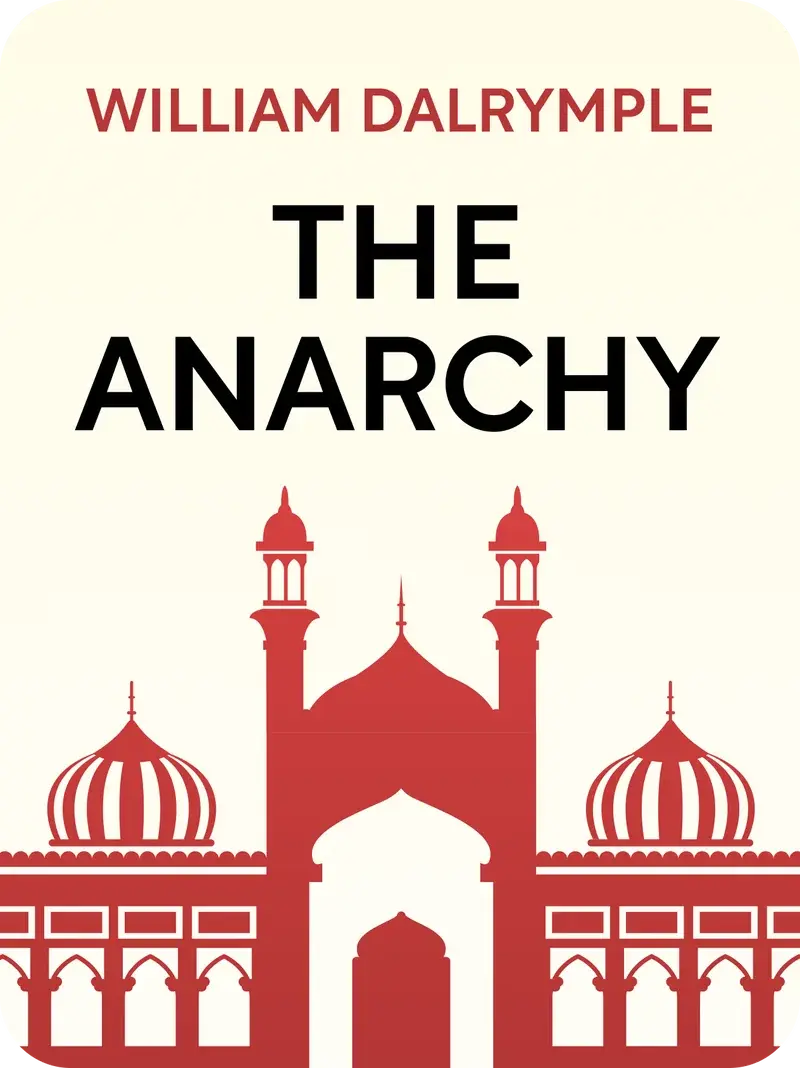
by William Dalrymple
Premium summary · Opens in the app · 30 min read
In the year 1599, a group of London merchants gathered to discuss an audacious proposition. The spice trade, long dominated by the Portuguese and the Dutch, seemed ripe for disruption. These men proposed forming a company that would sail to the distant shores of India, establish trading posts, and return with cargoes of pepper, indigo, and textiles. They sought a royal charter, raised capital from investors, and named their venture the Governor and Company of Merchants of London Trading into the
**Author:** William Dalrymple **Estimated Reading Time:** 45 minutes
**What You'll Learn:**
How a modest trading corporation became the most powerful empire in South Asia, the devastating human cost of unchecked corporate power, and why the East India Company remains one of history's most urgent warnings about the dangers of merging profit with political authority.
**Who This Book Is For:**
Readers who want to understand how empires actually function, anyone interested in the roots of modern corporate power, and those seeking to grasp how a commercial enterprise could conquer an entire subcontinent through opportunism, military innovation, and systematic exploitation.
In the year 1599, a group of London merchants gathered to discuss an audacious proposition. The spice trade, long dominated by the Portuguese and the Dutch, seemed ripe for disruption. These men proposed forming a company that would sail to the distant shores of India, establish trading posts, and return with cargoes of pepper, indigo, and textiles. They sought a royal charter, raised capital from investors, and named their venture the Governor and Company of Merchants of London Trading into the East Indies. No one present could have imagined what this organization would become. Within two centuries, the East India Company would command a private army larger than that of most European nations. It would collect taxes from millions of people, mint its own currency, conduct diplomatic negotiations with emperors, and rule over vast territories stretching from Calcutta to Delhi. It would orchestrate the economic destruction of one of the world's wealthiest regions and preside over famines that killed millions. It would become, in the words of one contemporary observer, "an empire within an empire." The story of the East India Company is not merely a historical curiosity. It is a cautionary tale about what happens when commercial interests acquire political power without meaningful accountability. It is a study in how institutions evolve in unexpected directions when opportunities present themselves. And it is a reminder that the line between legitimate enterprise and systematic exploitation can blur with terrifying speed. William Dalrymple's account draws upon previously overlooked sources, including the Company's own archives in Delhi and London, to reconstruct this extraordinary transformation. What emerges is not the familiar story of British imperial triumph, but something far more complex and disturbing. The Company's rise was not the result of superior British character or inevitable historical progress. It was an opportunistic, often chaotic process driven by individual ambition, institutional greed, and the exploitation of political fragmentation. The Mughal Empire, which had ruled much of India for two centuries, was not a weak or primitive state. It was one of the wealthiest and most sophisticated empires in the world. Its decline created openings that the Company…
Continue reading in the MinuteRead app
Get the complete 30-minute summary of The Anarchy
Get the complete summary in the appThe East India Company transformed from a trading venture into an empire through incremental steps, not a grand plan.
The Mughal Empire's decline created the conditions for the Company's rise. The Company exploited fragmentation, not inhe
The conquest of Bengal was achieved through bribery and conspiracy at the Battle of Plassey, not military victory.
The Bengal famine of 1770 killed ten million people and was caused by Company policies that prioritized revenue over hum
The Company was a corporation that functioned as a state, creating fundamental contradictions between profit and governa
The Company's army was mostly Indian, and its victories depended on Indian soldiers. The conquest of India was partly an
"The Anarchy" is a strong fit if you want practical ideas around history, india, economics, especially themes like the east india company transformed from a trading venture into an empire through incremental steps, not a grand plan; the mughal empire's decline created the conditions for the company's rise. the company exploited fragmentation, not inhe. The MinuteRead summary distills these concepts into a focused read, whether you're deciding whether to buy the book or applying its lessons at work.
Motivated to help readers with "We must become Nabobs ourselves in Fact if not in Name, William Dalrymple wrote “The Anarchy” to package those ideas for a fast, focused read. In “The Anarchy”, William Dalrymple focuses on "We must become Nabobs ourselves in Fact if not in Name. Through “The Anarchy”, William Dalrymple distills the core ideas on history into lessons readers can absorb in a single short sitting. Readers turn to this work when they want William Dalrymple's perspective on the subjec…
Continue Reading
Access the complete 30-minute summary and thousands more nonfiction books in the MinuteRead app.

Continue reading the complete summary in the MinuteRead app.