MinuteRead
30 min
Book summary
Premium summary · Opens in the app · 5 min read
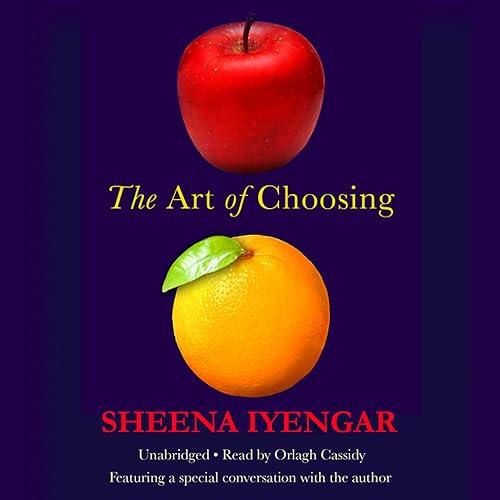
The Art Of Choosing extensively covers the scientific research made about human decision making, showing you what affects how you make choices, how the consequences of those choices affect you, as well as how you can adapt to these circumstances to make better decisions in the future.
The Art Of Choosing extensively covers the scientific research made about human decision making, showing you what affects how you make choices, how the consequences of those choices affect you, as well as how you can adapt to these circumstances to make better decisions in the future.
There are innumerable factors that influence any given choice you make. When we think about how we can change these, we usually try to answer the question “How can I maximize the amount of choice I have?” – because we assume that more choice is better. At least that’s how I try to answer it, because I grew up in the Western civilization.
Here’s where it gets tricky: Not all of us need to maximize our freedom of choice to thrive. How much choice you need is highly individual.
One of the factors that determines how much choice you actually need is culture. It makes sense. Cultures that focus and promote individual freedom, as in Europe or the United States, produce people who thrive on being in charge. Eastern cultures are usually more focused on their collective entity, in which it feels more natural to have others make decisions for you.
In a study where Asian-American and Anglo-American children were either given a toy to play with by their mothers or allowed to select a toy to play with themselves, the Asian kids played longer when their mom selected the toy, whereas the American kids enjoyed playing longer if they self-selected.
What might seem trivial when looking at kid’s playing behaviors is not when it comes to life: In another study, the same two ethnic groups were given a math test before and after playing Space Quest, a game designed to improve their math skills. One group could choose their spaceship’s color and name, another was given the most popular settings among the class.
The American kids improved by 18% when they were allowed to choose themselves and not at all when they were denied the choice, whereas the Asian kids improved by 18% when they were given the settings, and only 11% if they had to decide.
How much freedom of choice you need is not an easy one to answer for yourself, but you can bet that it’s an important one to find out.
Two famous studies among over 10,000 British civil servants, called the Whitehall studies, showed that employees with a higher salary tended to be healthier, in spite of having more stressful jobs. Those with the lowest pay grade had the highest likelihood of dying from heart disease. However, nobody who works for their government in a Western country lives a life close to the poverty line, so what’s…
Continue reading in the MinuteRead app
Get the complete 5-minute summary of The Art Of Choosing
Get the complete summary in the appYou must find out how much choice you personally need, something that heavily depends on culture, for example.
Some choice is better than none, and even the illusion of it makes us happier.
Sometimes it’s better to have others choose for you, but only if you’re properly informed.
"The Art Of Choosing" is a strong fit if you want practical ideas around productivity, business, psychology, especially themes like you must find out how much choice you personally need, something that heavily depends on culture, for example; some choice is better than none, and even the illusion of it makes us happier. The MinuteRead summary distills these concepts into a focused read, whether you're deciding whether to buy the book or applying its lessons at work.
SHEENA IYENGAR is the S. T. Lee Professor of Business at Columbia University and a recipient of the Presidential Early Career Award. She holds an undergraduate degree from Wharton School of Business and a doctorate in social psychology from Stanford University. Her innovative research on choice has been funded by the Institute for Advanced Studies, the Jerome A. Chazen Institute of International Business, the National Science Foundation, and the National Institute of Mental Health. Her work is r…
View all summaries by Sheena IyengarContinue Reading
Access the complete 5-minute summary and thousands more nonfiction books in the MinuteRead app.

Continue reading the complete summary in the MinuteRead app.