MinuteRead
30 min
Book summary
Premium summary · Opens in the app · 30 min read
Every investor wants the same thing: to buy low and sell high. The entire financial industry is built on the promise of helping people do this. Analysts publish reports predicting where stocks will go. Fund managers market their ability to spot opportunities. Television pundits shout confidently about what the market will do next. The implicit message is always the same: if you can just predict the future well enough, you will make money.
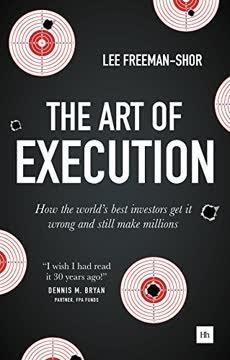
**Author:** Lee Freeman-Shor **Estimated Reading Time:** 45 minutes
**What You'll Learn:**
- Why the world's best investors are wrong nearly half the time yet still make fortunes - The four distinct investor personalities and which one you should cultivate - How to cut losses without regret and let winners run without anxiety - The psychological traps that destroy returns and how to neutralize them - A practical system for turning average ideas into exceptional profits
**Who This Book Is For:**
This book is for anyone who has ever bought an investment, watched it fall, and felt paralyzed. It is for investors who have sold too early and watched a stock double without them. It is for professionals who want to understand what actually separates great money managers from mediocre ones. And it is for beginners who want to build good habits before bad ones take root.
Every investor wants the same thing: to buy low and sell high. The entire financial industry is built on the promise of helping people do this. Analysts publish reports predicting where stocks will go. Fund managers market their ability to spot opportunities. Television pundits shout confidently about what the market will do next. The implicit message is always the same: if you can just predict the future well enough, you will make money. Lee Freeman-Shor discovered something that turns this assumption on its head. As a fund manager at Old Mutual Global Investors, Freeman-Shor had an extraordinary opportunity. He was given a mandate to allocate capital to forty-five of the world's top investors, each of whom would manage a portfolio of their ten best ideas. These were not amateurs. They included some of the most respected fund managers, hedge fund operators, and investment professionals on the planet. They had track records, research teams, and decades of experience. Freeman-Shor tracked every single trade these investors made over a seven-year period. He recorded thousands of positions. He noted when they bought, when they sold, how much they made, and how much they lost. What he found was startling. The best investors in the world were wrong almost as often as they were right. Across thousands of trades, the average success rate was approximately 49 percent. In other words, if you had flipped a coin to decide whether any given investment would make money, you would have been about as accurate as these elite professionals. This finding alone would be remarkable. But there was more. Despite being wrong more than half the time, these investors made substantial profits. Some made fortunes. How could this be? How could people who were wrong so often end up so wealthy? The answer, Freeman-Shor realized, was not in their ability to…
Continue reading in the MinuteRead app
Get the complete 30-minute summary of The Art of Execution
Get the complete summary in the appExecution matters more than prediction. The best investors are right less than half the time yet still make fortunes.
Never freeze with a losing position. Doing nothing is a decision, and it is usually the wrong one.
Cut losses quickly. A small loss is easy to recover from. A large loss is not.
Set stop-losses in advance and honor them. The decision should be made when your mind is clear.
Average down only when the thesis remains intact. Reassess before each additional purchase.
Do not sell winners too early. Big winners are rare. Make the most of them when they appear.
"The Art of Execution" is a strong fit if you want practical ideas around finance, business, economics, especially themes like execution matters more than prediction. the best investors are right less than half the time yet still make fortunes; never freeze with a losing position. doing nothing is a decision, and it is usually the wrong one. The MinuteRead summary distills these concepts into a focused read, whether you're deciding whether to buy the book or applying its lessons at work.
Lee Freeman-Shor is a fund manager at Old Mutual Global Investors. He oversees a fund that selects 45 top investors to each invest in their 10 best ideas. This unique position allowed him to analyze the behaviors and strategies of successful investors over an extended period. Freeman-Shor's research revealed that even top investors often lose money on more than half their positions, yet still generate good overall returns through effective money management. His book draws on these observations t…
View all summaries by Lee Freeman-ShorContinue Reading
Access the complete 30-minute summary and thousands more nonfiction books in the MinuteRead app.

Continue reading the complete summary in the MinuteRead app.