MinuteRead
30 min
Book summary
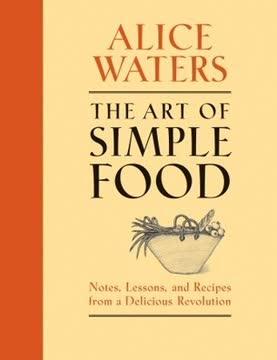
by Alice Waters
Premium summary · Opens in the app · 30 min read
Most cookbooks begin with a lie. They suggest that great cooking requires complexity, that the path to a memorable meal winds through elaborate techniques and obscure ingredients. They imply that unless you have professional training, a fully equipped kitchen, and hours of free time, you cannot hope to produce food worth eating.
**Author:** Alice Waters **Estimated Reading Time:** 45 minutes
**What You'll Learn:** How to cook with confidence by mastering essential techniques, sourcing quality ingredients, and understanding the principles of flavor that transform simple meals into memorable experiences.
**Who This Book Is For:** Home cooks who want to move beyond recipes and develop true culinary intuition. Anyone who believes good food matters and wants to understand why the best cooking often starts with the simplest approach.
Most cookbooks begin with a lie. They suggest that great cooking requires complexity, that the path to a memorable meal winds through elaborate techniques and obscure ingredients. They imply that unless you have professional training, a fully equipped kitchen, and hours of free time, you cannot hope to produce food worth eating. Alice Waters spent decades proving otherwise. When she opened Chez Panisse in Berkeley, California in 1971, Waters did something radical. She built a restaurant around a simple premise: find the best ingredients possible and cook them in ways that honor their essential nature. No elaborate sauces to mask mediocrity. No complicated presentations designed to impress rather than nourish. Just food that tasted like itself. The restaurant became legendary. Waters became one of the most influential figures in American food. And the philosophy that guided her work turned out to be remarkably simple. This book distills that philosophy into practical wisdom for home cooks. It is not a collection of recipes to follow blindly. It is an education in how to think about food, how to approach cooking with confidence, and how to create meals that satisfy on a deeper level than mere sustenance. The problem Waters addresses is not lack of information. We live in an age of endless recipes, cooking shows, and food media. The problem is disconnection. We have become separated from the sources of our food, from the seasons that govern what grows, from the techniques that transform raw ingredients into nourishment, and from the communal experience of sharing meals. This disconnection has consequences. It leads to food that tastes bland and requires heavy seasoning to be palatable. It leads to cooking that feels like a chore rather than a creative act. It leads to meals eaten quickly, without attention or appreciation. And it leads to a food system that prioritizes convenience and profit over health, flavor, and sustainability. Waters offers a different path. She argues that good cooking is not mysterious. You do not need years of training or expensive equipment. You need your senses, quality ingredients, a few fundamental techniques, and the willingness to pay attention. The approach is deceptively simple. Source good food. Learn basic skills. Taste as you go. Cook with the seasons. Share what you make.…
Continue reading in the MinuteRead app
Get the complete 30-minute summary of The Art of Simple Food
Get the complete summary in the app**Ingredient quality comes first.** The best technique cannot compensate for mediocre ingredients. Source the best food
**Master a few fundamental techniques.** Knife skills, sautéing, roasting, and braising will take you further than dozen
**Season throughout the cooking process.** Taste as you go. Salt early and often. Use acid to brighten and balance.
**Embrace simplicity.** When you have excellent ingredients, the best approach is often the simplest one. Let food taste
**Stock a quality pantry.** Good staples enable spontaneous cooking. Invest in good olive oil, vinegar, rice, and canned
**Cook with the seasons.** Seasonal food is fresher, more flavorful, and more sustainable. Let the seasons guide your co
"The Art of Simple Food" is a strong fit if you want practical ideas around cookbooks, food, cooking, especially themes like **ingredient quality comes first.** the best technique cannot compensate for mediocre ingredients. source the best food; **master a few fundamental techniques.** knife skills, sautéing, roasting, and braising will take you further than dozen. The MinuteRead summary distills these concepts into a focused read, whether you're deciding whether to buy the book or applying its lessons at work.
Alice Waters is a pioneering chef, restaurateur, and food activist. She founded the legendary Chez Panisse restaurant in Berkeley, California, and has been at the forefront of the organic, locally-sourced food movement for over four decades. Waters is also known for her educational initiatives, including the Edible Schoolyard Project. Her numerous accolades include induction into the French Legion of Honor and receiving the National Humanities Medal from President Obama. Waters has authored mult…
View all summaries by Alice WatersContinue Reading
Access the complete 30-minute summary and thousands more nonfiction books in the MinuteRead app.

Continue reading the complete summary in the MinuteRead app.