MinuteRead
30 min
Book summary
Premium summary · Opens in the app · 30 min read
The world of finance has a strange blind spot. Walk into any bookstore, scroll through any investing blog, or listen to any money podcast, and you will find endless advice about how to earn more, save more, and invest better. Entire industries exist to help you grow your money. But ask a simple question, "What should I actually do with my money once I have it?" and the conversation goes silent.
**Author:** Morgan Housel **Estimated Reading Time:** 35 minutes
**What You'll Learn:** Why the way you spend money matters far more than how much you earn. How to align your spending with your deepest values. Why most financial advice ignores the most important question of all: what should you actually do with your money once you have it?
**Who This Book Is For:** Anyone who has ever felt that earning more did not make them happier. Anyone tired of one-size-fits-all financial advice. Anyone who suspects that the secret to wealth is not just growing money, but learning to spend it wisely.
The central argument of this book can be stated in a single sentence: most people have never learned to spend money consciously. This is not because they are irresponsible or foolish. It is because nobody teaches spending. Schools teach mathematics but not budgeting. Parents teach hard work but rarely discuss how to use the fruits of that work. The financial industry teaches compound interest and asset allocation but stays silent on the question of what money is actually for. The result is a world full of high earners who feel financially insecure. People who have objectively more than they need but subjectively feel they are falling behind. The problem is not their income. The problem is that their spending has drifted away from their values. Housel calls the solution "intentional spending." The concept is straightforward: every purchase should be a conscious choice that reflects what you genuinely care about. Not what impresses others. Not what fills an emotional void. Not what you bought last year so you feel compelled to buy again this year. But what actually matters to you. This sounds obvious, but it is remarkably difficult in practice. Social pressure is powerful. Advertising is relentless. The human brain adapts quickly to new luxuries and converts them into perceived necessities. What was once a treat becomes the new baseline. The car that thrilled you six months ago now feels ordinary. The house that seemed spacious now feels cramped. The salary that once felt generous now feels insufficient. Intentional spending requires stepping off this treadmill. It means looking at your expenses and asking hard questions: Does this purchase bring me genuine joy? Would I still buy this if nobody knew I owned it? Am I spending this money on what I value, or on what I think I should value? The goal is not deprivation. Housel is not arguing for a life of frugality. He is arguing for a life of alignment. If music is your highest value, spending five hundred francs on a concert ticket is not wasteful. It is wise. If you spend eighty thousand francs on a…
Continue reading in the MinuteRead app
Get the complete 30-minute summary of The Art of Spending Money
Get the complete summary in the appSpending is an art, not a science. Align it with your values.
Happiness depends on the gap between income and expectations, not on income alone.
Step off the hedonic treadmill by saving your raises.
True wealth is invisible: freedom, time, health, relationships.
Define "enough" or you will chase more forever.
Use the regret minimization framework: what will your eighty-year-old self thank you for?
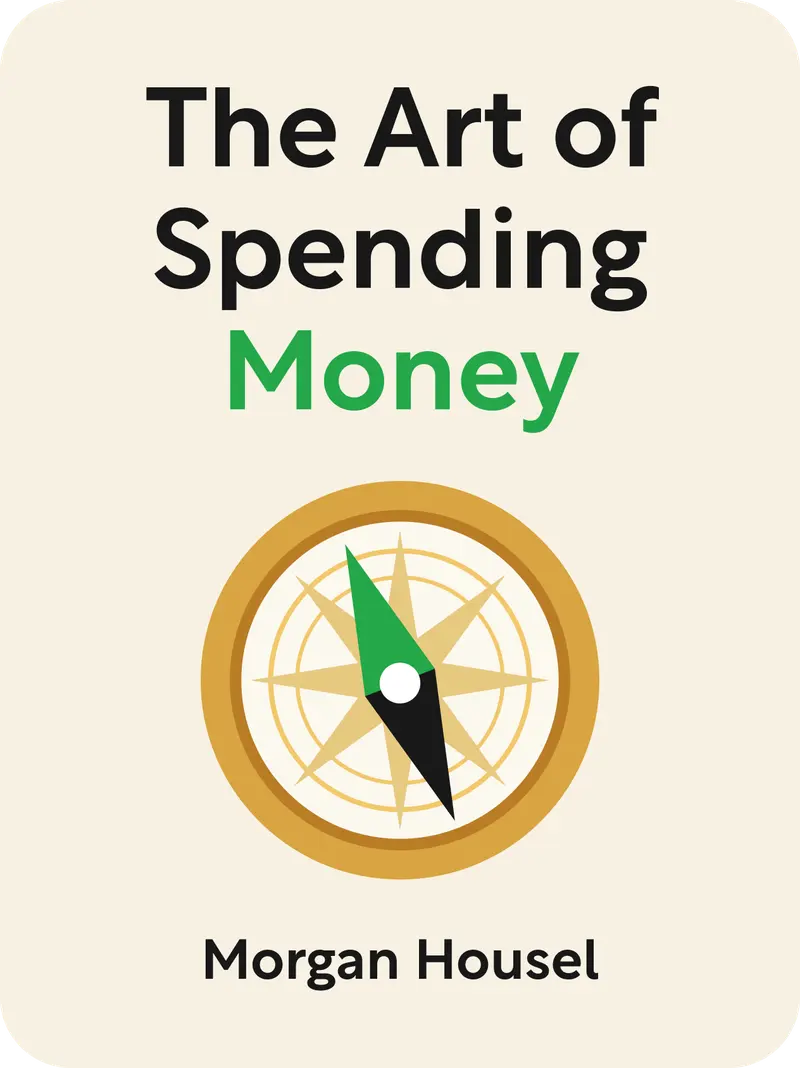
"The Art of Spending Money" is a strong fit if you want practical ideas around finance, psychology, especially themes like spending is an art, not a science. align it with your values; happiness depends on the gap between income and expectations, not on income alone. The MinuteRead summary distills these concepts into a focused read, whether you're deciding whether to buy the book or applying its lessons at work.
Motivated to help readers with the world of finance has a strange blind spot. Walk into any bookstore, Morgan Housel wrote “The Art of Spending Money” to package those ideas for a fast, focused read. In “The Art of Spending Money”, Morgan Housel focuses on the world of finance has a strange blind spot. Walk into any bookstore. Through “The Art of Spending Money”, Morgan Housel distills the core ideas on finance into lessons readers can absorb in a single short sitting. Readers turn to this work …
View all summaries by Morgan HouselContinue Reading
Access the complete 30-minute summary and thousands more nonfiction books in the MinuteRead app.

Continue reading the complete summary in the MinuteRead app.