MinuteRead
30 min
Book summary
by John Heins
Premium summary · Opens in the app · 30 min read
Most people approach investing as a game of prediction. They study charts, track momentum, and try to guess where prices will go next week or next month. They treat stocks as ticker symbols that bounce around a screen, disconnected from anything real.
**Author:** John Heins **Estimated Reading Time:** 45 minutes
### What You'll Learn
The mental frameworks that distinguish the world's most successful value investors from the crowd. How to think about intrinsic value, margin of safety, and market psychology. Why patience and emotional discipline matter more than intelligence. The specific research habits, selling strategies, and risk management practices that compound into superior long-term returns.
### Who This Book Is For
Investors who suspect there is more to building wealth than chasing hot stocks and reacting to headlines. Professionals who want to deepen their analytical process. Anyone who has felt the pull of market euphoria or panic and wondered how the great investors remain calm when everyone else is losing their minds.
Most people approach investing as a game of prediction. They study charts, track momentum, and try to guess where prices will go next week or next month. They treat stocks as ticker symbols that bounce around a screen, disconnected from anything real. The world's most successful investors do something entirely different. They treat stocks as partial ownership stakes in actual businesses. They care about what those businesses are worth, not what someone might pay for them tomorrow. And they buy only when the price sits comfortably below that worth. This approach has a name. It is called value investing. And despite decades of academic criticism, despite endless claims that markets are perfectly efficient, despite the rise of algorithms and high-frequency trading, value investing continues to produce extraordinary results for those who practice it with discipline. The problem is that value investing sounds simple but proves remarkably difficult to execute. The difficulty is not intellectual. It is emotional. Buying stocks that everyone hates feels terrible. Holding them while they get cheaper feels worse. Selling popular stocks that keep rising feels like admitting defeat. The entire process runs counter to human nature. John Heins spent years interviewing the most accomplished value investors of our era for Value Investor Insight. He asked them how they think, how they research, how they manage risk, how they decide to sell, and how they handle the psychological weight of going against the crowd. This book distills that wisdom into a coherent philosophy. What emerges is not a formula. There is no checklist that guarantees success. Instead, there is a way of thinking, a set of principles, and a collection of mental habits that tilt the odds in your favor over time. The investors profiled in these pages do not agree on everything. They argue about valuation methods, portfolio concentration, and the role of macroeconomics. But they share a core conviction: that buying assets for less than they are worth, with a margin of safety, is the…
Continue reading in the MinuteRead app
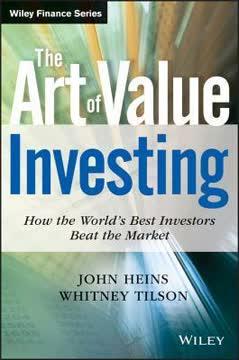
Get the complete 30-minute summary of The Art of Value Investing
Get the complete summary in the appBuy assets for less than they are worth, with a margin of safety.
Invest only within your circle of competence. Know what you do not know.
Markets are mostly efficient but not perfectly efficient. Inefficiency creates opportunity.
Understand the business before you look at the price. A stock is not a ticker symbol.
Research is your edge. Turn over more rocks than the next person.
Think in years, not quarters. Time arbitrage is a genuine advantage.
"The Art of Value Investing" is a strong fit if you want practical ideas around finance, business, personal finance, especially themes like buy assets for less than they are worth, with a margin of safety; invest only within your circle of competence. know what you do not know. The MinuteRead summary distills these concepts into a focused read, whether you're deciding whether to buy the book or applying its lessons at work.
John Heins is the co-founder and Editor-in-Chief of Value Investor Insight, a monthly investment newsletter. He collaborated with Whitney Tilson to create The Art of Value Investing, which compiles insights from their publication. Heins has extensive experience in financial journalism and publishing, having worked with various investment-focused publications. His work focuses on distilling the wisdom of successful value investors and presenting it in an accessible format for readers. While not a…
View all summaries by John HeinsContinue Reading
Access the complete 30-minute summary and thousands more nonfiction books in the MinuteRead app.

Continue reading the complete summary in the MinuteRead app.