MinuteRead
30 min
Book summary
Premium summary · Opens in the app · 30 min read
There is a quiet epidemic that affects millions of people. It does not show up in medical statistics or public health reports, but it damages careers, corrodes relationships, and erodes self-esteem with remarkable efficiency. The epidemic is the inability to communicate assertively.
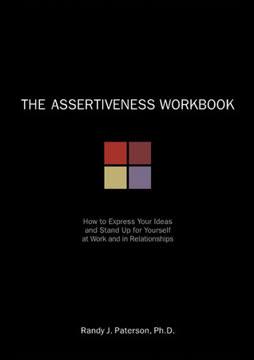
**Author:** Randy J. Paterson **Estimated Reading Time:** 42 minutes
**What You'll Learn:** How to express your thoughts, feelings, and needs clearly and respectfully. You will learn to identify your default communication style, overcome the internal and external barriers that hold you back, master the nonverbal signals that either support or undermine your words, say no without guilt, make requests with confidence, and navigate difficult conversations with composure.
**Who This Book Is For:** Anyone who has ever walked away from a conversation wishing they had spoken up. Anyone who says yes when they mean no. Anyone who struggles to give feedback, receive criticism, or ask for what they want. If you have ever felt invisible in meetings, resentful in relationships, or exhausted from constantly accommodating others, this book is for you.
There is a quiet epidemic that affects millions of people. It does not show up in medical statistics or public health reports, but it damages careers, corrodes relationships, and erodes self-esteem with remarkable efficiency. The epidemic is the inability to communicate assertively. Consider how often you have experienced something like this: A colleague takes credit for your work in a meeting, and you say nothing. A friend repeatedly cancels plans at the last minute, and you pretend it does not bother you. A family member makes a comment that stings, and you laugh it off. A request comes your way that you do not want to fulfill, and you hear yourself agreeing before you have even decided. Each of these moments seems small in isolation. But accumulated over weeks, months, and years, they create a life that does not feel like your own. You become the person who absorbs inconvenience, swallows frustration, and silently resents the very people you wish you could speak to honestly. The problem is not that you lack opinions, feelings, or needs. You have all of these in abundance. The problem is that you have never learned how to express them effectively. Somewhere along the way, you absorbed the message that speaking up is rude, that asking for what you want is selfish, that saying no is unkind, or that conflict is dangerous. These beliefs may have protected you once. Now they imprison you. Randy J. Paterson, a clinical psychologist with decades of experience treating anxiety, depression, and stress-related conditions, has observed this pattern in countless clients. He noticed something important: many people who struggle with mental health challenges also struggle with assertiveness. They cannot set boundaries, cannot advocate for themselves, and cannot express their needs. The result is a life of quiet desperation, punctuated by moments of explosive frustration when the pressure becomes too much. Paterson wrote The Assertiveness Workbook to address this gap. His…
Continue reading in the MinuteRead app
Get the complete 30-minute summary of The Assertiveness Workbook
Get the complete summary in the appAssertiveness is a learnable skill, not a personality trait. You can develop it through practice.
There are four communication styles: passive, aggressive, passive-aggressive, and assertive. The goal is to use the asse
Three main barriers block assertiveness: stress, social fear, and negative beliefs. Identify your barriers and address t
Nonverbal communication often matters more than words. Align your body language and voice tone with your verbal message.
Saying no is essential to controlling your own life. Use clear, direct language and avoid over-explaining.
Making requests is a fundamental assertiveness skill. Use the DESO method: Describe, Express, Specify, Outline.
"The Assertiveness Workbook" is a strong fit if you want practical ideas around self help, psychology, communication, especially themes like assertiveness is a learnable skill, not a personality trait. you can develop it through practice; there are four communication styles: passive, aggressive, passive-aggressive, and assertive. the goal is to use the asse. The MinuteRead summary distills these concepts into a focused read, whether you're deciding whether to buy the book or applying its lessons at work.
Randy J. Paterson is a Canadian psychologist and author based in Vancouver. He founded Changeways Clinic, specializing in cognitive behaviour therapy for mental health issues. Paterson has authored five books, including the award-winning "The Assertiveness Workbook," and created numerous therapy resources. He has conducted over 300 workshops internationally on psychological topics. Paterson maintains a video blog called PsychologySalon and owns an orchard in British Columbia. His work focuses on…
View all summaries by Randy J. PatersonContinue Reading
Access the complete 30-minute summary and thousands more nonfiction books in the MinuteRead app.

Continue reading the complete summary in the MinuteRead app.