MinuteRead
30 min
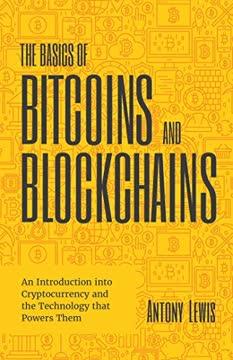
Book summary
by Antony Lewis
Premium summary · Opens in the app · 30 min read
Every few decades, a technology emerges that forces people to reconsider how the world works. The internet was one such technology. It changed how we communicate, how we shop, how we learn, and how we think about information. Blockchain technology, and the cryptocurrencies built upon it, may prove to be another.
**Author:** Antony Lewis
**Estimated Reading Time:** 65 minutes
**What You'll Learn**
You will learn how Bitcoin and other cryptocurrencies actually work, what blockchain technology really is, why digital assets have value, how to navigate exchanges and wallets safely, and what the future might hold for this transformative technology.
**Who This Book Is For**
This book is for anyone who has heard about Bitcoin, Ethereum, or blockchain but feels lost in the noise. Whether you are an investor trying to understand what you are buying, a professional exploring business applications, or simply a curious reader who wants to separate fact from hype, this condensed edition will give you a clear, grounded understanding of the entire landscape.
Every few decades, a technology emerges that forces people to reconsider how the world works. The internet was one such technology. It changed how we communicate, how we shop, how we learn, and how we think about information. Blockchain technology, and the cryptocurrencies built upon it, may prove to be another. Yet for most people, the world of Bitcoin and blockchains remains confusing, intimidating, and filled with contradictory claims. One headline declares that Bitcoin is the future of money. The next warns that it is a speculative bubble. One expert says blockchain will revolutionize every industry. Another dismisses it as a solution in search of a problem. In the middle of this noise stands the ordinary person, trying to understand what any of it means. Antony Lewis wrote this book to solve that problem. Having worked in traditional finance at institutions like Credit Suisse before moving into the cryptocurrency space, Lewis understands both worlds. He knows how bankers think and how technologists think. More importantly, he knows how to explain complex technical concepts in language that makes sense to people without a computer science degree. The central problem this book addresses is not a lack of information. There is plenty of information about Bitcoin and blockchain available online. The problem is that most of it assumes too much prior knowledge, or it comes from people with a vested interest in either promoting or attacking the technology. Lewis offers something different: a balanced, technically accurate, and genuinely educational introduction to the subject. Why does this matter? Because blockchain technology and digital assets are not going away. They have already begun to reshape conversations about money, finance, governance, and digital ownership. Understanding the basics will help you make better decisions, whether you are considering an investment, evaluating a business opportunity, or simply trying to participate in conversations about the future of technology. The book begins with foundational concepts: what money is, how it has evolved, and why digital currencies represent a meaningful step in that evolution. It…
Continue reading in the MinuteRead app
Get the complete 30-minute summary of The Basics of Bitcoins and Blockchains
Get the complete summary in the appBlockchain is a collection of technologies that can be combined in different ways, like a bag of Legos.
Money is whatever people collectively agree to use as money.
Bitcoin is decentralized digital money that can be transferred without any third party approving or denying the transact
Cryptographic hash functions and digital signatures are the foundation of blockchain security.
Control of private keys equals control of cryptocurrency. Not your keys, not your coins.
Bitcoin transactions are pseudonymous, not anonymous.
"The Basics of Bitcoins and Blockchains" is a strong fit if you want practical ideas around finance, technology, economics, especially themes like blockchain is a collection of technologies that can be combined in different ways, like a bag of legos; money is whatever people collectively agree to use as money. The MinuteRead summary distills these concepts into a focused read, whether you're deciding whether to buy the book or applying its lessons at work.
Antony Lewis is an expert in the field of cryptocurrencies and blockchain technology. With extensive experience in the financial sector, Lewis has worked with various institutions to implement blockchain solutions. He is known for his ability to explain complex technical concepts in a clear and accessible manner. Lewis's background includes positions at Credit Suisse and itBit, a bitcoin exchange. He has been involved in the cryptocurrency space since 2013 and has contributed significantly to th…
View all summaries by Antony LewisContinue Reading
Access the complete 30-minute summary and thousands more nonfiction books in the MinuteRead app.

Continue reading the complete summary in the MinuteRead app.