MinuteRead
30 min
Book summary
by Doctor Daniel Crosby
Premium summary · Opens in the app · 30 min read
Financial markets are often described as mathematical systems. We imagine them as vast machines processing information, pricing assets with cold precision, and rewarding those who can calculate better than others. This image is comforting because it suggests that investing is a problem of intelligence. If we could just be smarter, faster, or better informed, we would succeed.
**Author:** Doctor Daniel Crosby
**Estimated Reading Time:** 42 minutes
**What You'll Learn:**
- Why your brain is fundamentally mismatched with financial markets - How evolution shaped instincts that sabotage investment decisions - The role of ego, emotion, and attention in destroying returns - Why both passive and active investing have serious limitations - How to build a rules-based system that protects you from yourself
**Who This Book Is For:**
Anyone who has ever made an investment decision they later regretted. Anyone who has watched a stock soar and felt the urge to buy at the top. Anyone who has sold in a panic only to watch the market recover without them. If you have a brain that evolved for survival on the savanna and you are trying to navigate modern financial markets, this book is for you.
Financial markets are often described as mathematical systems. We imagine them as vast machines processing information, pricing assets with cold precision, and rewarding those who can calculate better than others. This image is comforting because it suggests that investing is a problem of intelligence. If we could just be smarter, faster, or better informed, we would succeed. The reality is far messier. Markets are not mathematical systems. They are social systems. They are collections of human beings making decisions while tired, scared, greedy, overconfident, and distracted. Every price on every screen represents millions of individual choices filtered through brains that evolved for a completely different world. Consider the timeline. The human brain reached its modern form roughly 150,000 years ago. For nearly all of that time, our ancestors lived in small groups, faced immediate physical threats, and made decisions with short feedback loops. A bad decision meant a predator attack or a failed hunt. A good decision meant survival for another day. The brain optimized for quick reactions, social conformity, and avoiding losses. Financial markets, by contrast, are roughly 400 years old. The first stock exchange opened in Amsterdam in 1602. Modern portfolio theory emerged in the 1950s. Index funds arrived in the 1970s. The cognitive demands of investing are radically different from the cognitive demands of survival, yet we bring the same ancient hardware to the task. This mismatch explains why intelligent people make terrible investment decisions. It explains why doctors, lawyers, engineers, and business owners, people who excel in their fields, routinely underperform simple index funds. It explains why we buy high and sell low, why we chase hot stocks, why we panic during downturns, and why we stubbornly hold losing positions hoping they will recover. The problem is not a lack of information. We have more financial data than ever before. The problem is not a lack of intelligence. The…
Continue reading in the MinuteRead app
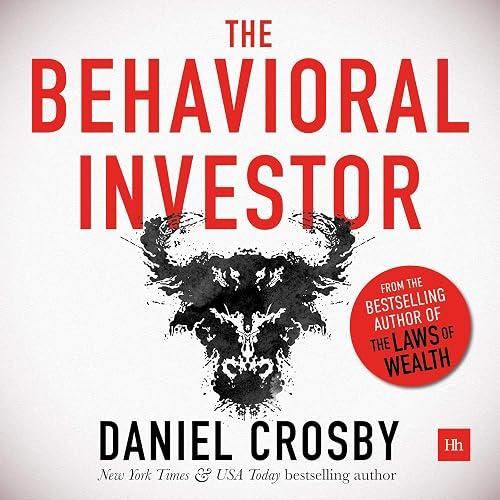
Get the complete 30-minute summary of The Behavioral Investor
Get the complete summary in the appMarkets are driven by human psychology, not mathematics.
Your brain evolved for survival, not for investing.
Overconfidence destroys returns. Humility protects them.
Familiarity is not safety. Challenge your existing holdings.
Attention bias makes recent events seem more important than they are.
Emotions cannot be suppressed, only managed.
"The Behavioral Investor" is a strong fit if you want practical ideas around finance, psychology, business, especially themes like markets are driven by human psychology, not mathematics; your brain evolved for survival, not for investing. The MinuteRead summary distills these concepts into a focused read, whether you're deciding whether to buy the book or applying its lessons at work.
Motivated to help readers with "There is no understanding markets without understanding people." Human Nature Drives Markets, Doctor Daniel Crosby wrote “The Behavioral Investor” to package those ideas for a fast, focused read. In “The Behavioral Investor”, Doctor Daniel Crosby focuses on "There is no understanding markets without understanding people." Human Nature Drives Markets. Through “The Behavioral Investor”, Doctor Daniel Crosby distills the core ideas on finance into lessons readers can…
Continue Reading
Access the complete 30-minute summary and thousands more nonfiction books in the MinuteRead app.

Continue reading the complete summary in the MinuteRead app.