MinuteRead
30 min
Book summary
Premium summary · Opens in the app · 30 min read
For more than sixty years, Americans have been told a simple story about fat. Saturated fat clogs arteries. Clogged arteries cause heart attacks. Therefore, eating less saturated fat will save your life. This story has been repeated so often, with such conviction, by so many authoritative voices, that it has come to feel like an established fact of nature, as certain as gravity.
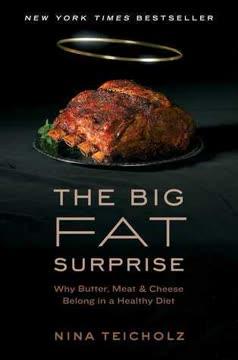
**Author:** Nina Teicholz
**Estimated Reading Time:** 45 minutes
**What You'll Learn:**
- Why saturated fat was wrongly blamed for heart disease - How weak science became entrenched dietary dogma - What the real evidence says about fats, carbohydrates, and health - Why the Mediterranean Diet may be more myth than miracle - How the food industry shaped what you believe about nutrition - What a genuinely evidence-based approach to eating looks like
**Who This Book Is For:**
Anyone who has ever felt confused by conflicting nutrition advice. Anyone who has dutifully avoided butter, eggs, and red meat only to watch obesity and diabetes rates climb. Anyone who suspects that the official dietary guidelines might be built on a shaky foundation. And anyone who wants to understand how science, politics, and industry money combined to create one of the most influential and least examined dietary experiments in human history.
For more than sixty years, Americans have been told a simple story about fat. Saturated fat clogs arteries. Clogged arteries cause heart attacks. Therefore, eating less saturated fat will save your life. This story has been repeated so often, with such conviction, by so many authoritative voices, that it has come to feel like an established fact of nature, as certain as gravity. But what if the story is wrong? Nina Teicholz spent nearly a decade asking that question. She read thousands of studies. She interviewed the researchers who conducted the original experiments. She traveled to archives and pored over documents that had been forgotten for decades. What she found was not a minor correction to the official story. It was a complete unraveling. The diet-heart hypothesis, the idea that saturated fat causes heart disease, was never proven. It was promoted. The evidence supporting it was thin from the beginning, and it grew thinner over time. Yet the hypothesis did not collapse under the weight of contradictory findings. It hardened into dogma. It became the foundation of dietary guidelines in the United States and around the world. It reshaped the food supply. It changed what billions of people ate every day. And it failed. During the decades when Americans dutifully reduced their saturated fat intake, replacing butter with margarine, red meat with pasta, eggs with cereal, the rates of obesity, diabetes, and heart disease did not fall. They rose. Dramatically. The low-fat experiment, conducted on an entire population without their informed consent, did not produce the promised results. In many ways, it made things worse. This book is the story of how that happened. It is a work of investigative journalism that reads like a detective story, following the trail of evidence through laboratories, government hearings, industry boardrooms, and the kitchens of…
Continue reading in the MinuteRead app
Get the complete 30-minute summary of The Big Fat Surprise
Get the complete summary in the appThe diet-heart hypothesis, which blamed saturated fat for heart disease, was never proven. It was promoted by influentia
The Seven Countries Study, the most famous evidence for the hypothesis, was methodologically flawed and excluded data th
Saturated fat was a valued part of the human diet for most of history, and heart disease was rare during periods of high
The Mediterranean Diet is based on weak evidence from a small number of men in post-war Greece, collected during Lent.
Trans fats, introduced as a replacement for saturated fats, turned out to be far more harmful than the fats they replace
The Women's Health Initiative, the largest dietary trial ever conducted, found no benefits from a low-fat diet.
"The Big Fat Surprise" is a strong fit if you want practical ideas around health & fitness, health, nutrition, especially themes like the diet-heart hypothesis, which blamed saturated fat for heart disease, was never proven. it was promoted by influentia; the seven countries study, the most famous evidence for the hypothesis, was methodologically flawed and excluded data th. The MinuteRead summary distills these concepts into a focused read, whether you're deciding whether to buy the book or applying its lessons at work.
Nina Teicholz is an investigative science journalist and author known for her work on nutrition and food policy. She spent nearly a decade researching and writing "The Big Fat Surprise," which challenges long-held beliefs about dietary fats. Teicholz has written for publications such as The Wall Street Journal and The New York Times. Her work has been controversial, with some praising her for exposing flaws in nutrition science and others criticizing her conclusions. Teicholz continues to advoca…
View all summaries by Nina TeicholzContinue Reading
Access the complete 30-minute summary and thousands more nonfiction books in the MinuteRead app.

Continue reading the complete summary in the MinuteRead app.