MinuteRead
30 min
Book summary
by Amy Webb
Premium summary · Opens in the app · 30 min read
Every so often, humanity crosses a threshold that changes everything that follows. The invention of agriculture transformed nomadic tribes into civilizations. The printing press democratized knowledge and sparked revolutions. The Industrial Revolution reorganized how people worked, lived, and related to one another. Artificial intelligence represents another such threshold, and we are crossing it right now, mostly without realizing how much is at stake.
**Author:** Amy Webb
**Estimated Reading Time:** 45 minutes
**What You'll Learn:**
- Why a small group of companies and countries now controls the future of artificial intelligence - How the race between American and Chinese AI development shapes your daily life - What artificial general intelligence could mean for humanity within your lifetime - Why current AI systems cannot explain their own decisions - How you can influence the direction of AI development starting today
**Who This Book Is For:**
This book is for anyone who senses that artificial intelligence is reshaping the world but feels uncertain about what that actually means. You do not need a technical background. You need curiosity about the forces shaping your future, concern about who controls powerful technologies, and a willingness to think seriously about choices that will affect generations to come.
Every so often, humanity crosses a threshold that changes everything that follows. The invention of agriculture transformed nomadic tribes into civilizations. The printing press democratized knowledge and sparked revolutions. The Industrial Revolution reorganized how people worked, lived, and related to one another. Artificial intelligence represents another such threshold, and we are crossing it right now, mostly without realizing how much is at stake. The problem is not that AI is developing too quickly. The problem is that its development is being shaped by an extraordinarily small group of people who share similar backgrounds, similar educations, similar worldviews, and similar blind spots. These people are not villains. They are engineers, executives, and researchers working inside a handful of powerful companies and government programs. But their decisions about what AI should do, whom it should serve, and how it should behave are being made without broad public input, without meaningful oversight, and often without full awareness of the consequences. Amy Webb wrote The Big Nine to illuminate this situation. She is a futurist who has spent years studying how emerging technologies reshape societies. Her concern is not that AI will suddenly become conscious and turn against humanity. Her concern is more subtle and more urgent: AI is already making decisions about who gets loans, who gets hired, who gets stopped by police, and what information people see. These decisions are being made by systems that reflect the values, assumptions, and biases of their creators. And most people have no idea this is happening. The book's title refers to nine companies that dominate AI development. In the United States, they are Google, Microsoft, Amazon, Facebook, IBM, and Apple, collectively known as the G-MAFIA. In China, they are Baidu, Alibaba, and Tencent, collectively known as the BAT. These nine companies control the vast majority of AI research funding, the largest pools of user data, and the…
Continue reading in the MinuteRead app
Get the complete 30-minute summary of The Big Nine
Get the complete summary in the appAI is the third era of computing, following tabulating machines and programmable computers.
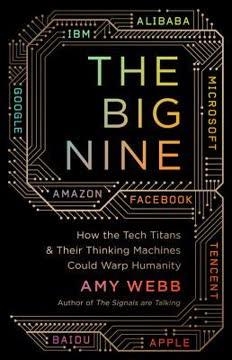
Nine companies dominate AI development: Google, Microsoft, Amazon, Facebook, IBM, Apple, Baidu, Alibaba, and Tencent.
The American approach to AI is driven by market forces, while the Chinese approach is driven by state direction.
AI systems learn from data, which means they reflect the biases and values embedded in that data.
Many AI systems are black boxes that cannot explain their decisions, which undermines accountability.
The surveillance economy depends on collecting vast amounts of user data, creating incentives that conflict with privacy
"The Big Nine" is a strong fit if you want practical ideas around technology, business, artificial intelligence, especially themes like ai is the third era of computing, following tabulating machines and programmable computers; nine companies dominate ai development: google, microsoft, amazon, facebook, ibm, apple, baidu, alibaba, and tencent. The MinuteRead summary distills these concepts into a focused read, whether you're deciding whether to buy the book or applying its lessons at work.
Amy Webb is a renowned futurist, author, and technology expert. She has been recognized by Forbes, BBC, and Thinkers50 for her influential work. Webb has authored several acclaimed books on technology and business, including "The Big Nine" and "The Signals Are Talking." Her writing has received numerous awards and accolades. Webb collaborates with Hollywood on science and technology-related projects, including TV shows and commercials. She is a member of the Academy of Television Arts & Sciences…
View all summaries by Amy WebbContinue Reading
Access the complete 30-minute summary and thousands more nonfiction books in the MinuteRead app.

Continue reading the complete summary in the MinuteRead app.