MinuteRead
30 min
Book summary
Premium summary · Opens in the app · 30 min read
Most books about investing are written for professionals. They are filled with formulas, jargon, and assumptions that make sense only if you manage billions of dollars. The average person who reads them walks away feeling more confused than before. They learn that investing is complicated, that experts disagree, and that the safest path is probably to hand their money over to someone else and hope for the best.
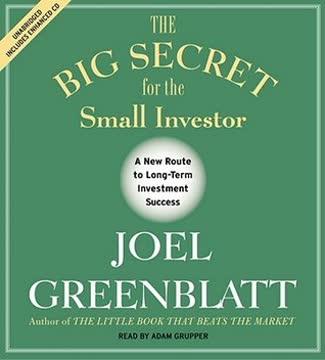
**Author:** Joel Greenblatt
**Estimated Reading Time:** 45 minutes
**What You'll Learn:**
- Why most professional money managers fail to beat the market - How to think about business value in a way that gives you an edge - The surprising flaws in traditional index funds - A systematic approach to value investing that works for ordinary people - How to overcome the psychological traps that sabotage most investors
**Who This Book Is For:**
This book is for anyone who wants to invest their own money but feels overwhelmed by the complexity of financial markets. It is for the small investor who suspects the game is rigged against them, who has heard that index funds are the only sensible choice but wonders if there is something better. It is for people who want to understand what investing actually means, not just which buttons to push on a brokerage app.
Most books about investing are written for professionals. They are filled with formulas, jargon, and assumptions that make sense only if you manage billions of dollars. The average person who reads them walks away feeling more confused than before. They learn that investing is complicated, that experts disagree, and that the safest path is probably to hand their money over to someone else and hope for the best. Joel Greenblatt wrote this book to change that. He believes the small investor has been sold a story that is not quite true. The story goes like this: markets are efficient, professional managers know what they are doing, and ordinary people cannot compete. The best you can do is buy a broad index fund, minimize your fees, and wait. There is truth in that story. Most actively managed mutual funds do underperform the market after fees. Most individual investors do make costly mistakes. The odds do favor the patient owner of a low-cost index fund over the typical stock picker. But Greenblatt argues there is a deeper truth that most people never hear. The market is not always rational. Prices do not always reflect value. And the same forces that cause professional managers to fail also create opportunities for those who understand what is actually going on. The problem is not that beating the market is impossible. The problem is that most people go about it the wrong way. They try to predict which stocks will go up next week. They chase hot sectors. They listen to television pundits who sound confident but know nothing. They buy when they feel optimistic and sell when they feel scared. In other words, they do everything that guarantees poor results. Greenblatt's approach is different. He starts with a simple question: what is a business actually worth? If…
Continue reading in the MinuteRead app
Get the complete 30-minute summary of The Big Secret for the Small Investor
Get the complete summary in the appFigure out what something is worth, then pay a lot less.
Price and value are different. The gap between them is where opportunity lives.
Valuing a business is hard, but you only need to be approximately right.
A margin of safety protects you from your own errors.
Most professional money managers do not beat the market after fees.
Traditional index funds have a hidden flaw: they overweight overvalued stocks.
"The Big Secret for the Small Investor" is a strong fit if you want practical ideas around finance, business, personal finance, especially themes like figure out what something is worth, then pay a lot less; price and value are different. the gap between them is where opportunity lives. The MinuteRead summary distills these concepts into a focused read, whether you're deciding whether to buy the book or applying its lessons at work.
Joel Greenblatt is a prominent figure in the investment world, known for his role as a hedge fund manager and founder of Gotham Capital. Joel Greenblatt is also an accomplished author and academic, serving as an adjunct professor at Columbia University's Graduate School of Business. His expertise extends beyond managing investments, as he has held positions such as chairman of the board at Alliant Techsystems and founded the New York Securities Auction Corporation. Greenblatt's contributions to …
View all summaries by Joel GreenblattContinue Reading
Access the complete 30-minute summary and thousands more nonfiction books in the MinuteRead app.

Continue reading the complete summary in the MinuteRead app.