MinuteRead
30 min
Book summary
Premium summary · Opens in the app · 30 min read
Imagine standing in Amsterdam in the year 1700. The city hums with commerce. Ships from every corner of the known world crowd its harbor. Merchants trade shares in joint-stock companies, farmers use advanced techniques to coax abundance from reclaimed land, and ordinary citizens enjoy a standard of living unmatched anywhere on earth. Now travel south to Madrid, where gold and silver from the Americas have flowed for two centuries. The streets should gleam with wealth. Instead, the Spanish empire
**Author:** William J. Bernstein **Estimated Reading Time:** 45 minutes
**What You'll Learn:** Why some nations became wealthy while others remained poor, the four institutional pillars that make prosperity possible, and how the modern world's economic landscape was shaped by decisions made centuries ago.
**Who This Book Is For:** Anyone who wants to understand the deep historical roots of economic growth, investors seeking perspective on why institutions matter more than resources, and readers curious about the forces that created the modern world.
Imagine standing in Amsterdam in the year 1700. The city hums with commerce. Ships from every corner of the known world crowd its harbor. Merchants trade shares in joint-stock companies, farmers use advanced techniques to coax abundance from reclaimed land, and ordinary citizens enjoy a standard of living unmatched anywhere on earth. Now travel south to Madrid, where gold and silver from the Americas have flowed for two centuries. The streets should gleam with wealth. Instead, the Spanish empire lurches from one bankruptcy to the next, its manufacturing base crumbling, its brightest minds expelled or silenced. Why did one small, waterlogged republic become the wealthiest society in human history while a vast empire controlling the world's richest mines stagnated and declined? This question sits at the heart of William Bernstein's investigation into the origins of prosperity. The answer is not what most people expect. It is not natural resources. Spain had more silver than any nation could dream of, and it ruined them. It is not intelligence or work ethic. The industriousness of Chinese peasants or Ottoman artisans was never in question. It is not even technology in isolation. The printing press existed in the Ottoman Empire, but it was banned for centuries. Bernstein argues that prosperity emerges from something deeper: a set of institutions that either encourage or strangle human creativity, investment, and exchange. When the right institutions align, economic growth becomes not just possible but explosive. When they are absent, even the most resource-rich societies remain trapped in poverty. The stakes of this question could not be higher. Before roughly 1820, almost all humans lived in what we would now consider extreme poverty. Life expectancy was short, hunger was common, and economic growth was so slow as to be imperceptible. Then something remarkable happened. A handful of nations, concentrated in northwestern Europe, broke free from the ancient constraints on human prosperity. Their incomes began to rise, and they have never stopped rising since. Understanding how this happened is not merely an academic exercise. It holds the key to understanding why billions of people today still live in poverty and what might be done about it. Bernstein's approach is distinctive because he refuses to reduce economic development to…
Continue reading in the MinuteRead app
Get the complete 30-minute summary of The Birth of Plenty
Get the complete summary in the appProsperity comes from institutions, not resources. The Dutch became wealthy in a swamp while Spain stagnated despite its
Four pillars are necessary for sustained growth: property rights, scientific rationalism, capital markets, and efficient
Property rights give people the confidence to invest and innovate. Without them, no one will build for the future.
Scientific rationalism drives innovation by valuing observation, experimentation, and open inquiry over tradition and au
Capital markets mobilize savings and channel them into productive investments, dramatically reducing the cost of capital
Efficient transportation and communication expand markets and enable specialization, transforming fragmented economies i
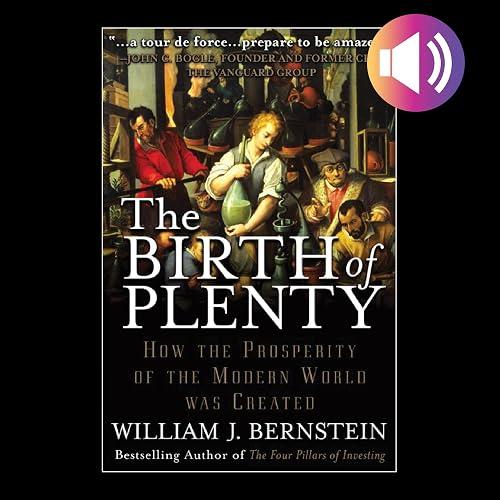
"The Birth of Plenty" is a strong fit if you want practical ideas around history, economics, business, especially themes like prosperity comes from institutions, not resources. the dutch became wealthy in a swamp while spain stagnated despite its; four pillars are necessary for sustained growth: property rights, scientific rationalism, capital markets, and efficient. The MinuteRead summary distills these concepts into a focused read, whether you're deciding whether to buy the book or applying its lessons at work.
Motivated to help readers with world history and economics by American author William J, William J. Bernstein wrote “The Birth of Plenty” as a practical guide drawn from years of experience and research. In “The Birth of Plenty”, William J. Bernstein focuses on not until all four of these factors—property rights. Through “The Birth of Plenty”, William J. Bernstein distills the core ideas on history into lessons readers can absorb in a single short sitting. Readers turn to this work when they wan…
View all summaries by William J. BernsteinContinue Reading
Access the complete 30-minute summary and thousands more nonfiction books in the MinuteRead app.

Continue reading the complete summary in the MinuteRead app.