MinuteRead
16 min
Book summary
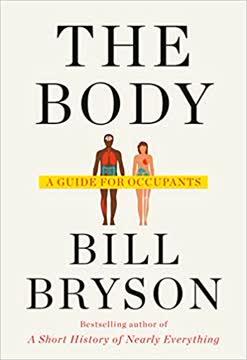
by Bill Bryson
Premium summary · Opens in the app · 30 min read
We pass our entire lives inside a warm, pulsing, thinking, self-repairing miracle and almost never stop to consider it. The average person will spend about seventy years in continuous occupancy of a body, and yet most of us could not explain the basic functions of the pancreas, describe what the spleen actually does, or say how many bones we have with any confidence. We are, in a very real sense, strangers to ourselves.
### By Bill Bryson
**Estimated Reading Time:** 45 minutes
**What You'll Learn**
The human body is the most complex structure in the known universe, yet most of us wander through life with almost no understanding of how it actually works. This condensed edition takes you on a journey through your own interior, revealing the astonishing engineering, the strange history of discovery, and the quiet miracles that keep you alive from moment to moment. You will learn how trillions of cells coordinate without any central planner, why your brain is weirder than you think, what your immune system is doing right now, and how the food you ate today becomes, temporarily, you.
**Who This Book Is For**
This book is for anyone who has ever wondered what is actually happening inside their own skin. It is for the curious, the grateful, and the slightly bewildered. You do not need a science background. You only need a body and a willingness to be astonished by it.
We pass our entire lives inside a warm, pulsing, thinking, self-repairing miracle and almost never stop to consider it. The average person will spend about seventy years in continuous occupancy of a body, and yet most of us could not explain the basic functions of the pancreas, describe what the spleen actually does, or say how many bones we have with any confidence. We are, in a very real sense, strangers to ourselves. Bill Bryson wrote this book to fix that. He is not a doctor or a scientist. He is a curious outsider who spent years talking to researchers, reading studies, visiting laboratories, and asking the questions most of us never think to ask. What he found is that the human body is far stranger, more magnificent, and more improbably successful than most of us ever imagine. Consider a few numbers. You are composed of about 37 trillion cells, each one a tiny factory performing millions of chemical reactions every second. Your DNA, if stretched out, would reach beyond the solar system. Your heart will beat roughly three billion times in a lifetime. Your brain contains more connections than there are stars in the Milky Way. You are, by any measure, the most complex object known to exist. And yet you did not have to learn how to be any of this. Your heart started beating before you were born and has not stopped since. Your immune system identifies and destroys threats you never knew existed. Your cells are constantly dividing, dying, and being replaced without your conscious involvement. You are a walking, talking, self-maintaining ecosystem of staggering sophistication. The problem is that we take all of this for granted until something goes wrong. We…
Continue reading in the MinuteRead app
Get the complete 30-minute summary of The Body
Get the complete summary in the appThe human body is the most complex structure in the known universe, composed of 37 trillion cells working in concert wit
The brain constructs your experience of reality. It does not passively record the world. It actively builds it.
The microbiome is essentially an additional organ. You cannot live without your microbes.
Sleep is not optional. It is essential for memory, immunity, emotional regulation, and metabolic health.
The immune system must balance between underactivity and overactivity. Vaccination trains it safely.
Cancer is uncontrolled cell growth caused by accumulated mutations. Age is the biggest risk factor.
"The Body" is a strong fit if you want practical ideas around science, health, biology—especially themes like the human body is the most complex structure in the known universe, composed of 37 trillion cells working in concert wit; the brain constructs your experience of reality. it does not passively record the world. it actively builds it. The MinuteRead summary distills these concepts into a focused read, whether you're deciding whether to buy the book or applying its lessons at work.
William McGuire Bryson is an American-British author known for his non-fiction works on travel, language, and science. Born in the United States, he has spent most of his adult life in Britain and holds dual citizenship. Bryson served as chancellor of Durham University from 2005 to 2011. His notable books include "Notes from a Small Island" and "A Short History of Nearly Everything." In 2020, Bryson announced his retirement from writing books but later recorded an audiobook for Audible in 2022. …
View all summaries by Bill BrysonContinue Reading
Access the complete 30-minute summary and thousands more nonfiction books in the MinuteRead app.

Continue reading the complete summary in the MinuteRead app.