MinuteRead
30 min
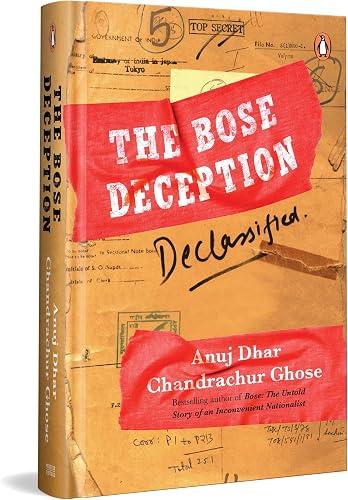
Book summary
by Anuj Dhar & Chandrachur Ghose
Premium summary · Opens in the app · 30 min read
On August 18, 1945, the world was told that Subhas Chandra Bose, the most formidable Indian revolutionary of his generation, had died in a plane crash in Taipei, Taiwan. The announcement came from Japan, then under American occupation, and was relayed to a war-weary India still processing the trauma of Partition and the exhilaration of independence. The body, it was said, had been cremated. The ashes were kept at Renkoji Temple in Tokyo. The matter, officially, was closed.
**Authors:** Anuj Dhar & Chandrachur Ghose **Estimated Reading Time:** 45 minutes
**What You'll Learn:**
Why the official story of Subhas Chandra Bose's death in a 1945 plane crash has never been accepted by millions of Indians, what declassified government files actually reveal, and how successive governments constructed and maintained a narrative that contradicted their own intelligence assessments.
**Who This Book Is For:**
Anyone interested in modern Indian history, the mechanics of state secrecy, investigative journalism, and the unresolved mystery of one of India's most consequential freedom fighters. This condensed edition is for readers who want to understand not just what happened to Netaji Subhas Chandra Bose, but how institutions conceal inconvenient truths.
On August 18, 1945, the world was told that Subhas Chandra Bose, the most formidable Indian revolutionary of his generation, had died in a plane crash in Taipei, Taiwan. The announcement came from Japan, then under American occupation, and was relayed to a war-weary India still processing the trauma of Partition and the exhilaration of independence. The body, it was said, had been cremated. The ashes were kept at Renkoji Temple in Tokyo. The matter, officially, was closed. It was never closed for the Indian public. From the moment the news broke, millions refused to believe it. Bose was not merely a political leader; he was a symbol of uncompromising resistance, a man who had escaped British surveillance, traveled across continents, built an army from Indian prisoners of war, and challenged the British Empire with the force of arms. To accept his death in a routine plane crash, in a war that had already ended, felt like an insult to the scale of his life. The skepticism was not born of sentimentality alone. It was born of contradictions, silences, and the unmistakable smell of something being hidden. For decades, the Indian government maintained that the Taiwan crash story was the truth. Three official inquiries, the Shah Nawaz Committee of 1956, the Khosla Commission of 1970 to 1974, and the Mukherjee Commission of 1999 to 2005, examined the question. The first two upheld the death theory. The third, after extensive investigation including visits to Russia and Taiwan, rejected it. The Mukherjee Commission concluded that Bose did not die in the plane crash, that the ashes at Renkoji Temple were not his, and that the available evidence pointed toward survival beyond 1945. The Indian government, then led by the Congress party, rejected that report in 2006 without substantive explanation. This book is the product of an extraordinary moment in Indian history: the declassification of over 1,300 secret government files on the Bose mystery beginning in 2016. Anuj Dhar and Chandrachur Ghose, who spent years campaigning for transparency through the Right…
Continue reading in the MinuteRead app
Get the complete 30-minute summary of The Bose Deception: Declassified
Get the complete summary in the appThe official story of Bose's death in a 1945 Taipei plane crash was never proven.
American and British intelligence did not confirm the crash story.
India's Intelligence Bureau believed Bose was headed toward Soviet Russia.
The Mukherjee Commission concluded that Bose did not die in the crash.
The government rejected the commission's report based on a brief ordered to find faults.
The Taiwanese cremation records contradict the Japanese account.
"The Bose Deception: Declassified" is a strong fit if you want practical ideas around history, politics, especially themes like the official story of bose's death in a 1945 taipei plane crash was never proven; american and british intelligence did not confirm the crash story. The MinuteRead summary distills these concepts into a focused read, whether you're deciding whether to buy the book or applying its lessons at work.
Motivated to help readers with on August 18, Anuj Dhar & Chandrachur Ghose wrote “The Bose Deception: Declassified” to package those ideas for a fast, focused read. In “The Bose Deception: Declassified”, Anuj Dhar & Chandrachur Ghose focuses on on August 18. Through “The Bose Deception: Declassified”, Anuj Dhar & Chandrachur Ghose distills the core ideas on history into lessons readers can absorb in a single short sitting. Readers turn to this work when they want Anuj Dhar & Chandrachur Ghose's …
View all summaries by Anuj DharContinue Reading
Access the complete 30-minute summary and thousands more nonfiction books in the MinuteRead app.

Continue reading the complete summary in the MinuteRead app.