MinuteRead
30 min
Book summary
Premium summary · Opens in the app · 30 min read
For centuries, the human brain was understood as a magnificent but fixed machine. Once its circuits were laid down in childhood, the story went, they remained largely immutable. Damage to the brain was permanent. Lost functions were lost forever. The best a patient could hope for was to compensate for deficits, never to truly recover from them.
**Author:** Norman Doidge, M.D.
**Estimated Reading Time:** 45 minutes
**What You'll Learn:** How the brain's remarkable ability to rewire itself offers new hope for chronic pain, Parkinson's disease, traumatic brain injury, and other neurological conditions. You'll discover the specific techniques, technologies, and approaches that are helping patients recover functions once considered permanently lost.
**Who This Book Is For:** Anyone living with a neurological condition, caring for someone who is, or simply fascinated by the brain's untapped potential. This book is also essential reading for healthcare practitioners who want to understand the emerging landscape of neuroplastic healing.
For centuries, the human brain was understood as a magnificent but fixed machine. Once its circuits were laid down in childhood, the story went, they remained largely immutable. Damage to the brain was permanent. Lost functions were lost forever. The best a patient could hope for was to compensate for deficits, never to truly recover from them. This view shaped medicine for generations. Stroke patients were told their recovery would plateau within months. People with chronic pain were told their brains were simply malfunctioning in ways that could only be managed with medication. Those with Parkinson's disease watched their motor control decline with the grim certainty that nothing could reverse the trajectory. Traumatic brain injury patients were given a bleak prognosis and sent home to live with their limitations. Norman Doidge's first book, The Brain That Changes Itself, introduced readers to a revolutionary idea: the brain is plastic. It can change its own structure and function in response to experience, thought, and activity. That book told the story of the scientists who overturned centuries of neurological dogma and the patients whose recoveries defied all expectations. This book goes further. It asks a practical question: if the brain can change, how do we direct that change toward healing? The answer, as Doidge discovered through years of research and clinical observation, is both simpler and more profound than anyone expected. The brain heals through the same processes by which it learns. Light, sound, movement, vibration, and conscious attention can all serve as entry points for triggering the brain's natural repair mechanisms. The body itself, far from being a passive vessel for the brain, turns out to be a powerful instrument for changing it. The stories in this book are not miracles in the supernatural sense. They are the result of understanding how the brain actually works and applying that understanding with patience, precision, and creativity. A man with Parkinson's disease learns to walk normally again by thinking about each step. A woman with chronic pain shrinks her pain circuits through focused visualization. A boy with learning disabilities rewires his brain through sound therapy. A blind woman…
Continue reading in the MinuteRead app
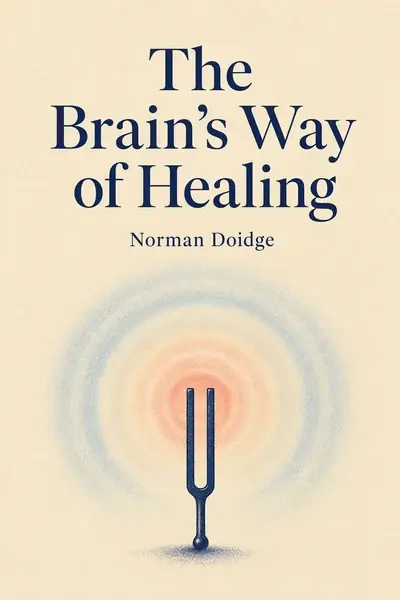
Get the complete 30-minute summary of The Brain's Way of Healing
Get the complete summary in the appThe brain can change its own structure and function throughout life. This capacity, called neuroplasticity, is the found
Neurons that fire together wire together. What you practice grows stronger; what you neglect grows weaker.
Chronic pain is a learned pattern in the brain that can be unlearned through visualization and attention redirection.
Conscious movement can bypass damaged circuits and create new pathways. John Pepper walked his way out of Parkinson's sy
Healing unfolds in stages: cellular repair, neurostimulation, neuromodulation, neurorelaxation, and neurodifferentiation
Light, sound, vibration, and electrical stimulation can all promote brain healing when used correctly.
"The Brain's Way of Healing" is a strong fit if you want practical ideas around health & fitness, science, psychology, especially themes like the brain can change its own structure and function throughout life. this capacity, called neuroplasticity, is the found; neurons that fire together wire together. what you practice grows stronger; what you neglect grows weaker. The MinuteRead summary distills these concepts into a focused read, whether you're deciding whether to buy the book or applying its lessons at work.
Norman Doidge, M.D. is a psychiatrist, psychoanalyst, researcher, author, essayist, and poet based in Toronto. He holds faculty positions at Columbia University's Center for Psychoanalytic Training and Research and the University of Toronto's Department of Psychiatry. Doidge is known for his work on neuroplasticity, having authored two New York Times bestsellers on the subject. His writing style combines scientific insights with engaging storytelling, making complex neuroscience accessible to ge…
View all summaries by Norman DoidgeContinue Reading
Access the complete 30-minute summary and thousands more nonfiction books in the MinuteRead app.

Continue reading the complete summary in the MinuteRead app.