MinuteRead
30 min
Book summary
by Robert C. Allen
Premium summary · Opens in the app · 30 min read
Every schoolchild learns that the Industrial Revolution began in Britain. The steam engine, the spinning jenny, the blast furnace: these inventions transformed human existence more profoundly than any development since the invention of agriculture. Before the Industrial Revolution, economic growth was glacial. Most people lived and died in conditions not dramatically different from their ancestors centuries earlier. After it, sustained increases in living standards became the norm, first in Brit
**Author:** Robert C. Allen
**Estimated Reading Time:** 45 minutes
**What You'll Learn:** Why the Industrial Revolution happened in Britain rather than elsewhere, how economics rather than culture drove innovation, and what this reveals about the nature of technological change.
**Who This Book Is For:** Readers interested in economic history, the origins of modern growth, and anyone who wants to understand why the world economy looks the way it does today.
Every schoolchild learns that the Industrial Revolution began in Britain. The steam engine, the spinning jenny, the blast furnace: these inventions transformed human existence more profoundly than any development since the invention of agriculture. Before the Industrial Revolution, economic growth was glacial. Most people lived and died in conditions not dramatically different from their ancestors centuries earlier. After it, sustained increases in living standards became the norm, first in Britain, then across Europe, then around the world. But why Britain? Why not France, with its sophisticated scientific culture? Why not the Netherlands, with its advanced commercial institutions? Why not China, with its long history of technical ingenuity? For generations, historians offered answers that emphasized British exceptionalism. Some pointed to political institutions: Britain's constitutional monarchy, its protection of property rights, its relatively free markets. Others emphasized culture: a Protestant work ethic, an empirical scientific tradition, a pragmatic entrepreneurial spirit. Still others pointed to natural resources: abundant coal, accessible waterways, a favorable geography. Robert C. Allen's argument is different. He contends that the Industrial Revolution happened in Britain because it paid to invent it there. The key was not British genius or British virtue, but British prices. In eighteenth-century Britain, wages were unusually high by global standards. British workers earned significantly more than their counterparts in France, Germany, Italy, or Asia. At the same time, energy was extraordinarily cheap. Britain sat on vast coal deposits, and by the eighteenth century, a sophisticated infrastructure had developed to extract and transport that coal. The result was a unique economic environment: expensive labor, cheap capital, and cheap energy. This combination created powerful incentives. When labor is expensive and energy is cheap, it makes economic sense to develop machines that use more energy and less labor. When labor is cheap and energy is expensive, as in most of the world, such machines make no economic sense at all. The steam engine, which consumed enormous quantities of coal but saved labor, was a brilliant investment in Britain and a losing proposition almost everywhere else. This insight reframes the Industrial Revolution. It was not primarily a cultural or political phenomenon, though those factors played supporting roles. It was an economic response to a specific set of prices. British inventors and entrepreneurs did not possess unique genius. They faced…
Continue reading in the MinuteRead app
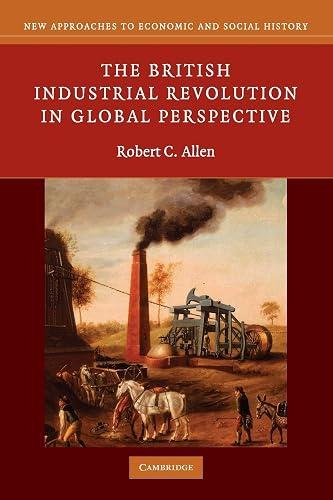
Get the complete 30-minute summary of The British Industrial Revolution in Global Perspective
Get the complete summary in the appThe Industrial Revolution happened in Britain because it paid to invent it there.
British factor prices were unique: high wages and cheap energy.
These factor prices created incentives for labor-saving, energy-using technologies.
The same technologies would not have been profitable in countries with different factor prices.
Britain's factor prices emerged from its success in global trade.
Invention is an economic activity, driven by the expectation of profit.
"The British Industrial Revolution in Global Perspective" is a strong fit if you want practical ideas around history, economics, technology, especially themes like the industrial revolution happened in britain because it paid to invent it there; british factor prices were unique: high wages and cheap energy. The MinuteRead summary distills these concepts into a focused read, whether you're deciding whether to buy the book or applying its lessons at work.
Motivated to help readers with the Industrial Revolution, Robert C. Allen wrote “The British Industrial Revolution in Global Perspective” to package those ideas for a fast, focused read. In “The British Industrial Revolution in Global Perspective”, Robert C. Allen focuses on the Industrial Revolution. Through “The British Industrial Revolution in Global Perspective”, Robert C. Allen distills the core ideas on history into lessons readers can absorb in a single short sitting. Readers turn to this…
Continue Reading
Access the complete 30-minute summary and thousands more nonfiction books in the MinuteRead app.

Continue reading the complete summary in the MinuteRead app.