MinuteRead
30 min
Book summary
Premium summary · Opens in the app · 30 min read
In 1929, the American stock market collapsed with a force that nearly destroyed the nation's faith in capitalism. In the aftermath, Congress passed landmark legislation designed to protect investors from the excesses that had caused the crash. The Securities Act of 1933, the Securities Exchange Act of 1934, and the Investment Company Act of 1940 created a framework built on a simple premise: those who manage other people's money must act as fiduciaries, placing their clients' interests above the
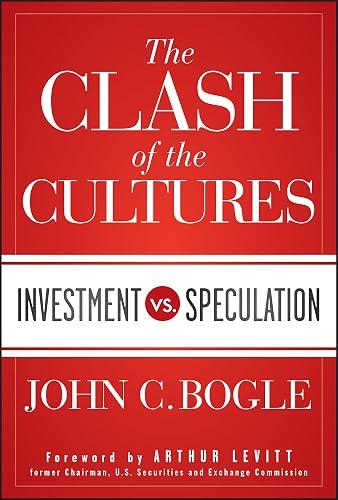
**Author:** John C. Bogle
**Estimated Reading Time:** 45 minutes
**What You'll Learn:**
- Why short-term speculation has overtaken long-term investment as the dominant force in financial markets - How the mutual fund industry abandoned its fiduciary roots for salesmanship - Why index funds represent the triumph of patient investing over speculation - What the "double-agency" problem means for your retirement savings - How to protect yourself from the excesses of modern finance
**Who This Book Is For:**
This book is for anyone who owns a mutual fund, contributes to a 401(k), or wonders why the financial system seems designed to enrich intermediaries rather than investors. It is for the individual saver who suspects that the game is rigged and wants to understand exactly how. It is for the young investor building a portfolio from scratch and the retiree trying to preserve capital. Most of all, it is for anyone who believes that capitalism should serve the many, not enrich the few.
In 1929, the American stock market collapsed with a force that nearly destroyed the nation's faith in capitalism. In the aftermath, Congress passed landmark legislation designed to protect investors from the excesses that had caused the crash. The Securities Act of 1933, the Securities Exchange Act of 1934, and the Investment Company Act of 1940 created a framework built on a simple premise: those who manage other people's money must act as fiduciaries, placing their clients' interests above their own. For decades, that framework worked reasonably well. Mutual funds were small, conservative institutions run by trustees who viewed themselves as stewards of their shareholders' capital. Stock turnover was low. Costs were modest. The relationship between investor and manager was built on trust. Then something changed. Beginning in the 1980s and accelerating through the 1990s and 2000s, the financial industry underwent a transformation so profound that it now bears little resemblance to the system those Depression-era laws were designed to govern. The patient, long-term investor of the mid-twentieth century has been replaced by the hyperactive trader. The mutual fund, once a vehicle for prudent stewardship, has become a product to be marketed. The stock market, once a place where capital flowed to productive enterprises, has become a casino where trillions of dollars change hands daily with no connection to the underlying businesses. John C. Bogle witnessed this transformation from a unique vantage point. As the founder of Vanguard, he created the first index mutual fund in 1976, a product so radical at the time that it was dismissed as "Bogle's Folly." He spent more than six decades in the investment industry, watching it evolve from a profession into a business, from a calling into a sales machine. And he became…
Continue reading in the MinuteRead app
Get the complete 30-minute summary of The Clash of the Cultures
Get the complete summary in the app**Speculation has overtaken investment** as the dominant force in financial markets, with stock turnover increasing from
**The double-agency problem** means that intermediaries often prioritize their own interests over those of the investors
**The mutual fund industry has shifted** from stewardship to salesmanship, with average expense ratios nearly doubling s
**Costs matter enormously.** A 1 percent annual fee consumes nearly a third of your potential wealth over 30 years.
**Index funds are the solution.** They guarantee the market's return at minimal cost and consistently outperform most ac
**Most ETFs are vehicles for speculation**, not investment. Use them only for long-term, broadly diversified exposure.
"The Clash of the Cultures" is a strong fit if you want practical ideas around finance, business, economics, especially themes like **speculation has overtaken investment** as the dominant force in financial markets, with stock turnover increasing from; **the double-agency problem** means that intermediaries often prioritize their own interests over those of the investors. The MinuteRead summary distills these concepts into a focused read, whether you're deciding whether to buy the book or applying its lessons at work.
Motivated to help readers with when enterprise becomes the bubble on a whirlpool of speculation , John C. Bogle wrote “The Clash of the Cultures” to package those ideas for a fast, focused read. In “The Clash of the Cultures”, John C. Bogle focuses on when enterprise becomes the bubble on a whirlpool of speculation . Through “The Clash of the Cultures”, John C. Bogle distills the core ideas on finance into lessons readers can absorb in a single short sitting. Readers turn to this work when they …
View all summaries by John C. BogleContinue Reading
Access the complete 30-minute summary and thousands more nonfiction books in the MinuteRead app.

Continue reading the complete summary in the MinuteRead app.