MinuteRead
30 min
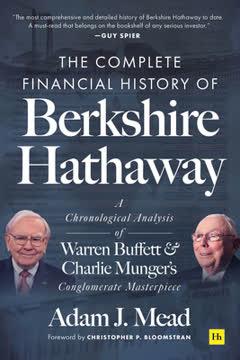
Book summary
by Adam J. Mead
Premium summary · Opens in the app · 30 min read
In the spring of 1965, a young investor from Omaha, Nebraska took control of a dying textile manufacturer in New Bedford, Massachusetts. The company had been losing money for years. Its mills were outdated. Its workforce was shrinking. Its industry was migrating south, then overseas. Most rational observers saw a business in terminal decline.
**Author:** Adam J. Mead
**Estimated Reading Time:** 45 minutes
**What You'll Learn:**
How a failing New England textile mill became one of the most valuable companies in history, the capital allocation principles that drove its extraordinary growth, the role of insurance float as an economic engine, the evolution of Warren Buffett's investment philosophy, and the management culture that allowed dozens of diverse businesses to thrive under one roof.
**Who This Book Is For:**
Investors seeking to understand the mechanics of long-term value creation, business owners who want to build enduring enterprises, students of corporate history, and anyone curious about how disciplined thinking compounds into extraordinary results over decades.
In the spring of 1965, a young investor from Omaha, Nebraska took control of a dying textile manufacturer in New Bedford, Massachusetts. The company had been losing money for years. Its mills were outdated. Its workforce was shrinking. Its industry was migrating south, then overseas. Most rational observers saw a business in terminal decline. Warren Buffett saw something else. He saw a balance sheet with hidden value, a stock price below working capital, and an opportunity to extract whatever remained before the inevitable end. He did not imagine building a conglomerate. He did not envision becoming one of the wealthiest people in history. He certainly did not anticipate that this failing textile mill would become the vehicle for one of the greatest capital allocation achievements ever recorded. The story of Berkshire Hathaway is not simply a story about investing. It is a story about thinking. It is about what happens when someone applies rigorous logic, patience, and an unwavering focus on economic reality to the problem of allocating capital. It is about the power of owning good businesses rather than trading stocks. It is about the compounding effects of trust, autonomy, and long-term orientation. Adam Mead's complete financial history of Berkshire Hathaway traces this journey from its earliest days through its transformation into a diversified powerhouse. What makes this history remarkable is not just the financial results, though those are extraordinary. Berkshire's book value compounded at roughly 24 percent annually for a quarter century, a record unmatched by any other large company over such a long period. What makes it remarkable is the consistency of the underlying principles. The same ideas that guided Buffett in 1965 guided him in 1985 and 1995 and beyond. He did not reinvent his approach with each passing decade. He refined it. He learned from mistakes. He adapted to changing circumstances. But the core remained constant: buy good businesses at sensible prices, let excellent managers run them, and reinvest the profits intelligently. Most books about Berkshire Hathaway focus on the investing lessons. They extract principles and present…
Continue reading in the MinuteRead app
Get the complete 30-minute summary of The Complete Financial History of Berkshire Hathaway
Get the complete summary in the appCapital allocation is the most important job of a CEO. Every dollar should be evaluated against the question: what is th
Time is the friend of the wonderful business and the enemy of the mediocre. Focus on quality.
A moat is a durable competitive advantage. Look for brand strength, cost advantages, network effects, switching costs, a
Insurance float is a powerful source of capital when underwriting is profitable. Discipline matters more than growth.
Buy good businesses at fair prices, not mediocre businesses at bargain prices.
Keep management in place after acquisitions. Trust and autonomy preserve culture.
"The Complete Financial History of Berkshire Hathaway" is a strong fit if you want practical ideas around finance, business, economics, especially themes like capital allocation is the most important job of a ceo. every dollar should be evaluated against the question: what is th; time is the friend of the wonderful business and the enemy of the mediocre. focus on quality. The MinuteRead summary distills these concepts into a focused read, whether you're deciding whether to buy the book or applying its lessons at work.
Adam J. Mead is a respected financial author and analyst known for his extensive research on Berkshire Hathaway. His work demonstrates a deep understanding of Warren Buffett's investment strategies and business principles. Mead's writing style is praised for its clarity in explaining complex financial concepts and providing context for Berkshire's decisions over the decades. His meticulous approach to analyzing Berkshire's history has earned him recognition among value investors and financial pr…
View all summaries by Adam J. MeadContinue Reading
Access the complete 30-minute summary and thousands more nonfiction books in the MinuteRead app.

Continue reading the complete summary in the MinuteRead app.