MinuteRead
30 min
Book summary
Premium summary · Opens in the app · 30 min read
The modern world likes to pretend that power no longer matters. We have democratic institutions, human resources departments, codes of conduct, and cultural norms that emphasize fairness, transparency, and collaboration. We tell ourselves that the age of kings and courtiers is over, that merit alone determines outcomes, and that those who scheme and manipulate eventually get exposed and punished.
**Author:** Robert Greene
**Estimated Reading Time:** 45 minutes
**What You'll Learn:**
- Why direct confrontation and brute force almost always fail - How to make those above you feel secure rather than threatened - The strategic value of silence, patience, and selective disclosure - How to use self-interest as the lever that moves people - Why formlessness and adaptability defeat rigid positions - How to recognize when victory itself becomes your greatest danger
**Who This Book Is For:**
Anyone who operates within hierarchies, which is to say everyone. Whether you navigate a corporate office, a creative industry, a social circle, or a family dynamic, the dynamics of power shape your outcomes. This book is for those who want to understand those dynamics clearly, without illusion, and act strategically rather than react emotionally.
The modern world likes to pretend that power no longer matters. We have democratic institutions, human resources departments, codes of conduct, and cultural norms that emphasize fairness, transparency, and collaboration. We tell ourselves that the age of kings and courtiers is over, that merit alone determines outcomes, and that those who scheme and manipulate eventually get exposed and punished. Robert Greene's central observation is that this belief is not merely wrong. It is dangerous. The world has not become less political. It has only become more sophisticated at hiding its politics. The Renaissance court did not disappear. It transformed into the open-plan office, the startup culture, the academic department, the creative agency, and the social media landscape. In each of these environments, the same dynamics that governed the courts of Europe remain fully operational. People compete for status, resources, and influence. They form alliances and betray them. They flatter those above them and undermine those beside them. They present carefully curated versions of themselves while concealing their true intentions. The difference is that modern courtiers must maintain the appearance of being above such games. The person who openly schemes is punished. The person who schemes while appearing genuine, collaborative, and transparent is rewarded. This is the central paradox Greene identifies: you must play the game of power while appearing not to play it at all. This creates a profound disadvantage for those who take the modern world's stated values at face value. The honest employee who speaks truth to power gets sidelined. The transparent colleague who shares their ambitions openly gets undermined. The principled person who refuses to engage in politics becomes a pawn in other people's games. Meanwhile, those who understand the hidden rules advance steadily, accumulating influence while maintaining spotless reputations. Greene's book is an attempt to level this playing field by making the hidden rules visible. Drawing on three thousand years of history, he distills…
Continue reading in the MinuteRead app
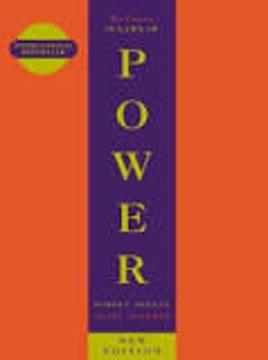
Get the complete 30-minute summary of The Concise 48 Laws of Power
Get the complete summary in the app**Never outshine the master.** Make those above you feel superior. Your talent is a threat to them.
**Talk less than necessary.** Every word you speak is information you give away. Silence creates power.
**Use enemies, not friends.** Friends resent being subordinate. Enemies have something to prove.
**Appeal to self-interest, not gratitude.** People care about their own desires, not your needs.
**Conceal your intentions.** Use honesty strategically. A reputation for integrity creates room to maneuver.
**Crush your enemies completely.** Half-victories breed full revenge. Leave no ember smoldering.
"The Concise 48 Laws of Power" is a strong fit if you want practical ideas around psychology, self help, business, especially themes like **never outshine the master.** make those above you feel superior. your talent is a threat to them; **talk less than necessary.** every word you speak is information you give away. silence creates power. The MinuteRead summary distills these concepts into a focused read, whether you're deciding whether to buy the book or applying its lessons at work.
Robert Greene is a best-selling author and public speaker known for his books on power, strategy, and human behavior. Born in Los Angeles, he studied classical studies at U.C. Berkeley and the University of Wisconsin-Madison. Greene has worked as an editor, writer, and story developer in various locations worldwide. His breakthrough came with "The 48 Laws of Power" in 1998, co-created with Joost Elffers. This book became an international bestseller, translated into 17 languages. Greene has since…
View all summaries by Robert GreeneContinue Reading
Access the complete 30-minute summary and thousands more nonfiction books in the MinuteRead app.

Continue reading the complete summary in the MinuteRead app.