MinuteRead
30 min
Book summary
Premium summary · Opens in the app · 30 min read
In 2008, a young patient walked into Nadine Burke Harris's pediatric clinic in Bayview-Hunters Point, one of San Francisco's poorest neighborhoods. The boy, whom she calls Diego, was seven years old. He had been referred for attention deficit hyperactivity disorder. His teachers said he could not sit still. He was impulsive. He struggled to focus.
**Author:** Nadine Burke Harris, M.D.
**Estimated Reading Time:** 45 minutes
**What You'll Learn:**
- Why childhood adversity is one of the most significant yet overlooked public health crises of our time - How toxic stress physically alters a child's developing brain and body - The science connecting early trauma to heart disease, cancer, depression, and autoimmune disorders decades later - Why your ACE score matters more than your family history in predicting health outcomes - Practical strategies for healing, building resilience, and breaking intergenerational cycles
**Who This Book Is For:**
This book is for parents, educators, healthcare providers, and anyone who has ever wondered why they struggle with health issues that seem disconnected from their current circumstances. It is for people who work with children and want to understand what is really happening beneath behavioral problems. Most importantly, it is for anyone who experienced adversity in childhood and needs to know that their body's responses make scientific sense, and that healing is possible.
In 2008, a young patient walked into Nadine Burke Harris's pediatric clinic in Bayview-Hunters Point, one of San Francisco's poorest neighborhoods. The boy, whom she calls Diego, was seven years old. He had been referred for attention deficit hyperactivity disorder. His teachers said he could not sit still. He was impulsive. He struggled to focus. But something did not add up. When Burke Harris examined Diego, she noticed he was the size of a four-year-old. His growth had stalled. His medical history revealed asthma that had begun in infancy. He had been hospitalized multiple times before his second birthday. His mother confirmed that Diego had witnessed severe domestic violence in his earliest years. His father had been deported. His home life was chaotic and unpredictable. The standard medical approach would have been to prescribe medication for ADHD and move on to the next patient. But Burke Harris had recently read a study that would change the trajectory of her career. It was called the Adverse Childhood Experiences Study, or the ACE Study. What she learned from that research made her look at Diego, and every other child in her clinic, through an entirely new lens. The ACE Study, conducted by Dr. Vincent Felitti at Kaiser Permanente and Dr. Robert Anda at the Centers for Disease Control and Prevention, surveyed more than 17,000 adults about their childhood experiences. The participants were not poor. They were not marginalized. They were middle-class, college-educated, employed adults with health insurance. Seventy percent were white. The average age was fifty-seven. What the study found was staggering. Two-thirds of participants had experienced at least one category of childhood adversity. More than one in eight had experienced four or more. And there was a direct,…
Continue reading in the MinuteRead app
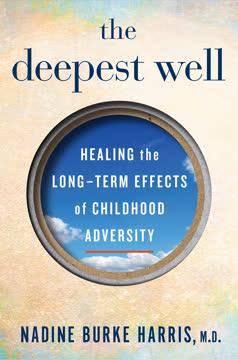
Get the complete 30-minute summary of The Deepest Well
Get the complete summary in the appChildhood adversity literally gets under the skin, changing the body in ways that persist for decades.
Toxic stress occurs when the stress response is activated too frequently or never shuts down, without the buffering pres
The ACE Study found that two-thirds of adults have experienced at least one category of childhood adversity.
There is a dose-response relationship between ACEs and health outcomes: the more adversity, the greater the risk of dise
Toxic stress changes the brain, enlarging the amygdala and impairing the prefrontal cortex and hippocampus.
Chronic inflammation is a key mechanism linking ACEs to heart disease, cancer, diabetes, and autoimmune disorders.
"The Deepest Well" is a strong fit if you want practical ideas around health & fitness, psychology, self help, especially themes like childhood adversity literally gets under the skin, changing the body in ways that persist for decades; toxic stress occurs when the stress response is activated too frequently or never shuts down, without the buffering pres. The MinuteRead summary distills these concepts into a focused read, whether you're deciding whether to buy the book or applying its lessons at work.
Nadine Burke Harris, M.D. is a pioneering pediatrician and advocate for addressing childhood adversity's health impacts. As founder/CEO of the Center for Youth Wellness, she has brought attention to the science of toxic stress through lectures, media appearances, and her popular TED Talk. Her work has been recognized with prestigious awards and featured in various publications. Dr. Burke Harris serves as an expert advisor on child welfare initiatives and on the American Academy of Pediatrics Nat…
View all summaries by Nadine Burke HarrisContinue Reading
Access the complete 30-minute summary and thousands more nonfiction books in the MinuteRead app.

Continue reading the complete summary in the MinuteRead app.