MinuteRead
30 min
Book summary
by Gene Kim
Premium summary · Opens in the app · 30 min read
In 2009, a small group of software professionals began meeting at a conference in Belgium to discuss a growing frustration. They worked in different companies, different industries, different countries. Yet they all faced the same problem. Development teams were celebrated for shipping new features quickly. Operations teams were punished when those same features crashed in production. The two groups worked in the same building, sometimes on the same floor, but inhabited entirely different worlds
**Author:** Gene Kim **Estimated Reading Time:** 45 minutes
**What You'll Learn:** How to transform your technology organization using the principles of flow, feedback, and continuous learning. You will discover why high-performing organizations deploy code hundreds of times faster than their competitors, how to build a culture where failures become learning opportunities, and what specific practices separate elite technology teams from everyone else.
**Who This Book Is For:** Technology leaders seeking to accelerate delivery without sacrificing reliability, engineers who want to understand the broader system in which they work, and anyone responsible for modernizing how software gets built and operated.
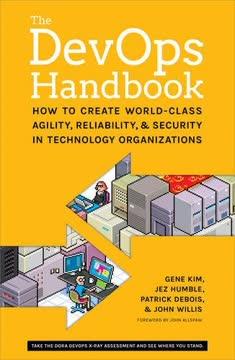
In 2009, a small group of software professionals began meeting at a conference in Belgium to discuss a growing frustration. They worked in different companies, different industries, different countries. Yet they all faced the same problem. Development teams were celebrated for shipping new features quickly. Operations teams were punished when those same features crashed in production. The two groups worked in the same building, sometimes on the same floor, but inhabited entirely different worlds. The result was predictable. Software releases became slow, painful, and dangerous. Companies that needed to innovate quickly found themselves trapped in processes designed for a different era. Every deployment felt like a high-wire act without a safety net. Every incident triggered a blame cycle that made the next deployment even scarier. This group in Belgium gave a name to a set of ideas that had been brewing in pockets of the industry for years. They called it DevOps, a deliberate combination of Development and Operations. The name signaled something important. These two functions could not succeed separately. They had to work as one. Gene Kim spent years studying what made some technology organizations excel while others floundered. He visited companies that deployed code hundreds of times per day with remarkable stability. He also visited companies that struggled to deploy once per quarter, and even then, the deployments often failed. The difference was not talent. It was not budget. It was not technology. The difference was how the work was organized, how people collaborated, and what leaders chose to measure and reward. The DevOps Handbook emerged from this research. It draws on decades of knowledge from manufacturing, particularly the Toyota Production System and Lean principles. It incorporates insights from the Theory of Constraints, which teaches that every system has a bottleneck that limits overall performance. It borrows from resilience engineering, which studies how complex systems fail and how they can be designed to fail safely. It integrates lessons from safety culture research, which shows that blame destroys learning while psychological safety accelerates it. The problem this book addresses is not new. Technology organizations have struggled with the tension…
Continue reading in the MinuteRead app
Get the complete 30-minute summary of The DevOps Handbook
Get the complete summary in the appThe Three Ways are Flow, Feedback, and Continuous Learning. They are the foundation of DevOps and must be pursued togeth
Map your value stream to see where work waits, where defects occur, and where value is lost. You cannot improve what you
Every system has a constraint. Find the bottleneck and improve it first. Improving anything else is wasted effort.
Blame drives problems underground. Practice blamelessness and build psychological safety to enable learning.
Security must be built in from the beginning, not bolted on at the end. Integrate security throughout the development pi
Automate your deployment process. Manual deployment is slow, error-prone, and creates fear. Automation enables speed and
"The DevOps Handbook" is a strong fit if you want practical ideas around technology, business, programming, especially themes like the three ways are flow, feedback, and continuous learning. they are the foundation of devops and must be pursued togeth; map your value stream to see where work waits, where defects occur, and where value is lost. you cannot improve what you. The MinuteRead summary distills these concepts into a focused read, whether you're deciding whether to buy the book or applying its lessons at work.
Gene Kim is a renowned figure in the IT industry, known for his contributions to DevOps and IT operations. As a multiple award-winning CTO and founder of Tripwire, he has established himself as a thought leader in the field. Kim's expertise spans IT operations, security, and compliance, with a particular focus on organizational transformation. He is also a certified IS auditor and a passionate advocate for user experience. Kim's work includes co-authoring "Visible Ops" and researching the Theory…
View all summaries by Gene KimContinue Reading
Access the complete 30-minute summary and thousands more nonfiction books in the MinuteRead app.

Continue reading the complete summary in the MinuteRead app.