MinuteRead
30 min
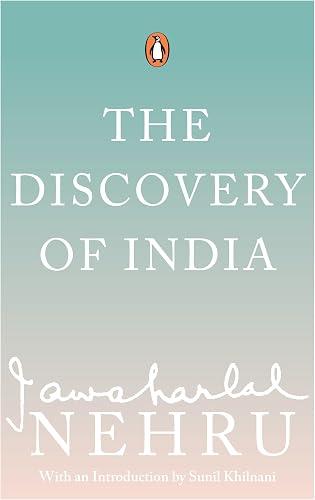
Book summary
Premium summary · Opens in the app · 30 min read
In the spring of 1944, Jawaharlal Nehru sat in a prison cell in Ahmadnagar Fort, confined by the British colonial government for his role in India's struggle for independence. He had spent years in various prisons, accumulating nearly a decade of incarceration across his political life. But this imprisonment was different. Rather than despair, Nehru chose to use the time for reflection, for understanding, for discovery.
**Author:** Jawaharlal Nehru **Estimated Reading Time:** 45 minutes
**What You'll Learn:**
The story of India's five thousand year journey as a civilization, from the Indus Valley to the struggle for independence. You will understand how India's philosophical traditions, religious movements, and cultural syntheses created a nation unlike any other. You will see how the colonial experience reshaped Indian consciousness and how the freedom movement forged a vision for a modern democratic nation.
**Who This Book Is For:**
Readers who want to understand India beyond headlines and stereotypes. Anyone interested in how civilizations form, endure, and transform. Students of history, philosophy, and politics who seek a deeper understanding of one of the world's oldest continuous cultures. Those who want to grasp the intellectual foundations of modern India.
In the spring of 1944, Jawaharlal Nehru sat in a prison cell in Ahmadnagar Fort, confined by the British colonial government for his role in India's struggle for independence. He had spent years in various prisons, accumulating nearly a decade of incarceration across his political life. But this imprisonment was different. Rather than despair, Nehru chose to use the time for reflection, for understanding, for discovery. The result was a remarkable book written entirely from memory and reflection, without access to libraries or reference materials. Nehru drew upon his vast reading, his deep engagement with Indian history and philosophy, and his personal experience as a leader of the independence movement. He wrote not as a historian but as a seeker, someone trying to understand what India truly was, what it had been, and what it might become. The question that drove him was deceptively simple: What is India? For centuries, outsiders had attempted to answer this question. British colonial administrators had catalogued India's peoples, languages, and customs, often with the implicit assumption that India was too diverse, too chaotic, too divided to ever govern itself. European scholars had studied India's ancient texts, sometimes with genuine admiration, sometimes with condescension. Indian nationalists had invoked India's glorious past as a rallying cry for freedom. But Nehru sensed that something essential was missing from all these accounts. What Nehru sought was an understanding of India as a living entity, a civilization with a continuous thread running through its long history. He wanted to grasp how India had absorbed countless influences, survived countless invasions, and maintained a distinctive identity through it all. He wanted to understand what made India Indian. The challenge was immense. India was not a single nation in the European sense. It was a subcontinent containing hundreds of languages, multiple major religions, countless castes and communities, and staggering economic and social diversity. At the time Nehru wrote, many argued that India was merely a geographic…
Continue reading in the MinuteRead app
Get the complete 30-minute summary of The Discovery of India
Get the complete summary in the appIndia is a civilization with a continuous history spanning five thousand years, not merely a geographic or political ent
The essence of Indian civilization is its capacity to absorb foreign influences and create new syntheses.
The Upanishads transformed Vedic ritualism into philosophical inquiry, establishing patterns of thought that shaped Indi
Buddhism and Jainism emerged as reform movements that challenged orthodoxy and offered new paths to liberation.
The arrival of Islam in India produced a rich cultural synthesis that enriched Indian art, music, language, and cuisine.
Colonial rule devastated India's economy and imposed cultural domination, but also created conditions for national consc
"The Discovery of India" is a strong fit if you want practical ideas around history, especially themes like india is a civilization with a continuous history spanning five thousand years, not merely a geographic or political ent; the essence of indian civilization is its capacity to absorb foreign influences and create new syntheses. The MinuteRead summary distills these concepts into a focused read, whether you're deciding whether to buy the book or applying its lessons at work.
Motivated to help readers with in the spring of 1944, Jawaharlal Nehru wrote “The Discovery of India” to package those ideas for a fast, focused read. In “The Discovery of India”, Jawaharlal Nehru focuses on in the spring of 1944. Through “The Discovery of India”, Jawaharlal Nehru distills the core ideas on history into lessons readers can absorb in a single short sitting. Readers turn to this work when they want Jawaharlal Nehru's perspective on the subject without working through the entire or…
View all summaries by Jawaharlal NehruContinue Reading
Access the complete 30-minute summary and thousands more nonfiction books in the MinuteRead app.

Continue reading the complete summary in the MinuteRead app.