MinuteRead
30 min
Book summary
Premium summary · Opens in the app · 30 min read
Most managers are set up to fail. They get promoted because they were good at their previous job, then receive little or no training for the entirely different job they now hold. They are expected to figure it out as they go, learning through trial and error while their teams bear the cost of their mistakes. The result is predictable: talented people leave, performance suffers, and organizations wonder why their managers cannot seem to get results.
### By Mark Horstman
**Estimated Reading Time:** 2 hours 15 minutes
**What You'll Learn**
The complete Manager Tools system for becoming a manager who consistently delivers results while retaining great people. You will learn how to run effective one-on-ones, deliver feedback that changes behavior, coach for performance improvement, delegate with confidence, and build the trust that makes everything else possible.
**Who This Book Is For**
New managers who feel overwhelmed by the transition from individual contributor to leader. Experienced managers who suspect there must be a better way than firefighting and guesswork. Executives who want their management teams operating with consistent, proven practices. Anyone who has ever wondered what effective management actually looks like in practice.
Most managers are set up to fail. They get promoted because they were good at their previous job, then receive little or no training for the entirely different job they now hold. They are expected to figure it out as they go, learning through trial and error while their teams bear the cost of their mistakes. The result is predictable: talented people leave, performance suffers, and organizations wonder why their managers cannot seem to get results. Mark Horstman spent years observing this pattern before deciding to do something about it. As co-founder of Manager Tools, he has trained tens of thousands of managers across industries and around the world. His approach is deliberately practical. He does not offer theories or philosophies. He offers specific behaviors, specific schedules, and specific language that managers can use immediately. The central insight of Horstman's work is that effective management is not a personality trait. It is a set of behaviors that can be learned and repeated. The manager who succeeds is not necessarily the most charismatic or the most brilliant. It is the one who shows up consistently, has structured conversations with each team member, delivers honest feedback, and builds trust through reliability. This book exists because management does not have to be mysterious. The tools described here are simple in concept but require discipline in execution. A weekly thirty-minute one-on-one with each direct report is not complicated. Yet remarkably few managers do it consistently. Feedback delivered in fifteen seconds using a specific format is not difficult. Yet most managers avoid it or do it poorly. The gap between knowing and doing is where most management careers stall. The problem this book addresses is not a lack of information. It is a lack of systems. Managers do not need more ideas. They need repeatable processes they can implement on Monday morning. They need to know exactly what to say, exactly how often to meet, exactly how to structure their time. Horstman provides these specifics without apology. Why does…
Continue reading in the MinuteRead app
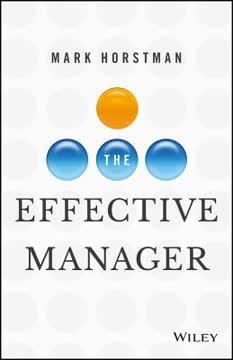
Get the complete 30-minute summary of The Effective Manager
Get the complete summary in the appAn effective manager gets results and keeps her people.
Schedule weekly thirty-minute one-on-ones with each direct report and never cancel.
The direct report gets the first ten to fifteen minutes of the one-on-one.
Use the four-step feedback model: ask permission, state behavior, describe impact, encourage or appreciate.
Deliver feedback in fifteen to thirty seconds, as soon as possible after the behavior.
Aim for a ratio of three or four positive feedback instances for every negative one.
"The Effective Manager" is a strong fit if you want practical ideas around management, business, leadership, especially themes like an effective manager gets results and keeps her people; schedule weekly thirty-minute one-on-ones with each direct report and never cancel. The MinuteRead summary distills these concepts into a focused read, whether you're deciding whether to buy the book or applying its lessons at work.
Mark Horstman is an experienced management consultant and co-founder of Manager Tools, a management consulting firm. He is known for his pragmatic approach to management, focusing on actionable strategies backed by data and research. Horstman has extensive experience training leaders and managers across various industries. He is also the host of the long-running Manager Tools podcast, which covers similar content to his book. Horstman's management philosophy emphasizes the importance of building…
View all summaries by Mark HorstmanContinue Reading
Access the complete 30-minute summary and thousands more nonfiction books in the MinuteRead app.

Continue reading the complete summary in the MinuteRead app.