MinuteRead
30 min
Book summary
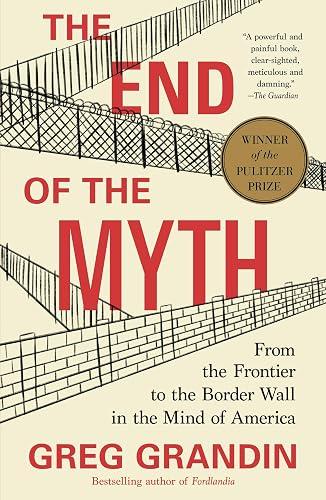
by Greg Grandin
Premium summary · Opens in the app · 30 min read
Every nation tells itself stories about who it is. These stories are not decorations. They are load-bearing walls. They hold up the structure of political life, justify sacrifices, explain contradictions, and give citizens a sense of shared purpose. When a nation's founding story collapses, the consequences are not merely intellectual. They are felt in elections, in wars, in the streets, and in the slow erosion of public trust.
**Author:** Greg Grandin
**Estimated Reading Time:** 45 minutes
**What You'll Learn:** How the American frontier shaped the nation's political identity, why its closing created a permanent crisis, and how the myth of endless expansion continues to distort American foreign and domestic policy.
**Who This Book Is For:** Readers who want to understand the deeper historical forces behind America's political divisions, its wars, and its ongoing struggle to define itself without the frontier that once promised unlimited possibility.
Every nation tells itself stories about who it is. These stories are not decorations. They are load-bearing walls. They hold up the structure of political life, justify sacrifices, explain contradictions, and give citizens a sense of shared purpose. When a nation's founding story collapses, the consequences are not merely intellectual. They are felt in elections, in wars, in the streets, and in the slow erosion of public trust. For the United States, the most important story it ever told itself was the story of the frontier. The frontier was never just a place. It was a promise. It was the idea that beyond the next ridge, across the next river, past the next settlement, there was always more land, more opportunity, more freedom. The frontier meant that American society did not have to confront its deepest contradictions because there was always an escape valve. When things went wrong in the East, you could go West. When social tensions mounted, the frontier absorbed them. When the nation needed to renew itself, it looked to open land and the possibility of starting over. This was the myth that defined American exceptionalism. It was not merely that America was different from Europe. It was that America could remain different forever because it had something Europe had lost: unlimited space. The frontier was the physical guarantee of American innocence. It allowed the nation to believe that its prosperity did not depend on exploitation, that its democracy did not require difficult compromises, and that its violence was always in service of a higher purpose. Greg Grandin's *The End of the Myth* argues that this story is now over. The frontier closed more than a century ago, but the myth of the frontier has refused to die. Instead, it has migrated. It has moved from geography to politics, from the western plains to the southern border, from the idea of open land to the idea of endless war. The United States, Grandin contends, has spent the last century trying to find substitutes for the frontier, and each substitute has failed to deliver what the original promised. This failure explains much of what feels inexplicable about contemporary American life. The political polarization. The endless military interventions. The wall-building at the…
Continue reading in the MinuteRead app
Get the complete 30-minute summary of The End of the Myth
Get the complete summary in the appThe frontier was the central element in America's national story, promising endless possibility and justifying endless v
The frontier closed in 1890, but the myth of the frontier did not end. It transformed into a more abstract and more dang
The United States has spent the last century seeking substitutes for the frontier: overseas territories, foreign markets
The border has become the new frontier, and the wall is the symbol of the inversion of the frontier myth from expansion
The frontier myth has always been intertwined with violence, and the patterns of frontier violence continue to shape Ame
The frontier myth has shaped American politics across the political spectrum, not just on the right.
"The End of the Myth" is a strong fit if you want practical ideas around history, finance, business, especially themes like the frontier was the central element in america's national story, promising endless possibility and justifying endless v; the frontier closed in 1890, but the myth of the frontier did not end. it transformed into a more abstract and more dang. The MinuteRead summary distills these concepts into a focused read, whether you're deciding whether to buy the book or applying its lessons at work.
Motivated to help readers with property investors work with money, Greg Grandin wrote “The End of the Myth” to package those ideas for a fast, focused read. Through “The End of the Myth”, Greg Grandin distills the core ideas on history into lessons readers can absorb in a single short sitting. Readers turn to this work when they want Greg Grandin's perspective on the subject without working through the entire original volume. The book is structured so each chapter highlights a practical lesson f…
Continue Reading
Access the complete 30-minute summary and thousands more nonfiction books in the MinuteRead app.

Continue reading the complete summary in the MinuteRead app.