MinuteRead
30 min
Book summary
Premium summary · Opens in the app · 30 min read
In the autumn of 2008, the American financial system came closer to total collapse than at any moment since the Great Depression. The largest investment banks in the country either failed, were acquired under duress, or transformed themselves overnight to survive. The government, long the champion of free markets, became the largest shareholder in the nation's biggest insurance company and its biggest bank. Trillions of dollars in wealth evaporated. Millions of Americans lost their homes, their
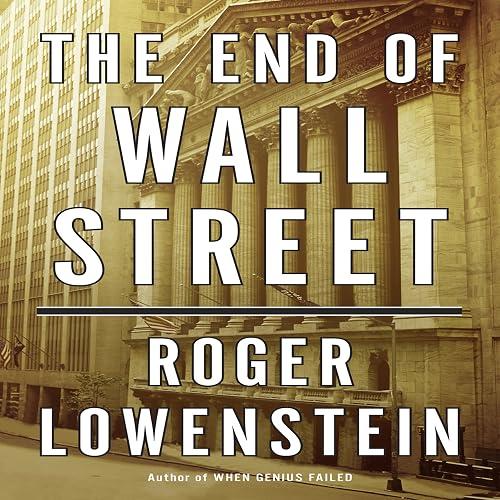
**Author:** Roger Lowenstein
**Estimated Reading Time:** 42 minutes
**What You'll Learn:**
- How a housing boom built on reckless lending brought the global financial system to its knees - Why the smartest people on Wall Street failed to see the collapse coming - What really happened inside Bear Stearns, Lehman Brothers, AIG, and the government agencies tasked with preventing disaster - How rating agencies, regulators, and bankers each contributed to the crisis - What the crisis revealed about modern capitalism, moral hazard, and the limits of free markets - The lasting changes in American economic behavior and financial regulation
**Who This Book Is For:**
This book is for anyone who wants to understand the 2008 financial crisis beyond the headlines. It is for readers who want to know how the machinery of modern finance actually worked, why it failed, and what that failure cost. It is for investors, students of economics, professionals in finance, and citizens who want to understand how their economy nearly collapsed. It is for anyone who has ever wondered how intelligent people could make such catastrophic mistakes, and why the bill for those mistakes was paid by ordinary Americans.
In the autumn of 2008, the American financial system came closer to total collapse than at any moment since the Great Depression. The largest investment banks in the country either failed, were acquired under duress, or transformed themselves overnight to survive. The government, long the champion of free markets, became the largest shareholder in the nation's biggest insurance company and its biggest bank. Trillions of dollars in wealth evaporated. Millions of Americans lost their homes, their jobs, and their savings. The world economy tipped into the deepest recession in generations. Roger Lowenstein's "The End of Wall Street" is the story of how this happened. It is not a story of villains twirling mustaches in darkened rooms, though there were certainly villains. It is not a story of a single bad decision, though there were many. It is the story of a system that failed, a system built on a foundation of assumptions that turned out to be wrong. The book's central question is simple: How did the smartest financial minds in the world, armed with the most sophisticated models ever created, backed by institutions with centuries of history, manage to nearly destroy the global economy? The answer, as Lowenstein reveals, is both complex and disturbingly simple. The crisis was not an accident. It was the predictable result of a series of choices made over decades. Choices about how mortgages should be written. Choices about how risk should be measured. Choices about how financial institutions should be regulated. Choices about how bankers should be paid. Each choice seemed…
Continue reading in the MinuteRead app
Get the complete 30-minute summary of The End of Wall Street
Get the complete summary in the appThe financial crisis was not an accident. It was the predictable result of choices made over decades.
The mortgage market abandoned traditional underwriting standards, creating loans designed to fail.
Financial engineering transformed risky mortgages into securities that appeared safe but were actually toxic.
Rating agencies blessed these securities with AAA ratings because they were paid by the banks whose securities they rate
Deregulation created a vacuum in which risky practices could flourish without oversight.
The collapse was a cascade of failures, not a single event, and the interconnectedness of the system made the failure of
"The End of Wall Street" is a strong fit if you want practical ideas around finance, history, business, especially themes like the financial crisis was not an accident. it was the predictable result of choices made over decades; the mortgage market abandoned traditional underwriting standards, creating loans designed to fail. The MinuteRead summary distills these concepts into a focused read, whether you're deciding whether to buy the book or applying its lessons at work.
Motivated to help readers with "They had invented mortgage products designed to circumvent the banking wisdom of the ages, Roger Lowenstein wrote “The End of Wall Street” to package those ideas for a fast, focused read. In “The End of Wall Street”, Roger Lowenstein focuses on "They had invented mortgage products designed to circumvent the banking wisdom of the ages. Through “The End of Wall Street”, Roger Lowenstein distills the core ideas on finance into lessons readers can absorb in a single s…
View all summaries by Roger LowensteinContinue Reading
Access the complete 30-minute summary and thousands more nonfiction books in the MinuteRead app.

Continue reading the complete summary in the MinuteRead app.