MinuteRead
30 min
Book summary
by Sharon Armstrong
Premium summary · Opens in the app · 30 min read
Every organization, regardless of size or industry, faces the same fundamental challenge: how do you bring together a group of individuals and help them work effectively toward shared goals? The answer lies in human resources management, a discipline that has evolved far beyond its administrative roots into a strategic function that can determine whether an organization thrives or merely survives.
**Author:** Sharon Armstrong
**Estimated Reading Time:** 45 minutes
**What You'll Learn:**
- How to align human resources strategy with overall business goals - The complete employee lifecycle, from hiring to development to retention - Practical frameworks for performance management, compensation, and employee relations - How to navigate legal requirements while building a positive workplace culture - Modern approaches to diversity, technology, and workplace challenges
**Who This Book Is For:**
This condensed edition is for HR professionals seeking a comprehensive reference, managers who want to understand people management fundamentals, small business owners building their first HR function, and anyone who wants to understand how great organizations attract, develop, and retain talented people.
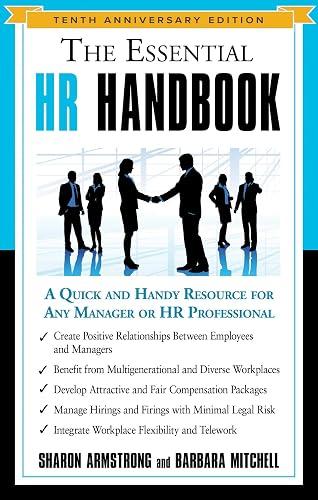
Every organization, regardless of size or industry, faces the same fundamental challenge: how do you bring together a group of individuals and help them work effectively toward shared goals? The answer lies in human resources management, a discipline that has evolved far beyond its administrative roots into a strategic function that can determine whether an organization thrives or merely survives. Sharon Armstrong wrote The Essential HR Handbook to address a persistent problem in the business world. Many organizations treat human resources as an afterthought, a department that handles paperwork, processes payroll, and manages compliance issues. This narrow view misses the profound impact that thoughtful people management can have on organizational success. When HR functions well, employees are engaged, productive, and committed. When it functions poorly, organizations struggle with turnover, legal problems, and a culture that drives talented people away. The challenge is that HR is genuinely difficult. It requires balancing competing interests: the needs of the organization against the needs of individuals, legal compliance against practical flexibility, consistency against the unique circumstances of each situation. It demands both analytical thinking and emotional intelligence. It involves making decisions that affect people's livelihoods, careers, and daily experiences. And it operates in an environment of constant change, with evolving laws, shifting workforce demographics, and new technologies that transform how work gets done. Armstrong's approach is distinctive because she treats HR as both an art and a science. The science involves understanding legal frameworks, compensation structures, and systematic processes for hiring and evaluation. The art involves reading situations, understanding human motivation, and building relationships that allow people to do their best work. Throughout the book, she emphasizes that effective HR requires both: the analytical rigor to design good systems and the interpersonal skill to implement them well. Another key aspect of Armstrong's perspective is her focus on practicality. This is not a theoretical treatise on organizational behavior. It is a handbook, designed to be used. Every chapter addresses real problems that HR professionals face daily: How do you find the right candidate for…
Continue reading in the MinuteRead app
Get the complete 30-minute summary of The Essential HR Handbook
Get the complete summary in the appStrategic HR connects people decisions to organizational goals. Know where your organization is going and align HR pract
Hiring is a strategic activity that deserves rigor and attention. Use behavioral interviewing to assess how candidates a
Onboarding is a process, not an event. Invest in comprehensive onboarding that extends over months and provides ongoing
Development is essential for organizational success. The fear of losing trained employees should not prevent investment
Performance management is an ongoing process of setting expectations, providing feedback, and supporting improvement. Do
Total rewards encompass more than salary. Benefits, flexibility, recognition, and development opportunities all contribu
"The Essential HR Handbook" is a strong fit if you want practical ideas around historical romance, business, leadership, especially themes like strategic hr connects people decisions to organizational goals. know where your organization is going and align hr pract; hiring is a strategic activity that deserves rigor and attention. use behavioral interviewing to assess how candidates a. The MinuteRead summary distills these concepts into a focused read, whether you're deciding whether to buy the book or applying its lessons at work.
Motivated to help readers with "If you don't know where you're going, Sharon Armstrong wrote “The Essential HR Handbook” to package those ideas for a fast, focused read. In “The Essential HR Handbook”, Sharon Armstrong focuses on "If you don't know where you're going. Through “The Essential HR Handbook”, Sharon Armstrong distills the core ideas on historical romance into lessons readers can absorb in a single short sitting. Readers turn to this work when they want Sharon Armstrong's perspective …
Continue Reading
Access the complete 30-minute summary and thousands more nonfiction books in the MinuteRead app.

Continue reading the complete summary in the MinuteRead app.