MinuteRead
30 min
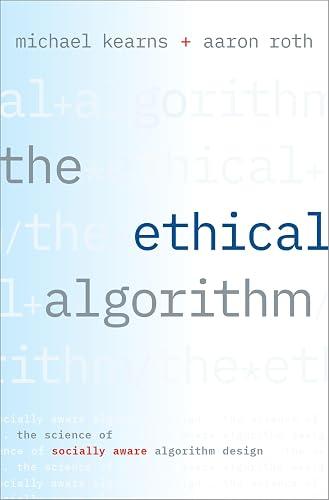
Book summary
by Michael Kearns
Premium summary · Opens in the app · 30 min read
We live in an age of algorithmic decision-making. Every day, software systems determine which advertisements we see, which job applications get reviewed, which loans receive approval, which news stories populate our feeds, and which potential romantic partners appear on our screens. These systems process billions of data points about billions of people, making choices that shape our economic opportunities, our social connections, and our understanding of the world.
**Author:** Michael Kearns (with Aaron Roth)
**Estimated Reading Time:** 42 minutes
**What You'll Learn:**
- Why algorithms can unintentionally discriminate, leak your private data, and manipulate your choices - How precise mathematical definitions can transform vague ethical concerns into solvable engineering problems - What differential privacy actually means and why it represents a genuine breakthrough - Why fairness is more complicated than simply removing sensitive attributes - How to think clearly about the trade-offs between accuracy, fairness, privacy, and transparency
**Who This Book Is For:**
Anyone who builds, deploys, regulates, or simply lives under the influence of algorithmic decision-making systems. If you have ever wondered why your news feed shows you certain content, how lenders decide who gets credit, or whether artificial intelligence will eventually outsmart us, this book provides the intellectual tools to think rigorously about these questions.
We live in an age of algorithmic decision-making. Every day, software systems determine which advertisements we see, which job applications get reviewed, which loans receive approval, which news stories populate our feeds, and which potential romantic partners appear on our screens. These systems process billions of data points about billions of people, making choices that shape our economic opportunities, our social connections, and our understanding of the world. For most of human history, decisions about people were made by other people. A loan officer looked at an applicant across a desk. A hiring manager read a resume and formed an impression. An editor selected stories based on judgment and experience. These human decision-makers were certainly flawed. They carried biases, made inconsistent judgments, and sometimes acted unfairly. But at least their reasoning could be questioned, their assumptions challenged, and their decisions appealed. The rise of machine learning has changed this dynamic fundamentally. Modern algorithms do not follow explicit rules written by programmers. Instead, they learn patterns from historical data, discovering correlations and making predictions that even their creators often cannot fully explain. A neural network trained on millions of loan applications might identify subtle patterns that predict default risk, but it might also discover that certain names, zip codes, or behavioral patterns correlate with protected characteristics. When the algorithm acts on these correlations, it can discriminate in ways that are difficult to detect, harder to explain, and nearly impossible to challenge through traditional means. This is the central problem that Michael Kearns and Aaron Roth address in The Ethical Algorithm. They argue that the challenge of building ethical algorithms is not primarily a philosophical problem, nor is it a matter of simply hiring more diverse engineering teams or writing better corporate values statements. The challenge is fundamentally technical. To build algorithms that respect privacy, ensure fairness, and remain transparent, we need precise…
Continue reading in the MinuteRead app
Get the complete 30-minute summary of The Ethical Algorithm
Get the complete summary in the appAlgorithms optimize whatever objective they are given. If you want them to respect fairness, privacy, or other values, y
Anonymization is not privacy protection. Auxiliary information enables re-identification, and the only rigorous solution
Fairness is not one thing. Multiple reasonable definitions of fairness exist, and some of them are mathematically incomp
Ethical constraints come with costs. Fairness reduces accuracy, privacy reduces utility, and interpretability may limit
Users are strategic agents. They will game algorithmic systems to achieve their own goals, and individual optimization c
P-hacking is a real problem. When many hypotheses are tested, false discoveries are likely. False discovery rate control
"The Ethical Algorithm" is a strong fit if you want practical ideas around technology, computer science, philosophy, especially themes like algorithms optimize whatever objective they are given. if you want them to respect fairness, privacy, or other values, y; anonymization is not privacy protection. auxiliary information enables re-identification, and the only rigorous solution. The MinuteRead summary distills these concepts into a focused read, whether you're deciding whether to buy the book or applying its lessons at work.
Motivated to help readers with "Algorithms won't give you things like gender neutrality 'for free' that you didn't explicitly ask for.", Michael Kearns wrote “The Ethical Algorithm” to package those ideas for a fast, focused read. In “The Ethical Algorithm”, Michael Kearns focuses on "Algorithms won't give you things like gender neutrality 'for free' that you didn't explicitly ask for.". Through “The Ethical Algorithm”, Michael Kearns distills the core ideas on technology into lessons readers ca…
Continue Reading
Access the complete 30-minute summary and thousands more nonfiction books in the MinuteRead app.

Continue reading the complete summary in the MinuteRead app.