MinuteRead
30 min
Book summary
Premium summary · Opens in the app · 30 min read
For most of medical history, the female brain was treated as a mystery wrapped in an enigma, or worse, as simply a smaller version of the male brain with a few reproductive differences thrown in. When researchers studied the brain, they studied male brains. When drugs were tested, they were tested on men. When psychological theories were developed, they were built around male patterns of thinking and behaving. The female brain was assumed to be essentially the same, just with a few hormonal inco
**Author:** Louann Brizendine, M.D.
**Estimated Reading Time:** 45 minutes
**What You'll Learn:** How the female brain develops, changes, and shapes behavior across every stage of life, from infancy through motherhood and menopause, and why understanding these biological differences matters for relationships, work, and health.
**Who This Book Is For:** Anyone who wants to understand the biological foundations of female behavior, whether you are a woman seeking to understand your own mind, a man trying to understand the women in your life, a parent raising daughters, or a professional working with women.
For most of medical history, the female brain was treated as a mystery wrapped in an enigma, or worse, as simply a smaller version of the male brain with a few reproductive differences thrown in. When researchers studied the brain, they studied male brains. When drugs were tested, they were tested on men. When psychological theories were developed, they were built around male patterns of thinking and behaving. The female brain was assumed to be essentially the same, just with a few hormonal inconveniences that made women emotional and unpredictable. Louann Brizendine, a neuropsychiatrist who founded the Women's Mood and Hormone Clinic at the University of California, San Francisco, spent decades treating women whose emotional and cognitive struggles were dismissed by a medical establishment that did not understand female neurobiology. She watched patients cycle through misdiagnoses, ineffective treatments, and the quiet shame of feeling broken because their brains did not work the way the textbooks said brains were supposed to work. The problem, she realized, was not the women. The problem was the textbooks. The Female Brain is her attempt to correct a fundamental error in our understanding of human biology. Drawing on decades of research in neuroscience, endocrinology, and clinical practice, Brizendine demonstrates that the female brain is not a flawed version of the male brain. It is a distinct organ with its own developmental timeline, its own hormonal rhythms, its own structural priorities, and its own remarkable strengths. The differences begin before birth. A cascade of hormones shapes the fetal brain, building more connections in communication centers and emotion-processing areas in female brains while male brains develop more circuits dedicated to aggression and sexual pursuit. These differences expand during childhood, explode during puberty, reshape themselves during pregnancy, and shift again during menopause. At every stage of life, the female brain is being remodeled by hormones in ways that influence perception, memory, emotion, and behavior. This matters not because biology is destiny, but because biology is reality. Understanding the biological foundations of female behavior does not limit women. It liberates them. It explains why a teenage girl can be brilliant and rational one moment and overwhelmed by emotional…
Continue reading in the MinuteRead app
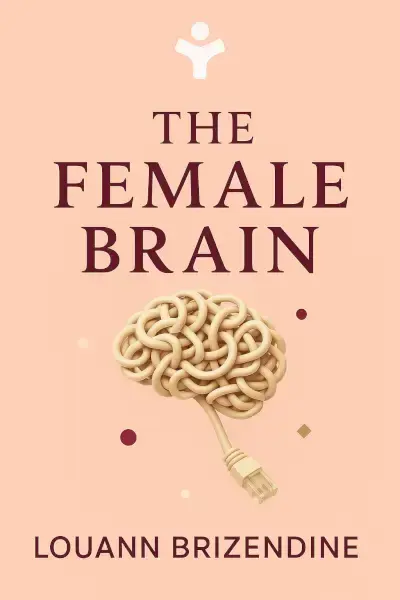
Get the complete 30-minute summary of The Female Brain
Get the complete summary in the appThe female brain is different from the male brain in measurable ways that matter.
These differences begin before birth, driven by hormones.
The female brain is optimized for social connection, emotional understanding, and verbal communication.
Puberty triggers a massive remodeling of the female brain.
Love is a neurochemical state driven by dopamine, oxytocin, and testosterone.
Pregnancy rewires the female brain for motherhood.
"The Female Brain" is a strong fit if you want practical ideas around psychology, science, neuroscience, especially themes like the female brain is different from the male brain in measurable ways that matter; these differences begin before birth, driven by hormones. The MinuteRead summary distills these concepts into a focused read, whether you're deciding whether to buy the book or applying its lessons at work.
Louann Brizendine, M.D. is a neuropsychiatrist specializing in the neurobiology of male and female brains. She graduated from UC Berkeley, Yale School of Medicine, and completed her residency at Harvard Medical School. Dr. Brizendine has held faculty positions at Harvard University and the University of California at San Francisco, where she founded the Women's Mood and Hormone Clinic in 1994. She actively pursues clinical work, teaching, research, and writing. Her first book, "The Female Brain,…
View all summaries by Louann BrizendineContinue Reading
Access the complete 30-minute summary and thousands more nonfiction books in the MinuteRead app.

Continue reading the complete summary in the MinuteRead app.