MinuteRead
30 min
Book summary
Premium summary · Opens in the app · 30 min read
When you meet someone new in America, the first question is almost always the same. Not "What brings you joy?" Not "What are you curious about?" Not "How do you spend your time?" The question is: "What do you do?"
By Simone Stolzoff
**Estimated Reading Time:** 55 minutes
**What You'll Learn:**
- Why work has become the dominant source of identity and meaning in modern life - How the "dream job" myth fuels burnout and dissatisfaction - What happens when people build lives beyond their careers - Practical strategies for developing a healthier relationship with work - How to find fulfillment through multiple sources of identity and purpose
**Who This Book Is For:**
Anyone who has ever felt defined by their job title. Anyone who has sacrificed relationships, health, or hobbies for career advancement. Anyone who suspects that the constant hustle might not be the path to happiness after all. If you have ever introduced yourself with your profession before your name, this book is for you.
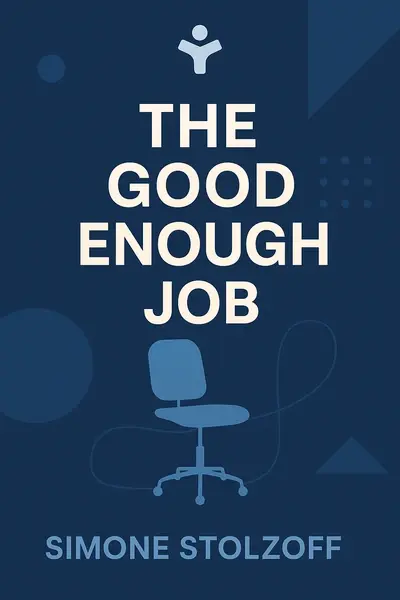
When you meet someone new in America, the first question is almost always the same. Not "What brings you joy?" Not "What are you curious about?" Not "How do you spend your time?" The question is: "What do you do?" The question seems innocent enough. It is a social reflex, a way of breaking the ice. But embedded within it is a profound assumption: that what you do for money is the most interesting and important thing about you. That your job is your identity. That your work defines who you are. Simone Stolzoff wrote The Good Enough Job to challenge this assumption. The book emerged from a simple observation: Americans have developed an unhealthy relationship with work. We have transformed careers from a means of survival into a source of ultimate meaning. We have replaced religion with the office, community with colleagues, and purpose with productivity. This shift did not happen by accident. It was decades in the making, driven by economic pressures, cultural narratives, and corporate interests. As traditional sources of meaning have declined, work has rushed in to fill the void. The result is a society where people work longer hours, tie their self-worth to professional achievements, and feel perpetually anxious about falling behind. The consequences are severe. Burnout has become an epidemic. Stress-related health problems are rising. Relationships suffer as people prioritize work over connection. And when people lose their jobs or retire, they often lose their sense of self along with their paycheck. Stolzoff's approach is different from typical career advice. He does not tell you to quit your job and follow your passion. He does not promise that the right career will solve all your problems. Instead, he asks a more fundamental question: What if work is not supposed to be everything? The Good Enough Job is not about finding the perfect career. It is about building a life where work plays an important but bounded role.…
Continue reading in the MinuteRead app
Get the complete 30-minute summary of The Good Enough Job
Get the complete summary in the appWork should support your life, not consume it.
The dream job is a myth that creates unrealistic expectations.
Your identity should rest on multiple sources, not just your job.
Corporate perks often mask exploitation.
Status is a treadmill that never stops.
Boundaries are essential for well-being and performance.
"The Good Enough Job" is a strong fit if you want practical ideas around self help, business, psychology, especially themes like work should support your life, not consume it; the dream job is a myth that creates unrealistic expectations. The MinuteRead summary distills these concepts into a focused read, whether you're deciding whether to buy the book or applying its lessons at work.
Simone Stolzoff is a writer and designer based in San Francisco. With a background as a design lead at IDEO, a global innovation firm, Stolzoff brings a unique perspective to his work. His writing has been featured in prominent publications such as The New York Times, Washington Post, Wall Street Journal, and The Atlantic. Stolzoff's educational background includes degrees from Stanford University and the University of Pennsylvania, contributing to his interdisciplinary approach to exploring wor…
View all summaries by Simone StolzoffContinue Reading
Access the complete 30-minute summary and thousands more nonfiction books in the MinuteRead app.

Continue reading the complete summary in the MinuteRead app.