MinuteRead
30 min
Book summary
by Jonny Bowden
Premium summary · Opens in the app · 30 min read
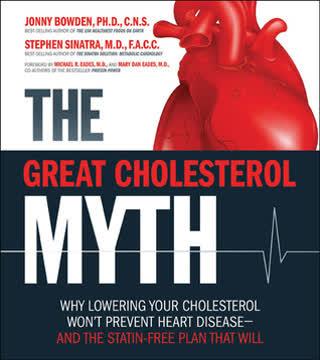
For more than half a century, a single idea has dominated medicine: cholesterol causes heart disease. This belief has shaped dietary guidelines, launched a multi-billion dollar pharmaceutical industry, and convinced millions of people that eating eggs, butter, and red meat is a death sentence. It has also failed spectacularly.
**Author:** Jonny Bowden, PhD, CNS, with Stephen Sinatra, MD
**Estimated Reading Time:** 45 minutes
**What You'll Learn:**
* Why cholesterol is not the cause of heart disease * What actually drives cardiovascular damage * How sugar and refined carbohydrates destroy your arteries * Why saturated fat has been wrongly demonized * The truth about statin drugs and their real risks * Which tests actually predict heart attack risk * Which foods and supplements genuinely protect your heart * A complete lifestyle approach to cardiovascular health
**Who This Book Is For:**
Anyone who has ever worried about their cholesterol numbers. Anyone taking or considering statin medication. Anyone who wants to understand what truly causes heart disease and how to prevent it using evidence-based nutrition and lifestyle strategies rather than fear-driven pharmaceutical interventions.
For more than half a century, a single idea has dominated medicine: cholesterol causes heart disease. This belief has shaped dietary guidelines, launched a multi-billion dollar pharmaceutical industry, and convinced millions of people that eating eggs, butter, and red meat is a death sentence. It has also failed spectacularly. Heart disease remains the leading cause of death worldwide. Despite aggressive cholesterol-lowering campaigns, despite millions of people taking statin drugs, despite the widespread removal of fat from our diets, cardiovascular disease continues to kill more people than any other condition. Something is deeply wrong with the story we have been told. Jonny Bowden, a board-certified nutritionist known for questioning established nutritional dogma, teamed up with Stephen Sinatra, an integrative cardiologist with decades of clinical experience, to investigate this contradiction. What they discovered is unsettling. The cholesterol hypothesis, the foundation upon which modern cardiology has been built, rests on shaky scientific ground. The studies that launched the war on fat were flawed. The dietary guidelines that followed were influenced by politics as much as science. And the pharmaceutical industry has profited enormously from keeping the myth alive. The real story is more complex and more hopeful. Heart disease is not caused by a single molecule floating in your bloodstream. It is caused by a cascade of factors including inflammation, oxidative stress, sugar consumption, chronic stress, and nutritional deficiencies. The good news is that these factors are largely within your control. This book exists because millions of people are being treated for the wrong disease. They are taking medications with significant side effects to lower a number that is a poor predictor of heart attack risk. Meanwhile, the actual causes of their cardiovascular damage go unaddressed. They are fighting the wrong battle with the wrong weapons. The problem matters because heart disease is not an inevitable consequence of aging. It is a lifestyle disease, driven by the modern diet of processed foods,…
Continue reading in the MinuteRead app
Get the complete 30-minute summary of The Great Cholesterol Myth
Get the complete summary in the appCholesterol is not the cause of heart disease. Inflammation is.
Sugar and refined carbohydrates are the real dietary villains, not saturated fat.
Half of all heart attack victims have normal cholesterol levels.
C-reactive protein is a better predictor of heart attack risk than cholesterol.
Statin drugs have modest benefits for primary prevention and significant side effects.
If you take statins, supplement with CoQ10 to prevent muscle pain and weakness.
"The Great Cholesterol Myth" is a strong fit if you want practical ideas around health & fitness, health, nutrition, especially themes like cholesterol is not the cause of heart disease. inflammation is; sugar and refined carbohydrates are the real dietary villains, not saturated fat. The MinuteRead summary distills these concepts into a focused read, whether you're deciding whether to buy the book or applying its lessons at work.
Jonny Bowden, PhD, CNS , is a board-certified nutritionist and best-selling author known as "The Rogue Nutritionist." With a master's in psychology, he has written 13 books on nutrition and health. Bowden frequently appears on major news networks and contributes to various publications, including The New York Times and Forbes. He serves on scientific advisory boards for natural product companies and consults for the Natural Products Industry. His expertise spans nutrition, weight loss, and natur…
View all summaries by Jonny BowdenContinue Reading
Access the complete 30-minute summary and thousands more nonfiction books in the MinuteRead app.

Continue reading the complete summary in the MinuteRead app.