MinuteRead
30 min
Book summary
Premium summary · Opens in the app · 30 min read
Andy Puddicombe did not set out to become a meditation teacher. In his early twenties, he was studying sports science at university when a series of personal tragedies turned his life upside down. His stepsister died in a cycling accident. His ex-girlfriend died in a car accident. A close friend died in a climbing accident. The grief piled up, and the coping mechanisms he had relied on, drinking, partying, staying busy, stopped working.
**Author:** Andy Puddicombe
**Estimated Reading Time:** 45 minutes
**What You'll Learn:**
- Why meditation is not about stopping your thoughts - How to build a daily practice that actually sticks - The blue sky analogy that changes how you see your mind - How to apply mindfulness to eating, walking, working, and sleeping - Why ten minutes a day is enough to rewire your brain - How to observe emotions without being controlled by them
**Who This Book Is For:**
This book is for anyone who has ever said, "I can't meditate because my mind won't stop." It is for busy professionals who think they don't have time, for skeptics who assume mindfulness is too vague to be useful, and for anyone who has tried meditation and quit because it felt frustrating or pointless. If you have ever wondered whether meditation could help you feel calmer, think more clearly, or simply enjoy your life more, this book will show you how.
Andy Puddicombe did not set out to become a meditation teacher. In his early twenties, he was studying sports science at university when a series of personal tragedies turned his life upside down. His stepsister died in a cycling accident. His ex-girlfriend died in a car accident. A close friend died in a climbing accident. The grief piled up, and the coping mechanisms he had relied on, drinking, partying, staying busy, stopped working. He found himself standing in a cemetery, looking at the graves of people his own age, and asking a question that would change everything: What am I doing with my life? The answer led him to leave university, travel to Asia, and eventually ordain as a Buddhist monk. He spent years in monasteries across India, Nepal, Burma, Thailand, and Russia, studying meditation under some of the world's most respected teachers. But when he returned to the West, he noticed something strange. The meditation he had learned, which was simple, practical, and profoundly transformative, had been wrapped in layers of mysticism and confusion. People thought meditation required sitting cross-legged for hours, chanting in a language they didn't understand, or achieving some kind of blank mental state. None of that was true. Puddicombe saw that meditation was being misunderstood. It was being treated as either a religious practice or a performance skill, when really it was something far more practical: a way to train the mind, the same way you might train your body at the gym. And just as you don't need to become a monk to benefit from exercise, you don't need to become a monk to benefit from meditation. This book exists because millions of people are living with minds that never stop. The constant…
Continue reading in the MinuteRead app
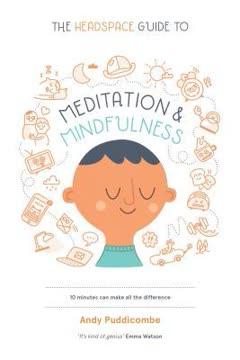
Get the complete 30-minute summary of The Headspace Guide to Meditation & Mindfulness
Get the complete summary in the appMeditation is about awareness, not stopping thoughts.
Your mind's natural state is calm and clear, like a blue sky.
Thoughts are clouds; you don't need to get rid of them, just observe them.
Noticing your mind has wandered is the practice, not a failure.
Emotions are filters that shape your perception.
You are not your thoughts or emotions; you are the awareness behind them.
"The Headspace Guide to Meditation & Mindfulness" is a strong fit if you want practical ideas around health & fitness, self help, psychology, especially themes like meditation is about awareness, not stopping thoughts; your mind's natural state is calm and clear, like a blue sky. The MinuteRead summary distills these concepts into a focused read, whether you're deciding whether to buy the book or applying its lessons at work.
Andy Puddicombe is the founder of Headspace, a digital platform for guided meditation. Born in 1972, he has an unconventional background as a former Buddhist monk with a degree in Circus Arts. Puddicombe is recognized as a key figure in the modern mindfulness movement, known for his simple and secular approach to meditation. His work has gained widespread popularity, with over a million users on the Headspace platform. Puddicombe is also an author and public speaker, praised for making meditatio…
View all summaries by Andy PuddicombeContinue Reading
Access the complete 30-minute summary and thousands more nonfiction books in the MinuteRead app.

Continue reading the complete summary in the MinuteRead app.