MinuteRead
30 min
Book summary
Premium summary · Opens in the app · 30 min read
In 1798, Mayer Amschel Rothschild was a successful but unremarkable coin dealer and textile trader living in the Judengasse, the cramped Jewish quarter of Frankfurt. His total wealth would not have placed him among the city's richest merchants. He was one of perhaps twenty thousand Jews living in the German territories, subject to legal restrictions that limited where he could live, what professions he could practice, and how he could travel. No reasonable observer would have predicted that with
### Money's Prophets, 1798-1848
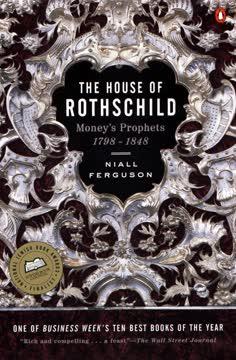
**Author:** Niall Ferguson **Estimated Reading Time:** 42 minutes **What You'll Learn:** How a single family from a Frankfurt ghetto built the world's first international banking empire, how they financed wars and peace, and how their name became synonymous with both extraordinary financial genius and enduring myth. **Who This Book Is For:** Readers interested in financial history, the Napoleonic era, Jewish history, the origins of modern banking, and anyone curious about how a family name became a global symbol of wealth and power.
In 1798, Mayer Amschel Rothschild was a successful but unremarkable coin dealer and textile trader living in the Judengasse, the cramped Jewish quarter of Frankfurt. His total wealth would not have placed him among the city's richest merchants. He was one of perhaps twenty thousand Jews living in the German territories, subject to legal restrictions that limited where he could live, what professions he could practice, and how he could travel. No reasonable observer would have predicted that within two decades his five sons would be operating from London, Paris, Vienna, Naples, and Frankfurt, moving more money across borders than any private institution in history. By 1848, the Rothschild name had become a byword for immense wealth and hidden power. Politicians courted them. Monarchs sought their counsel. Revolutionaries condemned them. Cartoonists depicted them as puppet masters pulling the strings of European governments. Their loans determined whether nations could wage war or maintain peace. Their information network moved news faster than official diplomatic channels. Their family partnerships constituted what historians now recognize as the first truly multinational corporation. This transformation was not inevitable. It was not the product of a single brilliant stroke of luck, nor the result of some sinister conspiracy. It emerged from a combination of factors that Niall Ferguson examines with unprecedented access to the family's private correspondence: the chaos of the Napoleonic Wars, the structure of the family partnership, an obsessive attention to information, and a willingness to take risks that more established banking houses would not contemplate. The problem with understanding the Rothschilds is that the myth has largely obscured the reality. For every writer who attributed their success to hard work and financial genius, two or three have taken the opposite view, seeing them as war profiteers, manipulators of markets, and puppet masters of politics. The name Rothschild has become a screen onto which successive generations have projected their anxieties about capitalism, Judaism, and globalization. Ferguson's achievement is to strip away these layers of myth and examine what actually happened. Drawing on the family's extensive private archives, he reconstructs the decisions, relationships, and accidents that built the Rothschild empire. What emerges is neither hagiography nor conspiracy theory, but something…
Continue reading in the MinuteRead app
Get the complete 30-minute summary of The House of Rothschild, Vol 1
Get the complete summary in the appThe Rothschilds built the first truly multinational bank by creating a family partnership that solved the trust problem
Their success was based on structure, not just talent. The partnership, the information network, and the reputation for
Information advantage was their most reliable source of profit. They invested heavily in communication infrastructure an
They preferred peace to war because peace was good for business. This alignment of private interest and public good made
Nathan Rothschild's move to London placed the family at the center of the world's most advanced economy. Position matter
The Elector's treasure story, while largely mythical, served a purpose. It demonstrated trustworthiness and reinforced t
"The House of Rothschild, Vol 1" is a strong fit if you want practical ideas around history, biography, finance, especially themes like the rothschilds built the first truly multinational bank by creating a family partnership that solved the trust problem; their success was based on structure, not just talent. the partnership, the information network, and the reputation for. The MinuteRead summary distills these concepts into a focused read, whether you're deciding whether to buy the book or applying its lessons at work.
Niall Ferguson is a renowned historian and senior fellow at Stanford University's Hoover Institution. He has authored 15 books, including award-winning works on financial history and international relations. Ferguson's research spans topics from the Rothschild family to Henry Kissinger and modern civilization. His work has been adapted into television documentaries, earning him international recognition. Ferguson holds positions at various prestigious institutions and has received numerous honor…
View all summaries by Niall FergusonContinue Reading
Access the complete 30-minute summary and thousands more nonfiction books in the MinuteRead app.

Continue reading the complete summary in the MinuteRead app.