MinuteRead
30 min
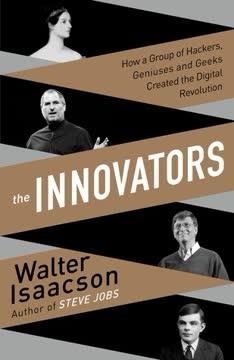
We tell the wrong stories about innovation. We celebrate the lone genius, the flash of insight, the garage where magic happened. We build monuments to individuals and forget the networks that made their work possible. The digital age did not arrive because one person had a great idea. It arrived because generations of thinkers, tinkerers, and collaborators built something together, often across decades and disciplines, frequently without knowing where their work would lead.
**Author:** Walter Isaacson **Estimated Reading Time:** 45 minutes
**What You'll Learn** How the digital revolution actually happened. Not through solitary genius, but through collaboration, cross-pollination of ideas, and the messy, human process of building on the work of others. You will meet the poets, engineers, hackers, entrepreneurs, and dreamers who created the world we now inhabit.
**Who This Book Is For** Anyone who wants to understand where the technology in their pocket came from. Anyone who believes innovation is a solo act and needs to learn the truth. Anyone leading teams, building products, or trying to create something that matters in a world that demands both vision and execution.
We tell the wrong stories about innovation. We celebrate the lone genius, the flash of insight, the garage where magic happened. We build monuments to individuals and forget the networks that made their work possible. The digital age did not arrive because one person had a great idea. It arrived because generations of thinkers, tinkerers, and collaborators built something together, often across decades and disciplines, frequently without knowing where their work would lead. Walter Isaacson set out to correct this misunderstanding. After writing biographies of singular figures like Steve Jobs and Albert Einstein, he turned his attention to the collaborative nature of creation itself. What he found was a story far more interesting than the myth of the solo inventor. He found a tapestry of minds, each contributing threads that others would later weave into something transformative. The problem is not that we lack innovation today. The problem is that we misunderstand how innovation works, which means we often fail to create the conditions that produce it. We build organizations that isolate talent rather than connect it. We reward individual achievement at the expense of collaborative progress. We forget that the most important breakthroughs in history came from people who knew how to share ideas, build on the work of predecessors, and combine skills that no single person could possess. This matters because the challenges we now face, in technology, in science, in society, demand the same collaborative creativity that built the digital age. Understanding how that age was born is not just an exercise in history. It is a guide to building the future. Isaacson's approach is different because he refuses to simplify. He does not give you a tidy list of heroes. He gives you the messy, human, interconnected story of how computing, the internet, and the personal computer actually came to be. He shows you the arguments, the failed projects, the borrowed ideas, and the moments when someone saw just a little further because they were standing on the right shoulders. What emerges is not just a history…
Continue reading in the MinuteRead app
Get the complete 30-minute summary of The Innovators
Get the complete summary in the appInnovation is collaborative, not solitary. The myth of the lone genius is wrong.
Ada Lovelace combined poetry and mathematics to envision the general-purpose computer in 1843.
The transistor, microchip, and internet were all products of teams, not individuals.
Innovation has three stages: invention, production, and market creation. All three are essential.
The personal computer was a vision of individual empowerment, born from the counterculture.
The Homebrew Computer Club and other communities were as important as any single company.
"The Innovators" is a strong fit if you want practical ideas around history, biography, business—especially themes like innovation is collaborative, not solitary. the myth of the lone genius is wrong; ada lovelace combined poetry and mathematics to envision the general-purpose computer in 1843. The MinuteRead summary distills these concepts into a focused read, whether you're deciding whether to buy the book or applying its lessons at work.
Walter Isaacson is a renowned author and historian known for his biographies of influential figures like Steve Jobs, Einstein, and Leonardo da Vinci. He has held prominent positions in media and academia, including CEO of the Aspen Institute, chair of CNN, and editor of Time magazine. Currently a professor at Tulane University, Isaacson's work often explores the lives of innovators and thinkers who have shaped history. His writing style is praised for its clarity and ability to make complex subj…
View all summaries by Walter IsaacsonContinue Reading
Access the complete 30-minute summary and thousands more nonfiction books in the MinuteRead app.

Continue reading the complete summary in the MinuteRead app.