MinuteRead
30 min
Book summary
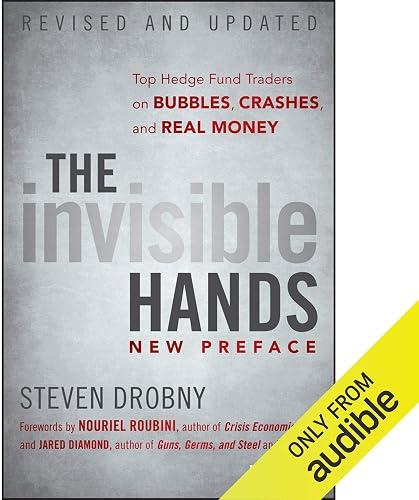
by Steven Drobny
Premium summary · Opens in the app · 30 min read
In the autumn of 2008, the global financial system came closer to collapse than at any point since the Great Depression. Banks failed. Markets froze. Trillions of dollars in wealth evaporated in a matter of weeks. The crisis exposed deep fractures in the global economy, but it also revealed something perhaps even more troubling: the people entrusted with managing the world's largest pools of money had been operating under a set of assumptions that were fundamentally broken.
**Author:** Steven Drobny
**Estimated Reading Time:** 52 minutes
**What You'll Learn:**
- Why the world's largest pools of money are dangerously unprepared for the next crisis - How the Endowment Model failed spectacularly in 2008 and what should replace it - The core principles that allowed a select group of investors to protect and grow capital during the worst market collapse in generations - Why liquidity, risk management, and adaptability matter more than return targets - How to apply the lessons of top global macro investors to your own portfolio decisions
**Who This Book Is For:**
This book is for anyone responsible for long-term capital, whether you manage a pension fund, oversee an endowment, run a family office, or simply want to understand how the invisible hands that manage trillions of dollars shape the financial world and your own financial future.
In the autumn of 2008, the global financial system came closer to collapse than at any point since the Great Depression. Banks failed. Markets froze. Trillions of dollars in wealth evaporated in a matter of weeks. The crisis exposed deep fractures in the global economy, but it also revealed something perhaps even more troubling: the people entrusted with managing the world's largest pools of money had been operating under a set of assumptions that were fundamentally broken. These are the invisible hands. They manage pension funds that secure the retirements of teachers, firefighters, and factory workers. They oversee endowments that fund universities and medical research. They direct foundations that support charitable causes around the world. They control sovereign wealth funds that represent the savings of entire nations. Collectively, they manage tens of trillions of dollars, and their decisions shape the financial landscape in ways that most people never see. Steven Drobny spent years interviewing the most successful global macro hedge fund managers for his previous work. After the 2008 crisis, he turned his attention to a different question: what went wrong with real money management, and what can be done to fix it? The answer he uncovered is uncomfortable. The dominant investment model adopted by pensions, endowments, and foundations over the past two decades was built on a foundation of flawed assumptions. It promised diversification but delivered concentration. It claimed to have a long-term horizon but couldn't meet short-term obligations. It treated liquidity as a nuisance rather than a necessity. And when the crisis hit, it failed catastrophically. The stakes could hardly be higher. U.S. pension assets alone total roughly $15 trillion. Global pension assets exceed $24 trillion. Total managed assets worldwide reached $62 trillion by the end of 2008. When these funds underperform, the consequences ripple through society. Underfunded pensions mean higher taxes or reduced public services. Struggling…
Continue reading in the MinuteRead app
Get the complete 30-minute summary of The Invisible Hands
Get the complete summary in the app**Avoid large drawdowns.** Losses are mathematically harder to recover from than gains are to achieve. A 50 percent loss
**Cash is an option, not trash.** Cash provides flexibility and the ability to buy assets at bargain prices during crise
**True diversification requires assets that respond differently to the same economic forces.** Holding different types o
**Valuation matters.** Buying assets at high prices reduces expected returns and increases risk.
**Liquidity is the most important lesson of 2008.** Having liquid positions allows you to avoid making bad decisions in
**Focus on risk-adjusted returns, not just return targets.** A portfolio that earns 7 percent with low volatility is bet
"The Invisible Hands" is a strong fit if you want practical ideas around finance, business, economics, especially themes like **avoid large drawdowns.** losses are mathematically harder to recover from than gains are to achieve. a 50 percent loss; **cash is an option, not trash.** cash provides flexibility and the ability to buy assets at bargain prices during crise. The MinuteRead summary distills these concepts into a focused read, whether you're deciding whether to buy the book or applying its lessons at work.
Motivated to help readers with real money funds are in crisis and are “too big to fail.” Massive Scale, Steven Drobny wrote “The Invisible Hands” to package those ideas for a fast, focused read. In “The Invisible Hands”, Steven Drobny focuses on real money funds are in crisis and are “too big to fail.” Massive Scale. Through “The Invisible Hands”, Steven Drobny distills the core ideas on finance into lessons readers can absorb in a single short sitting. Readers turn to this work when they want S…
Continue Reading
Access the complete 30-minute summary and thousands more nonfiction books in the MinuteRead app.

Continue reading the complete summary in the MinuteRead app.