MinuteRead
30 min
Book summary
Premium summary · Opens in the app · 30 min read
Most books about trading promise to teach you a system. They offer chart patterns, indicator combinations, or algorithmic strategies that supposedly unlock consistent profits. They imply that if you just learn the right technique, the market will reward you.
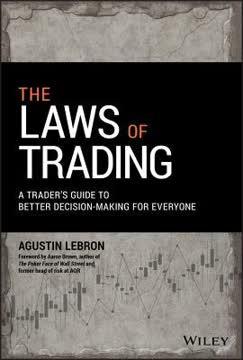
**Author:** Agustin Lebron
**Estimated Reading Time:** 45 minutes
**What You'll Learn:**
- Why self-knowledge matters more than technical skill in trading - How adverse selection shapes every market interaction - The true nature of risk and how to manage it intelligently - Why liquidity determines what you can and cannot trade - How to identify, articulate, and defend a genuine edge - The hidden costs that silently destroy profitability - Why adaptability separates survivors from casualties - How to apply trading wisdom to decisions far beyond markets
**Who This Book Is For:**
This book is for anyone who makes decisions under uncertainty. That includes professional traders, obviously, but it also includes investors, business owners, managers, entrepreneurs, and anyone who wants to think more clearly about risk, reward, and the stories we tell ourselves about why we deserve to win. If you have ever made a decision with incomplete information and real consequences, this book speaks directly to you.
Most books about trading promise to teach you a system. They offer chart patterns, indicator combinations, or algorithmic strategies that supposedly unlock consistent profits. They imply that if you just learn the right technique, the market will reward you. Agustin Lebron takes a different approach. After years as a trader at Jane Street, one of the most respected quantitative trading firms in the world, he came to a counterintuitive conclusion: the technical details of trading matter far less than the human and structural realities that surround every trade. The patterns, the models, the strategies all matter, but only after you understand something more fundamental. The problem is not that people lack trading strategies. The problem is that they lack a framework for thinking about what they are actually doing when they trade. Every trade is a social interaction. You are buying something from someone or selling something to someone. That person has their own reasons, their own information, and their own incentives. They might know something you do not. They might be acting on motivations that have nothing to do with profit. They might be smarter than you, faster than you, or better informed than you. Or they might be making a terrible mistake that you can profit from. The question is: how do you know which situation you are in? Lebron's answer is that you usually cannot know for certain, but you can reason carefully about the structure of the situation. You can understand your own motivations, recognize the inevitability of adverse selection, manage risk deliberately, respect liquidity constraints, articulate your edge clearly, and adapt as markets evolve. These are not techniques. They are laws. The word "laws" is deliberate. Lebron is not offering suggestions or tips. He is describing the…
Continue reading in the MinuteRead app
Get the complete 30-minute summary of The Laws of Trading
Get the complete summary in the appKnow why you are doing a trade before you trade. If the answer is not a specific, articulable edge, do not trade.
Every trade has a counterparty who may know more than you do. Expect to feel uncomfortable after every trade.
Take only the risks you are being paid to take. Hedge everything else.
Always use the most liquid instrument for the risk you want to express.
If you cannot explain your edge in five minutes, you do not have one.
Your model expresses your edge. Test it rigorously and treat it with skepticism.
"The Laws of Trading" is a strong fit if you want practical ideas around finance, business, psychology, especially themes like know why you are doing a trade before you trade. if the answer is not a specific, articulable edge, do not trade; every trade has a counterparty who may know more than you do. expect to feel uncomfortable after every trade. The MinuteRead summary distills these concepts into a focused read, whether you're deciding whether to buy the book or applying its lessons at work.
Agustin Lebron is a former trader at Jane Street, one of the most respected quantitative trading firms. Agustin Lebron draws from his extensive experience in the financial markets to write "The Laws of Trading." His background in prop trading and quantitative analysis informs his approach to decision-making and risk management. Lebron's writing style is praised for its clarity and ability to explain complex concepts in accessible terms. He applies insights from trading to broader life situations…
View all summaries by Agustin LebronContinue Reading
Access the complete 30-minute summary and thousands more nonfiction books in the MinuteRead app.

Continue reading the complete summary in the MinuteRead app.