MinuteRead
30 min
Book summary
by Ben Stein
Premium summary · Opens in the app · 30 min read
There is a quiet assumption buried inside almost every piece of mainstream investment advice. It sits there, unexamined, shaping the decisions of millions of investors. The assumption is that a portfolio split between stocks and bonds is diversified. It feels balanced. It looks prudent. It has been repeated so often that questioning it seems almost impolite.
**Author:** Ben Stein
**Estimated Reading Time:** 45 minutes
**What You'll Learn:**
Why the classic 60/40 portfolio is far riskier than it appears, how alternative investments can genuinely diversify your holdings, and which specific strategies deserve your attention.
**Who This Book Is For:**
Individual investors who sense something is wrong with conventional portfolio advice but have not known where to look for practical alternatives. If you have ever wondered whether there is more to investing than stocks and bonds, this book is for you.
There is a quiet assumption buried inside almost every piece of mainstream investment advice. It sits there, unexamined, shaping the decisions of millions of investors. The assumption is that a portfolio split between stocks and bonds is diversified. It feels balanced. It looks prudent. It has been repeated so often that questioning it seems almost impolite. Ben Stein thinks it is time to be impolite. The problem is not that stocks and bonds are bad investments. They are not. The problem is that the traditional 60/40 portfolio, with 60 percent of its dollars in stocks and 40 percent in bonds, is not nearly as balanced as it appears. When you measure risk rather than dollars, the picture changes dramatically. Stocks are far more volatile than bonds. They swing harder in both directions. That means the 60 percent stock allocation is carrying something closer to 85 percent of the portfolio's total risk. The investor who believes he is standing on two legs is actually balancing precariously on one. The consequences of this imbalance became painfully clear in 2008. Investors who thought they were prudently diversified watched their portfolios collapse along with the stock market. The bonds helped, but not enough. The risk was concentrated in the equity portion, and when equities fell, the whole portfolio fell with them. Diversification, it turned out, was an illusion. This book exists because that illusion persists. It exists because the financial industry has a vested interest in keeping things simple, familiar, and comfortable. Mutual fund companies sell stock funds and bond funds. Advisors recommend allocations that clients will accept without too many questions. The system works well for the industry. It works less well for the investor who discovers, too late, that his portfolio was never as safe as he believed. The solution Stein proposes is not to abandon stocks and bonds. It is to add a third category of investments, alternatives, that behave differently from both. These are investments that do not march in lockstep with the stock market. They include commodities, real estate investment trusts, hedge fund strategies packaged as mutual funds, managed futures, and other approaches that were once reserved for wealthy institutions but are now available to ordinary…
Continue reading in the MinuteRead app
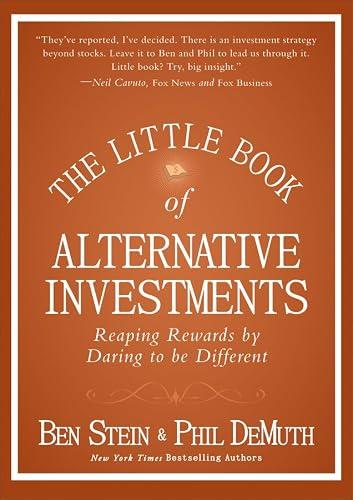
Get the complete 30-minute summary of The Little Book of Alternative Investments
Get the complete summary in the appThe 60/40 portfolio is far riskier than it appears because stocks dominate its risk profile.
True diversification requires assets with low correlation to stocks and bonds.
Alternative investments are now accessible to ordinary investors through mutual funds and ETFs.
Commodities provide inflation protection and diversification benefits.
REITs provide high income and real estate exposure without direct property ownership.
Long/short equity funds can profit in both up and down markets but rely on manager skill.
"The Little Book of Alternative Investments" is a strong fit if you want practical ideas around finance, business, money, especially themes like the 60/40 portfolio is far riskier than it appears because stocks dominate its risk profile; true diversification requires assets with low correlation to stocks and bonds. The MinuteRead summary distills these concepts into a focused read, whether you're deciding whether to buy the book or applying its lessons at work.
Motivated to help readers with the 60/40 stock and bond portfolio looks like it is standing on two legs, Ben Stein wrote “The Little Book of Alternative Investments” to package those ideas for a fast, focused read. In “The Little Book of Alternative Investments”, Ben Stein focuses on the 60/40 stock and bond portfolio looks like it is standing on two legs. Through “The Little Book of Alternative Investments”, Ben Stein distills the core ideas on finance into lessons readers can absorb in a singl…
Continue Reading
Access the complete 30-minute summary and thousands more nonfiction books in the MinuteRead app.

Continue reading the complete summary in the MinuteRead app.