MinuteRead
30 min
Book summary
by John Mauldin
Premium summary · Opens in the app · 30 min read
Every investor eventually confronts a painful question: Why is my portfolio not growing?
**Author:** John Mauldin **Estimated Reading Time:** 45 minutes
**What You'll Learn:** - Why the stock market moves in predictable long-term cycles - How to identify secular bull and bear markets - Why traditional buy-and-hold investing fails in certain decades - What strategies actually work when markets go nowhere - How to position your portfolio for the current market environment
**Who This Book Is For:** Investors who want to understand the bigger picture. If you have ever wondered why your portfolio stagnates despite doing everything right, this book explains why. It is for anyone willing to look beyond the daily noise and understand the structural forces that shape markets over decades.
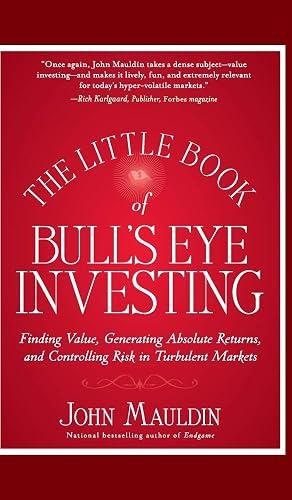
Every investor eventually confronts a painful question: Why is my portfolio not growing? You read the right books. You followed the standard advice. You diversified across stocks and bonds. You bought quality companies and held them through thick and thin. And yet, after years of effort, your account balance barely moved. The standard explanation is that you did something wrong. You picked the wrong stocks. You timed the market poorly. You lacked discipline. But what if the problem is not you? What if the problem is the market itself? John Mauldin wrote *Bull's Eye Investing* to answer this uncomfortable question. His argument is simple and unsettling: markets do not move in a straight line. They move in long cycles that last fifteen to twenty years. During some periods, known as secular bull markets, stocks rise almost regardless of what you buy. During other periods, known as secular bear markets, stocks go nowhere no matter how clever you are. The difference between these two environments is not small. During secular bull markets, the average real return on stocks has been about 13 percent per year. During secular bear markets, it has been close to zero. The same stock market, the same companies, the same economy, but radically different outcomes depending on when you invested. Most investors have never heard of secular market cycles. They have been taught that stocks always go up over time, that the market averages 8 to 10 percent per year, and that patience is always rewarded. This advice is true over very long periods. It is dangerously incomplete over any given decade. Consider the evidence. From 1964 through 1981, the U.S. economy grew by 374 percent. Corporate profits rose. Innovation flourished. And yet the stock market, measured by the Dow Jones Industrial Average, gained exactly 0.1 percent over those seventeen years. An investor who bought stocks in 1964 and held them faithfully until 1981 made nothing. Then, from 1981 through 2000, the market delivered one of the greatest bull runs in history. The Dow rose from under…
Continue reading in the MinuteRead app
Get the complete 30-minute summary of Little Book of Bull's Eye Investing
Get the complete summary in the appMarkets move in secular cycles lasting fifteen to twenty years, driven by valuation.
Secular bear markets deliver near-zero returns while secular bull markets deliver double-digit returns.
Economic growth does not guarantee stock market returns.
Value investing is the key to success in secular bear markets.
Investor psychology drives valuation and amplifies market cycles.
True diversification requires exposure to asset classes beyond stocks and bonds.
"Little Book of Bull's Eye Investing" is a strong fit if you want practical ideas around finance, business, economics, especially themes like markets move in secular cycles lasting fifteen to twenty years, driven by valuation; secular bear markets deliver near-zero returns while secular bull markets deliver double-digit returns. The MinuteRead summary distills these concepts into a focused read, whether you're deciding whether to buy the book or applying its lessons at work.
Motivated to help readers with there have been seven secular bull markets and seven secular bear markets since 1800, John Mauldin wrote “Little Book of Bull's Eye Investing” to package those ideas for a fast, focused read. In “Little Book of Bull's Eye Investing”, John Mauldin focuses on there have been seven secular bull markets and seven secular bear markets since 1800. Through “Little Book of Bull's Eye Investing”, John Mauldin distills the core ideas on finance into lessons readers can absor…
Continue Reading
Access the complete 30-minute summary and thousands more nonfiction books in the MinuteRead app.

Continue reading the complete summary in the MinuteRead app.