MinuteRead
30 min
Book summary
by Jeffrey A. Hirsch
Premium summary · Opens in the app · 30 min read
Every investor has asked the same question at some point: why does the stock market behave the way it does? Why do periods of spectacular growth follow decades of stagnation? Why do certain months consistently deliver gains while others reliably disappoint? Why does the market seem to have a rhythm that defies the daily headlines?
**Author:** Jeffrey A. Hirsch
**Estimated Reading Time:** 45 minutes
**What You'll Learn:**
- Why war, peace, and inflation form the hidden architecture of every major market cycle - How the four-year presidential election cycle creates predictable investment opportunities - The seasonal rhythms that have shaped market returns for over a century - How to use the January Barometer and Santa Claus Rally as early warning systems - Why the best six months strategy has outperformed buy-and-hold with less risk - What historical patterns suggest about the next secular bull market
**Who This Book Is For:**
This book is for investors who want to understand the recurring patterns that drive stock market performance. Whether you are a long-term investor seeking better entry and exit points, a trader looking for seasonal edges, or simply someone who wants to understand why markets move the way they do, this book provides a historical framework that has stood the test of time. No advanced financial knowledge is required, only a willingness to see the market through the lens of cycles rather than random noise.
Every investor has asked the same question at some point: why does the stock market behave the way it does? Why do periods of spectacular growth follow decades of stagnation? Why do certain months consistently deliver gains while others reliably disappoint? Why does the market seem to have a rhythm that defies the daily headlines? Most people approach the market as if it were a random walk, an unpredictable system where today's prices have no relationship to tomorrow's. They watch financial news, react to earnings reports, and make decisions based on the latest economic data. Yet despite all this effort, most investors fail to beat the market over time. Jeffrey Hirsch grew up with a different perspective. His father, Yale Hirsch, founded the Stock Trader's Almanac in 1967, a publication dedicated to uncovering the seasonal patterns and cyclical rhythms of the stock market. From an early age, Jeffrey was immersed in charts showing how the market performed in election years, which months delivered the strongest returns, and how historical events shaped market cycles. What he discovered was not randomness but repetition. The central insight of this book is both simple and profound: the stock market follows cycles that are driven by human behavior, institutional patterns, and the grand forces of war, peace, and inflation. These cycles are not perfect. They do not repeat with clockwork precision. But they are persistent enough to provide a meaningful edge to investors who understand them. Consider the evidence. Since 1950, the Dow Jones Industrial Average has gained nearly all of its points during the six months from November through April. The other six months, May…
Continue reading in the MinuteRead app
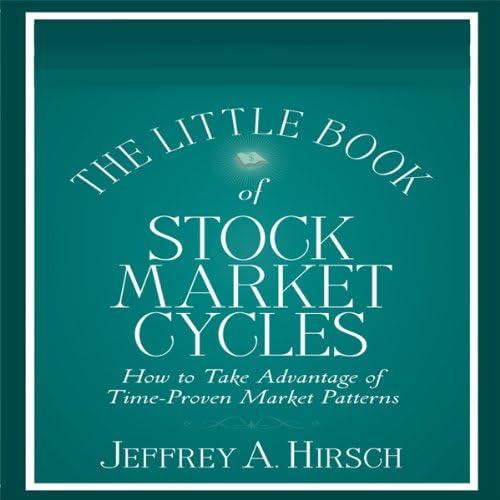
Get the complete 30-minute summary of The Little Book of Stock Market Cycles
Get the complete summary in the appWar stalls markets. Peace and inflation fuel booms. This is the foundation of all market cycles.
The best six months strategy: invest from November through April, switch to fixed income from May through October.
The January Barometer has predicted the market's annual direction with 88.7% accuracy since 1950.
Pre-election years are typically the strongest in the four-year presidential election cycle.
The Santa Claus Rally covers the last five trading days of December and the first two of January.
Major market bottoms often occur in August, September, or October.
"The Little Book of Stock Market Cycles" is a strong fit if you want practical ideas around finance, business, economics, especially themes like war stalls markets. peace and inflation fuel booms. this is the foundation of all market cycles; the best six months strategy: invest from november through april, switch to fixed income from may through october. The MinuteRead summary distills these concepts into a focused read, whether you're deciding whether to buy the book or applying its lessons at work.
Motivated to help readers with war and peace and inflation have an indelible impact on the stock market, Jeffrey A. Hirsch wrote “The Little Book of Stock Market Cycles” to package those ideas for a fast, focused read. In “The Little Book of Stock Market Cycles”, Jeffrey A. Hirsch focuses on war and peace and inflation have an indelible impact on the stock market. Through “The Little Book of Stock Market Cycles”, Jeffrey A. Hirsch distills the core ideas on finance into lessons readers can absor…
Continue Reading
Access the complete 30-minute summary and thousands more nonfiction books in the MinuteRead app.

Continue reading the complete summary in the MinuteRead app.