MinuteRead
30 min
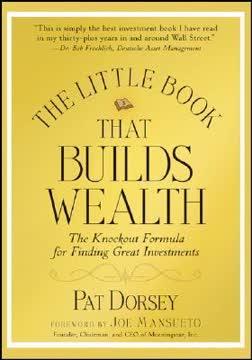
Book summary
by Pat Dorsey
Premium summary · Opens in the app · 30 min read
Every investor dreams of finding the next great company. The one that turns a modest investment into a fortune. The one that grows for decades, compounding wealth year after year while competitors scramble to keep up.
**Author:** Pat Dorsey **Estimated Reading Time:** 45 minutes
Why some companies generate enormous profits for decades while others struggle to survive. How to identify businesses with durable competitive advantages before the market recognizes them. What separates a genuine economic moat from a temporary advantage. How to combine moat analysis with valuation to make smarter long-term investment decisions.
Individual investors who want to move beyond stock tips and quarterly earnings noise. Anyone who has ever wondered why certain companies seem unstoppable while others fade. Readers who want a clear, practical framework for understanding what makes a business truly valuable.
Every investor dreams of finding the next great company. The one that turns a modest investment into a fortune. The one that grows for decades, compounding wealth year after year while competitors scramble to keep up. But here is the uncomfortable truth. Most companies do not create lasting wealth. They may grow quickly for a few years, attract attention, and generate excitement. Then competition arrives. Margins compress. Growth stalls. The stock price follows. Investors who bought at the peak of enthusiasm are left holding shares in a mediocre business that never fulfilled its promise. The problem is not that investors lack information. We live in an age of unprecedented data availability. Financial statements, analyst reports, news coverage, and real-time price quotes are all accessible with a few clicks. The problem is that most investors focus on the wrong things. They chase quarterly earnings beats. They obsess over short-term price movements. They evaluate companies based on recent performance rather than structural characteristics. Pat Dorsey spent more than a decade as Director of Equity Research at Morningstar, where he developed one of the most influential frameworks in modern investing. His insight was simple but profound. The companies that create lasting wealth share a common characteristic. They possess what he calls economic moats. The term comes from medieval castles. A moat was a deep, wide ditch filled with water that surrounded a castle and made it difficult for attackers to breach the walls. In business, an economic moat serves the same purpose. It is a structural characteristic that protects a company from competitors and allows it to sustain above-average profits for extended periods. Think about it this way. In a free market economy, high profits attract competition. If a company is earning exceptional returns, other businesses will notice and try to capture a share of those profits. They will launch competing products, undercut prices, and invest in marketing. Over time, this competitive pressure should erode the original company's advantage and push its returns down to average levels. This is how capitalism is supposed to work. And for most companies, it does. The average business earns…
Continue reading in the MinuteRead app
Get the complete 30-minute summary of The Little Book That Builds Wealth
Get the complete summary in the appCompanies with economic moats are more valuable than companies without moats because they can sustain above-average retu
The four sources of moats are intangible assets, switching costs, network effects, and cost advantages.
A brand is only a moat if it changes customer behavior by increasing willingness to pay or reducing willingness to switc
Switching costs create customer captivity, which allows companies to charge higher prices.
Network effects tend toward natural monopolies because users gravitate to the largest network.
Cost advantages create moats only when they are rooted in structural characteristics that competitors cannot easily repl
"The Little Book That Builds Wealth" is a strong fit if you want practical ideas around finance, business, money, especially themes like companies with economic moats are more valuable than companies without moats because they can sustain above-average retu; the four sources of moats are intangible assets, switching costs, network effects, and cost advantages. The MinuteRead summary distills these concepts into a focused read, whether you're deciding whether to buy the book or applying its lessons at work.
Pat Dorsey is a respected figure in the investment world, known for his expertise in analyzing companies' competitive advantages. He served as the Director of Equity Research at Morningstar for over a decade, where he developed the company's economic moat ratings. Dorsey is the founder of Dorsey Asset Management and has authored several books on investing. His approach focuses on identifying businesses with sustainable competitive advantages, or "economic moats," that can generate superior retur…
View all summaries by Pat DorseyContinue Reading
Access the complete 30-minute summary and thousands more nonfiction books in the MinuteRead app.

Continue reading the complete summary in the MinuteRead app.