 MinuteRead
30 min
Book summary
Premium summary · Opens in the app · 30 min read
Every business school teaches the same fundamental principle: listen to your customers, give them what they want, and make your product as accessible as possible. The customer is king. The market decides. Price follows demand. These rules have built the modern consumer economy, and they work brilliantly for most products.
**Author:** Jean-Noël Kapferer **Estimated Reading Time:** 42 minutes
**What You'll Learn:** Why luxury brands break every rule of conventional marketing, how they create desire through distance rather than accessibility, and what it takes to build a brand that commands irrational loyalty and premium pricing for generations.
**Who This Book Is For:** Executives and entrepreneurs in premium and luxury markets, brand managers seeking to understand the mechanics of desirability, and anyone curious about why certain products transcend utility to become cultural objects of desire.
Every business school teaches the same fundamental principle: listen to your customers, give them what they want, and make your product as accessible as possible. The customer is king. The market decides. Price follows demand. These rules have built the modern consumer economy, and they work brilliantly for most products. But they do not work for luxury. Consider the paradox. A luxury brand raises its prices, and demand increases. A luxury brand refuses to sell to certain customers, and its desirability grows. A luxury brand ignores what consumers say they want, and somehow becomes more relevant. A luxury brand makes it harder to buy its products, and people want them more intensely. This is not an accident. It is not the residue of clever marketing campaigns. It is the result of a fundamentally different business logic, one that operates according to principles that would be considered commercial suicide in any other industry. Jean-Noël Kapferer has spent decades studying why luxury brands behave the way they do. His conclusion is both simple and profound: luxury is not a more expensive version of ordinary commerce. It is a completely different system of value creation, with its own rules, its own psychology, and its own economic logic. The problem is that most people, including many executives who run luxury brands, do not understand this. They apply conventional marketing thinking to luxury products, and in doing so, they slowly destroy the very thing that made those products valuable in the first place. They listen to customers too much. They expand distribution too widely. They chase growth in ways that erode exclusivity. They treat luxury like premium, and premium like mass market, until the brand becomes just another commodity with a high price tag. Kapferer wrote this book to correct that misunderstanding. His central argument is that luxury requires what he calls "anti-laws of marketing": principles that invert conventional wisdom. Luxury does not follow demand; it creates it. Luxury does not reduce prices to attract customers; it raises them to create distance. Luxury does not make buying easy; it introduces friction, waiting lists, and exclusivity. Luxury does not ask customers what they want; it tells them what is beautiful, what is refined,…
Continue reading in the MinuteRead app
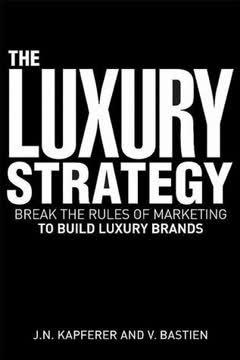
Get the complete 30-minute summary of The Luxury Strategy
Get the complete summary in the appLuxury is a different category from premium, with its own rules and logic.
The luxury brand leads; it does not follow. It defines taste rather than responding to it.
Raise prices to increase demand. The high price is a signal of value, not a barrier to purchase.
Make it difficult to buy. Scarcity and exclusivity are essential to luxury desirability.
Control distribution completely. The context of the sale is part of the product's meaning.
Treat the product as sacred. Its meaning matters more than its functionality.
"The Luxury Strategy" is a strong fit if you want practical ideas around business, fashion, entrepreneurship, especially themes like luxury is a different category from premium, with its own rules and logic; the luxury brand leads; it does not follow. it defines taste rather than responding to it. The MinuteRead summary distills these concepts into a focused read, whether you're deciding whether to buy the book or applying its lessons at work.
Jean-Noël Kapferer is a renowned European authority on brand management, recognized internationally for his expertise in luxury brands. He has authored eleven books on communication and brands, all widely translated and distributed globally. Kapferer's work is characterized by in-depth analysis and creative recommendations, balancing theory and practice. He is known for promoting innovative concepts in modern brand management, including brand identity, the holistic approach to brand identity, an…
View all summaries by Jean-Noël KapfererContinue Reading
Access the complete 30-minute summary and thousands more nonfiction books in the MinuteRead app.

Continue reading the complete summary in the MinuteRead app.






