MinuteRead
30 min
Book summary
Premium summary · Opens in the app · 30 min read
In 1988, a former codebreaker and mathematics professor launched a hedge fund with a radical premise. Financial markets, he believed, were not random. Hidden patterns existed beneath the chaos of price movements. With enough data, enough computing power, and enough brilliant minds, those patterns could be found and exploited.
**Author:** Gregory Zuckerman **Estimated Reading Time:** 45 minutes
**What You'll Learn** How a mathematician with no finance background built the most successful investment firm in history. The story of Renaissance Technologies and its Medallion Fund reveals how data, algorithms, and scientific thinking transformed finance. You will understand the principles behind quantitative investing, the power of assembling brilliant teams, and the relentless persistence required to solve problems others consider impossible.
**Who This Book Is For** Anyone curious about the intersection of mathematics and money. Investors who want to understand why machines now dominate markets. Leaders building teams that tackle hard problems. And anyone drawn to stories of unconventional thinkers who change the world by refusing to accept conventional wisdom.
In 1988, a former codebreaker and mathematics professor launched a hedge fund with a radical premise. Financial markets, he believed, were not random. Hidden patterns existed beneath the chaos of price movements. With enough data, enough computing power, and enough brilliant minds, those patterns could be found and exploited. Most people on Wall Street thought this was absurd. Markets moved on fear, greed, news, and human judgment. You could not reduce investing to equations and algorithms. The idea that mathematicians who had never traded a stock could outperform veteran investors seemed like academic fantasy. The professor was Jim Simons. His firm, Renaissance Technologies, would go on to achieve something unprecedented in financial history. Its flagship Medallion Fund generated average annual returns of 66 percent before fees over three decades. No other fund, no other investor, no other approach has come close to matching this record. Not Warren Buffett. Not George Soros. Not Peter Lynch. This is not simply a story about getting rich. It is a story about how a particular way of thinking, the scientific method applied with extraordinary rigor, can solve problems that resist all conventional approaches. Simons and his team did not succeed because they found one clever trick. They succeeded because they built a system that kept getting smarter, kept adapting, and kept finding edges that others could not see. Gregory Zuckerman tells this story with the depth it deserves. He gained access to people who had never spoken publicly about Renaissance, including Simons himself. What emerges is a portrait of genius in action, with all the triumphs, tensions, and human complications that accompany it. The book matters because the revolution Simons started has now consumed finance. Quantitative strategies dominate trading. Algorithms execute most transactions. Data scientists are as valuable as veteran traders. Understanding how this transformation happened, and what it reveals about markets and human decision-making, is essential for anyone who wants to understand modern investing. It also matters because the story contains lessons that extend far…
Continue reading in the MinuteRead app
Get the complete 30-minute summary of The Man Who Solved the Market
Get the complete summary in the appJim Simons treated markets as a scientific problem and built an organization of scientists to solve it.
Renaissance's Medallion Fund achieved the greatest investment returns in history by finding many small edges and compoun
Hiring brilliant people from unrelated fields and teaching them finance was more effective than hiring finance professio
Systematic, model-driven investing outperforms human judgment because it eliminates emotion and inconsistency.
Risk management is integral to strategy, not an afterthought. Medallion's low volatility was a feature, not an accident.
Crises test investment approaches. Surviving them requires preparation, discipline, and trust in well-tested models.
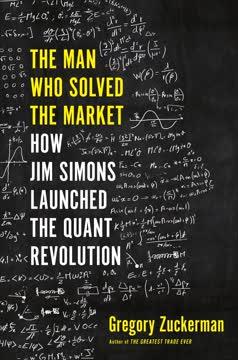
"The Man Who Solved the Market" is a strong fit if you want practical ideas around finance, business, biography—especially themes like jim simons treated markets as a scientific problem and built an organization of scientists to solve it; renaissance's medallion fund achieved the greatest investment returns in history by finding many small edges and compoun. The MinuteRead summary distills these concepts into a focused read, whether you're deciding whether to buy the book or applying its lessons at work.
Gregory Zuckerman is a Special Writer at The Wall Street Journal with 25 years of experience. He has won the Gerald Loeb award three times, the highest honor in business journalism. Zuckerman has authored six books, including works on the COVID-19 vaccine race, quantitative trading, fracking, and notable athletes. His writing often focuses on finance, business, and sports. Zuckerman resides in West Orange, N.J., with his wife and two sons, where they enjoy following New York sports teams. His di…
View all summaries by Gregory ZuckermanContinue Reading
Access the complete 30-minute summary and thousands more nonfiction books in the MinuteRead app.

Continue reading the complete summary in the MinuteRead app.