MinuteRead
30 min
Book summary
Premium summary · Opens in the app · 30 min read
Conflict is one of the few certainties of human existence. Every relationship, every organization, every community will eventually face moments when interests collide, perspectives diverge, and communication breaks down. The question is not whether conflict will occur but how it will be handled.
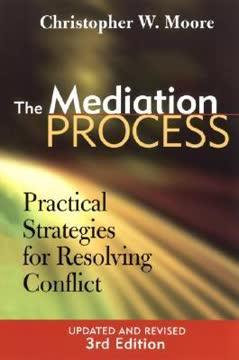
**Author:** Christopher W. Moore
**Estimated Reading Time:** 45 minutes
**What You'll Learn:**
- Why mediation has become one of the most effective tools for resolving disputes across every domain of human life - The mediator's true role and why neutrality matters more than expertise - How to analyze conflict systematically using a proven framework - The communication techniques that transform hostile exchanges into productive dialogue - How to move parties from rigid positions to creative, mutually satisfying solutions - The cultural and power dynamics that shape every mediation - How to know when a conflict is ready for resolution
**Who This Book Is For:**
Professionals who manage disputes, leaders who navigate organizational conflict, lawyers seeking alternatives to litigation, human resources specialists, community organizers, family counselors, and anyone who wants to understand how skilled third parties help people find common ground when agreement seems impossible.
Conflict is one of the few certainties of human existence. Every relationship, every organization, every community will eventually face moments when interests collide, perspectives diverge, and communication breaks down. The question is not whether conflict will occur but how it will be handled. For most of human history, the dominant answers to this question have been force, authority, or avoidance. People fought, appealed to those with power, or simply walked away. Each of these approaches has a fundamental limitation: none of them truly resolves the underlying dispute. Force produces resentment and retaliation. Authority imposes outcomes that may satisfy no one. Avoidance allows problems to fester until they explode. The modern field of mediation emerged from a recognition that these traditional approaches often fail to produce lasting peace. Mediation offers something different: a structured process in which disputing parties work with a neutral third party to find their own resolution. The mediator does not decide who is right or wrong. The mediator does not impose a settlement. Instead, the mediator creates conditions under which parties can communicate effectively, understand each other's needs, and craft agreements that address the real sources of their conflict. Christopher Moore's *The Mediation Process* is widely regarded as the definitive guide to this practice. First published in 1986 and refined through multiple editions, the book synthesizes decades of research and practical experience into a comprehensive framework for understanding and conducting mediation. It has become required reading in law schools, business programs, and conflict resolution training courses around the world. What makes Moore's approach distinctive is its integration of theory and practice. The book does not simply offer techniques; it explains why those techniques work, drawing on insights from psychology, sociology, communication theory, and negotiation research. It grounds practical advice in a deep understanding of how conflict operates and how people change their minds.…
Continue reading in the MinuteRead app
Get the complete 30-minute summary of The Mediation Process
Get the complete summary in the appMediation is a process in which a neutral third party helps parties reach their own resolution. The mediator does not im
The mediator's power comes from trust and neutrality, not from authority to decide.
Conflict has multiple sources: relationships, data, interests, structure, and values. Diagnose before intervening.
Positions are demands. Interests are the reasons behind demands. Focus on interests to find creative solutions.
Interest-based negotiation assumes that resources may not be limited and that different priorities create opportunities
Building trust and rapport is essential. Rushing to problem-solving before relationships are ready undermines resolution
"The Mediation Process" is a strong fit if you want practical ideas around school, leadership, business, especially themes like mediation is a process in which a neutral third party helps parties reach their own resolution. the mediator does not im; the mediator's power comes from trust and neutrality, not from authority to decide. The MinuteRead summary distills these concepts into a focused read, whether you're deciding whether to buy the book or applying its lessons at work.
Christopher W. Moore is an expert in the field of conflict resolution and mediation. While specific biographical information is not provided in the given content, Moore's work, "The Mediation Process," is widely recognized as a seminal text in the field. The book's comprehensive approach and detailed explanation of mediation techniques suggest that Moore has extensive experience and knowledge in conflict resolution. His writing style is described as structured and thorough, indicating a methodic…
View all summaries by Christopher W. MooreContinue Reading
Access the complete 30-minute summary and thousands more nonfiction books in the MinuteRead app.

Continue reading the complete summary in the MinuteRead app.