MinuteRead
30 min
Book summary
by Chris Riccomini
Premium summary · Opens in the app · 30 min read
Computer science education has a strange blind spot. Spend four years in a university program and you will learn about data structures, algorithms, operating systems, and compiler design. You will write code that sorts lists, traverses graphs, and implements protocols. What you will almost certainly not learn is how to function as a professional software engineer.
**Author:** Chris Riccomini
**Estimated Reading Time:** 45 minutes
**What You'll Learn:** - How to learn effectively in a fast-moving technical field - How to write code that is safe, testable, and maintainable - How to navigate code reviews, delivery pipelines, and on-call rotations - How to design systems that can evolve without collapsing under complexity - How to manage your manager and steer your career with intention
**Who This Book Is For:** This book is for software engineers who have learned how to write code but have not yet learned how to work. It is for new graduates joining their first team, for self-taught developers entering professional environments, and for experienced engineers who want to fill in the gaps that no one ever formally taught them. If you have ever felt that your education prepared you to solve algorithmic puzzles but not to navigate a production incident, a contentious code review, or a confusing performance review, this book is for you.
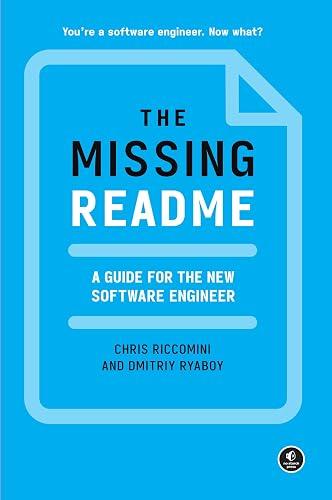
Computer science education has a strange blind spot. Spend four years in a university program and you will learn about data structures, algorithms, operating systems, and compiler design. You will write code that sorts lists, traverses graphs, and implements protocols. What you will almost certainly not learn is how to function as a professional software engineer. No one teaches you how to ask for help without annoying your colleagues. No one teaches you how to write code that other people can operate at 3 a.m. when something breaks. No one teaches you how to review someone else's code without damaging the relationship. No one teaches you how to handle an on-call page when production is down and you are the only person available. These skills are not hidden because they are unimportant. They are hidden because they are difficult to teach in a classroom. They require context, judgment, and experience. They are learned through trial and error, through painful mistakes, through watching senior engineers navigate situations that no textbook covers. The problem is that this learning process is slow, uneven, and often humiliating. Chris Riccomini wrote The Missing README to address this gap. The title is a reference to the README file that accompanies most software projects, the document that explains how to set things up and get started. Every codebase has one. But the profession of software engineering itself has no README. There is no single document that explains how the whole thing works. This book is that document. Riccomini draws on years of experience working at technology companies, observing what separates engineers who thrive from those who struggle. The difference, he argues, is rarely raw technical ability. It is the mastery of the practical skills that surround…
Continue reading in the MinuteRead app
Get the complete 30-minute summary of The Missing README
Get the complete summary in the app**Learn actively.** Front-load your learning, use diverse methods, and research thoroughly before asking for help.
**Write operable code.** Add logging, metrics, and error handling as you write. Operability is part of the definition of
**Manage dependencies deliberately.** Understand your dependency tree, pin versions, and treat every dependency as a com
**Test behavior, not implementation.** Tests are executable documentation that protects against regressions and enables
**Approach code review as a conversation.** Keep changes small, be receptive to feedback, and give comprehensive, respec
**Deliver software safely.** Use feature flags, canary deployments, and other rollout strategies to manage risk.
"The Missing README" is a strong fit if you want practical ideas around programming, technology, computer science, especially themes like **learn actively.** front-load your learning, use diverse methods, and research thoroughly before asking for help; **write operable code.** add logging, metrics, and error handling as you write. operability is part of the definition of. The MinuteRead summary distills these concepts into a focused read, whether you're deciding whether to buy the book or applying its lessons at work.
Motivated to help readers with the Missing README will teach you these skills, Chris Riccomini wrote “The Missing README” to package those ideas for a fast, focused read. Through “The Missing README”, Chris Riccomini distills the core ideas on programming into lessons readers can absorb in a single short sitting. Readers turn to this work when they want Chris Riccomini's perspective on the subject without working through the entire original volume. The book is structured so each chapter highligh…
Continue Reading
Access the complete 30-minute summary and thousands more nonfiction books in the MinuteRead app.

Continue reading the complete summary in the MinuteRead app.